By Mr Hull's Movie Guides

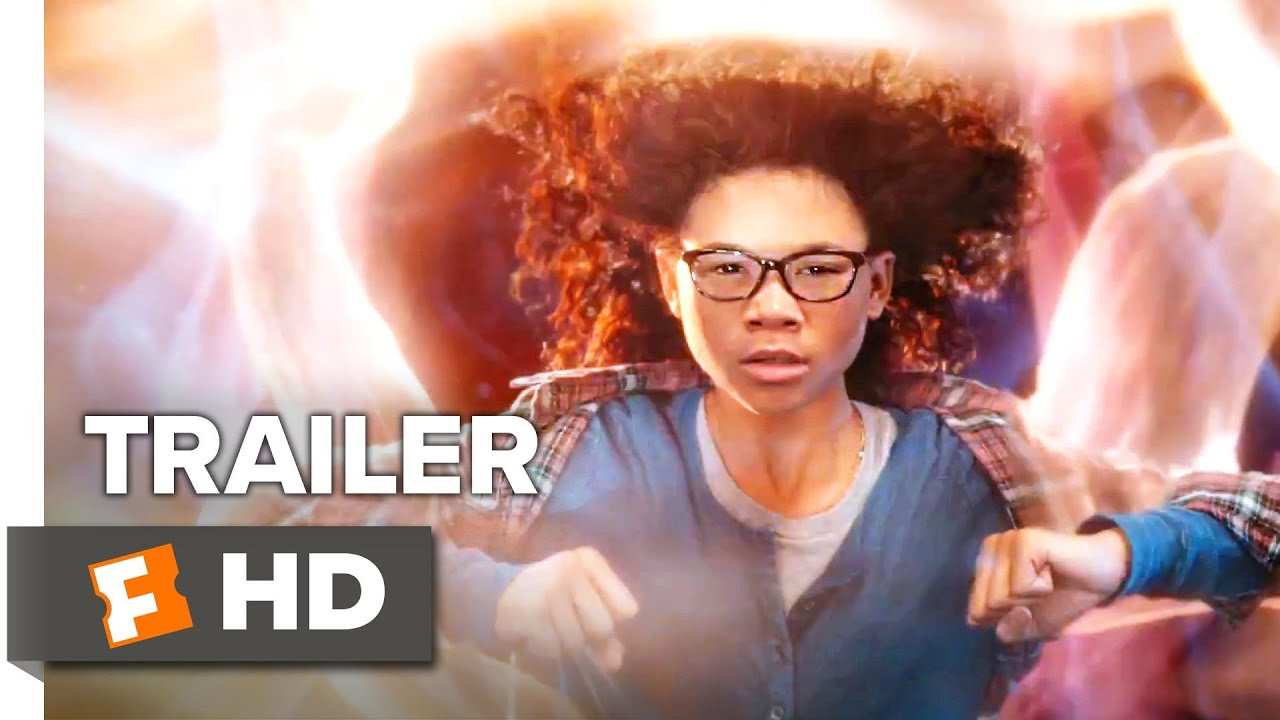
Watch the Trailer
What's Inside the Guide
This is a 12-page classroom-ready resource.
Three differentiated sets of chronological comprehension questions. Answer keys are included for all three sets.
- Forty question set.
- Shortened twenty five question set.
- Twenty five question multiple choice version with three answer options each.
This part covers two original writing tasks.
- Imagining finding the right frequency to tesser to a new planet and describing what they discover there.
- A first person recount of the journey from the moment the children meet the three Mrs.
“This is a great way to keep the kids engaged before spring break! It almost tricks students into learning and I love how many variations there are for the different English levels in my class. Thank you so much for this, it's a life saver!”
— Stephanie P.
“Good for holding students accountable during/after movie.”
— Amy V.
Why Watch This Movie With Your Students
Here's what your students naturally take away from the movie, whether through themes, values, ideas, or perspectives.
🌌 Turns Real Physics Into a Space Adventure. The movie treats tessering, a fictional method of folding space and time, as a way to make higher dimensional physics visible and understandable. Concepts like the fourth and fifth dimensions become concrete plot devices instead of abstract theory, giving students a way into ideas about space and time that usually stay confined to a textbook page.
🧭 Centers a Story on Self-Acceptance. Meg Murry spends most of the movie believing her anger, impatience, and stubbornness make her a problem to be fixed. The story's turning point comes when she learns to use those same traits as her greatest strength against a force built on total conformity, giving students a concrete example of reframing perceived flaws.
🌀 Builds Its Villain Around Conformity. The planet Camazotz is ruled by a collective mind called the IT, where every house, every child, and every routine looks identical. The contrast between Camazotz's forced sameness and the individuality the Murry family represents gives students a vivid way to think about groupthink and the value of standing apart from it.
👨👩👧👦 Explores a Family Coping With an Unexplained Absence. Meg and Charles Wallace have spent four years without an explanation for their father's disappearance, and the movie is honest about how that uncertainty affects Meg's confidence, her friendships, and her standing at school. It gives students a grounded emotional throughline underneath the science fiction plot.
🌍 Grounds Its Science Fiction in a Real Missing-Scientist Story. Meg is written as brilliant in math and science, and the movie builds its entire plot around her ability to solve a problem that the adults around her could not. It gives students a science-driven lead whose intelligence, not brute force or luck, is what resolves the central conflict.
💫 Reframes Love as an Active Force Against Darkness. Rather than treating love as a soft or secondary theme, the movie makes it the literal mechanism Meg uses to free her brother from the IT's control. Students see affection and connection function as a tool with narrative consequence, not just a sentiment stated at the end.
Age Suitability and Content
This movie is rated PG.
⚠️ Things to be aware of:
- Rated PG for thematic elements and some peril.
- Several scenes involve kids in physical danger, including a near fall from a great height and a character using telekinesis to hurt others, though no one is seriously injured
- A child character is briefly possessed by a dark force and turns hostile toward his family.
- Some verbal bullying and cruel comments among classmates.
- No sexual content or substance use, and no strong language beyond mild name calling.
📋 A free editable parent permission slip is available for this movie. It explains the educational benefits of watching movies in class and includes a space for parental consent. → Download Free Permission Slip on TpT (Free resource)
Note for educators: Movie details and age ratings in this post are sourced from IMDb, Common Sense Media, and Wikipedia to help ensure accuracy.
How My Movie Guide Helps You Teach It
Click your subject below to see how this guide supports it:
📚 English Language Arts Teachers
🗣️ ESL and ELL Teachers
🔬 Science Teachers
🎬 Substitute Teachers and Cover Lessons
🏠 Homeschool Parents
💙 SEL Teachers
🔭 STEM Teachers
🌟 Supporting All Learners A movie gives students a story to follow, and the guide gives them questions to work through as they watch. For students with autism, learning difficulties, and mild to severe disabilities, that combination provides a clear focus for the lesson and a concrete way to show understanding. The format can be useful in special education and learning support classrooms, where teachers need activities that give students a defined task during viewing. Find out more about why movies work for diverse learners.
Science and STEM callouts above rely on the guide's comprehension questions for accountability rather than dedicated subject-specific activities.
How These Guides Work: From Movie to Lesson
Watching a movie is not a break from learning. It reaches students through sight, sound, and story at once, engaging the brain in ways text alone does not, and the structured work around it is what turns the viewing into a genuine lesson. You can read the research behind this on the Why Movies Work page.
- A Teacher Notes and General Directions page opens the guide with a brief overview of everything inside: what the movie is about, then each part of the guide in order with a short description of what it entails. You know what to expect from the whole resource before you hand out a single page, so you can pick up the guide cold and teach it the same day.
- Answer keys are included for the comprehension question sets, so grading is quick and you are not rewatching the movie to check answers. Some guides also include example answers for the creative and written activities.
- Print and go: classroom ready, with no additional preparation needed. Print one the morning you need it and the lesson is ready.
- Substitute and first-timer friendly. A guide can be handed to a substitute or picked up by a teacher covering the topic for the first time. Nobody running the session needs to have seen the movie.
- Differentiated comprehension sets. Most guides include two or three question sets at different difficulty levels, and most include a multiple-choice option that works well for ESL and ELL students. One class set covers your strongest readers, your strugglers, and your language learners without separate prep.
- Activities that go beyond recall. Each guide includes structured activities that ask students to engage with the movie, not just watch it, ranging from creative and written tasks to discussion and critical thinking questions depending on the guide. That variety matters in a mixed classroom: a student who freezes on a written question set may show real understanding through a drawing or a creative task, and a confident writer gets room to go beyond recall. For the teacher, it turns a movie session into work you can grade: comprehension questions show whether students followed the plot, and the activities beyond them show whether they understood it.