Why Movies Work in the Classroom
There is more going on when a student watches a movie than entertainment. Here is what the research says, and what teachers who work with some of the most challenging student populations in America have found in practice.
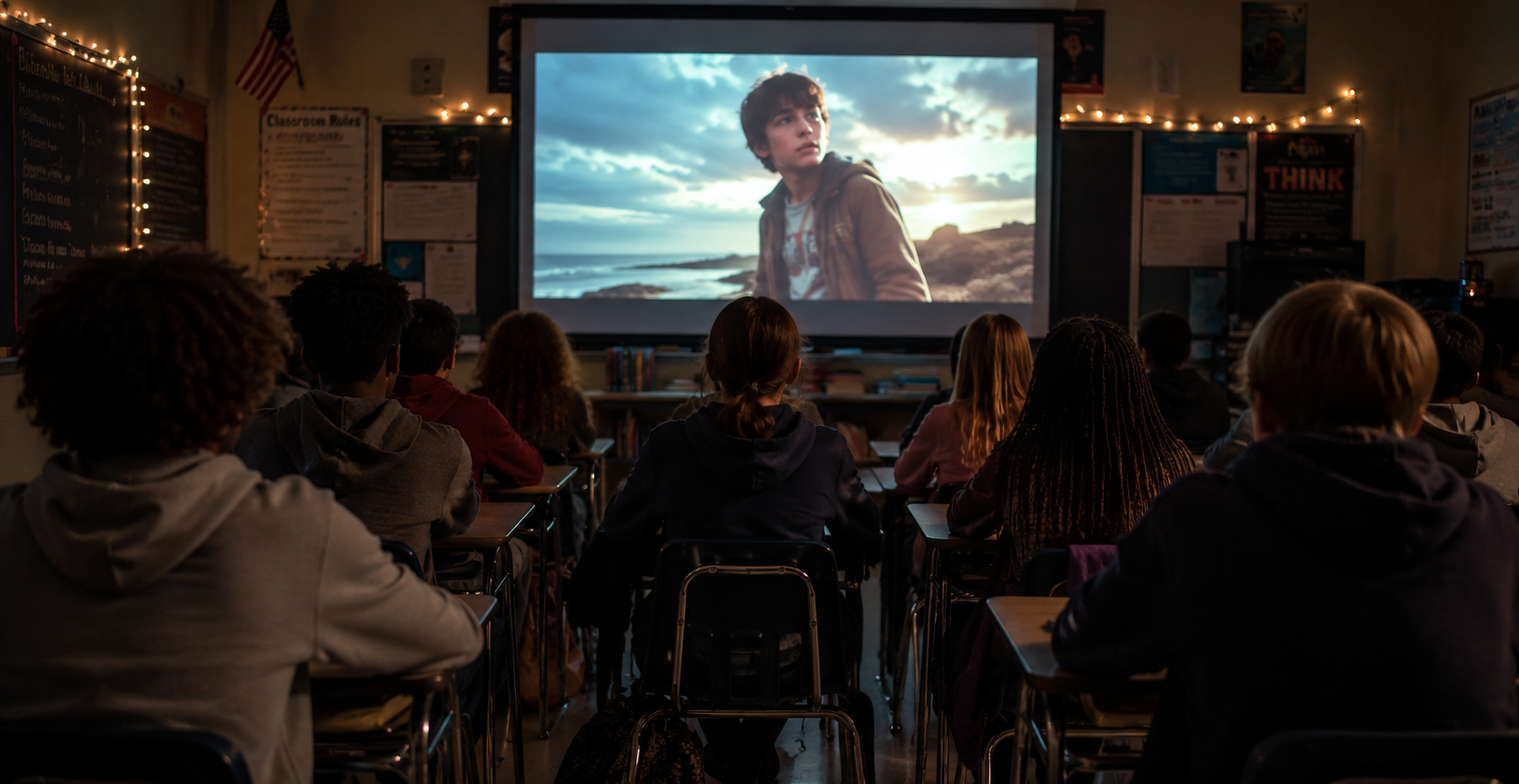

What Happens in the Brain When Students Watch a Movie
A traditional lesson fires up one part of the brain. A movie fires up several at once.
When a student reads a textbook or listens to a lecture, their brain processes information through a single channel. When they watch a movie, something different happens entirely. The visual cortex processes what they see, the auditory system processes what they hear, and the emotional centres of the brain engage with the story simultaneously. Researchers call this dual coding, and it is one of the most well-supported theories in educational psychology.
Allan Paivio's Dual Coding Theory1 established that the brain stores information more effectively when it arrives through both visual and verbal channels at the same time. When those two channels are activated together, the brain creates more memory connections, and retrieval becomes significantly easier. A movie does this in a way that text alone cannot, which is exactly why pairing a movie with a structured written guide creates something more powerful than either one on its own.
Research published across multiple educational studies supports what classroom teachers have long observed: students who engage with a movie alongside structured activities retain more, stay engaged longer, ask more questions, and make more connections to their own lives than students exposed to the same content through text alone.2
"Movie-based learning operates like a Trojan horse: entertainment sneaks in, but education follows."— Moviemaker.com, 2025
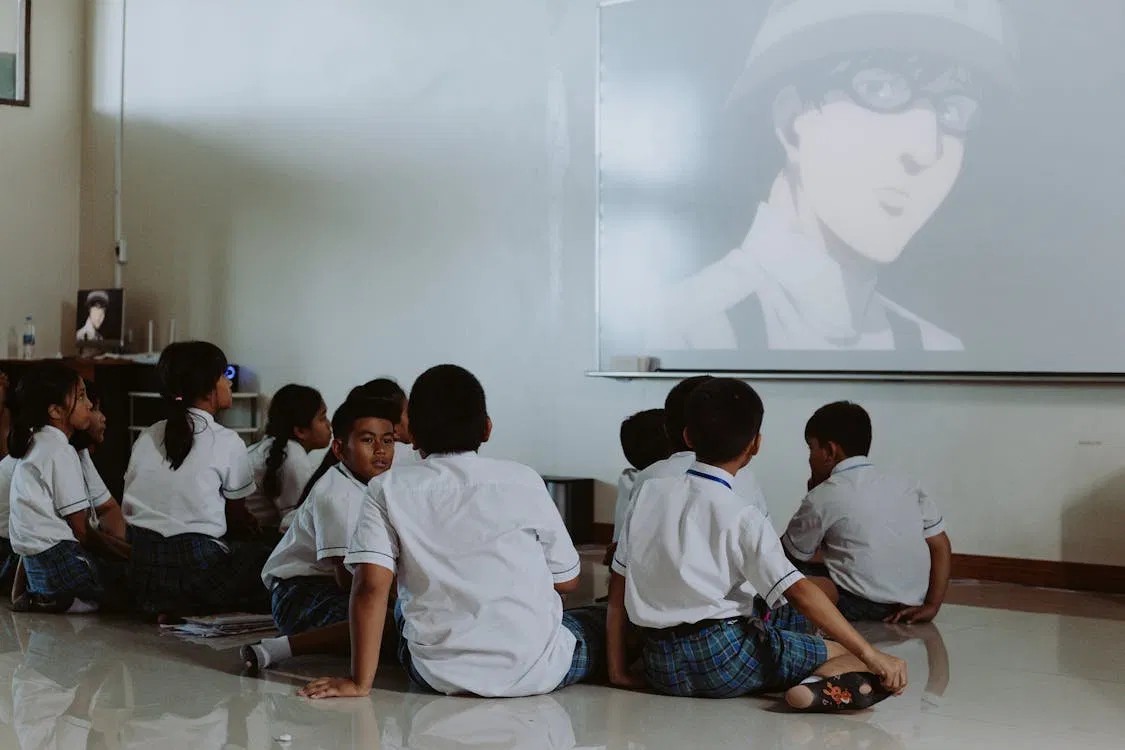
Why Movies Are Particularly Powerful for Language Learners
For students learning English as a second language, the classroom can feel like a high-stakes environment. Speaking in a new language in front of peers carries the risk of embarrassment, confusion, and anxiety. That anxiety has a name in research: the affective filter.
Stephen Krashen's Affective Filter Hypothesis3 is one of the most cited theories in second language acquisition. It proposes that when a student's anxiety is high, their brain effectively blocks the input it receives, reducing their ability to absorb new language. Conversely, when anxiety is low and motivation is high, language acquisition happens more naturally and more effectively.
Movies lower the affective filter. A student who might freeze when asked to speak in class will lean forward and engage when a compelling story is unfolding on screen. The comprehensible visual context makes the language accessible. The emotional investment in characters and plot makes the learning stick. Research by Sajida and Vijaya4 found that subtitled movies specifically reduce anxiety in language learners, creating conditions closer to natural acquisition than almost any other classroom activity.
For emerging bilingual students, a well-chosen movie paired with a structured guide is not a break from learning. The research on affective filters and visual input suggests it creates some of the most favourable conditions for language acquisition available in a mainstream classroom.

Reaching Students Who Are Hardest to Reach
One of the most consistent themes across thousands of reviews left by teachers on my TPT store is how well these guides work with students who have autism, learning difficulties, and mild to severe disabilities. This is not an accident. It reflects something genuine about how movies engage the brain differently from traditional instruction.
Research published in the Journal of Child and Adolescent Behaviour5 found that using movies with high school students who had autism and other social cognition challenges resulted in significantly higher levels of engagement in group discussions, increased use of language referencing characters' thoughts and feelings, and measurable improvements in perspective-taking skills. The researchers described the process as "scaffolded practice reading the minds of movie characters," with benefits that transferred into real-world social interaction.
For students with learning difficulties, the visual and auditory combination of a movie reduces the cognitive load that comes from processing dense text. The story provides structure. The characters provide emotional anchors. The guide provides accountability.
For students with autism, the predictable narrative arc of a movie, with a beginning, middle, and end, provides the kind of structure that supports engagement. Visual engagement strategies using cooperative learning activities have been shown to improve test scores and academic engagement in students with autism, and to increase meaningful interaction between students with autism and their non-disabled classmates.6
What Teachers Say
These are real reviews from teachers who use Mr Hull's Movie Guides with some of the most challenging and diverse student populations in America.
“Kids these days do not know how to just sit and watch a movie, so this helped them stay engaged and on task.”
— 6th/7th grade teacher | Student populations: Autism, Emerging bilinguals, Learning difficulties, Mild to severe disabilities“Used at a juvenile detention center and the kids followed along great. Made them really notice things in the movie they would have usually just skipped over.”
— 10th grade teacher | Student populations: Learning difficulties“I am a high school teacher in a mild to moderate special education setting. My students thoroughly enjoyed this resource, and it proved to be extremely helpful in supporting their learning.”
— 9th grade teacher | Student populations: Autism, Emerging bilinguals, Learning difficulties“They were focused and found the multiple choice questions easy to follow along with the movie. Great resource!”
— 7th grade teacher, used right before Christmas break | Student populations: Autism, Learning difficulties“I have a very diverse group of kids and they all were able to easily understand these.”
— 9th/10th/11th/12th grade teacher | Student populations: Autism, Learning difficulties, Mild to severe disabilities“The materials were well-structured, standards-aligned, and offered a perfect balance of challenging texts and accessible scaffolding. The activities encouraged critical thinking, close reading, and meaningful discussion.”
— 9th grade teacher | Student populations: Learning difficultiesThe Movie and the Guide Work Together
A movie without structure is just a movie. What turns it into a genuine classroom activity is the combination of the viewing experience and the structured work that surrounds it.
The comprehension questions in my guides serve a specific purpose during the movie itself. They give students a reason to pay attention and a frame for what they are watching. For students who struggle with passive learning, having something concrete to respond to while they watch makes the difference between genuine engagement and drifting off.
But something else happens during a well-chosen movie that most teachers do not anticipate. Students relax. They open up. They become emotionally invested in the characters and the world on screen. By the time the movie ends, they are not the same students who walked in at the start of the lesson.
This is not just an observation. It has a scientific explanation.

Psychologist Barbara Fredrickson's Broaden-and-Build Theory7 proposes that positive emotions do more than make people feel good. They literally broaden a person's cognitive scope, making them more open, more creative, and more willing to engage with challenging ideas in the moments that follow. Joy, interest, and emotional investment in a story expand what the brain is ready to do next. Stress and anxiety narrow it.
This same principle is reflected in research on high-performing education systems. Studies from Finland, whose schools are among the most studied in the world, show that students who experience enjoyable, engaging activities return to structured learning with sharper focus, stronger memory retention, and greater willingness to take on challenging tasks.8 The insight is not that learning should be easy, but that a positive experience immediately before structured work makes that work more effective.
A well-chosen movie creates exactly this condition in a classroom. By the time the credits roll, students are in a state of positive engagement. That is precisely the moment the activities in many of my guides are designed to be used.
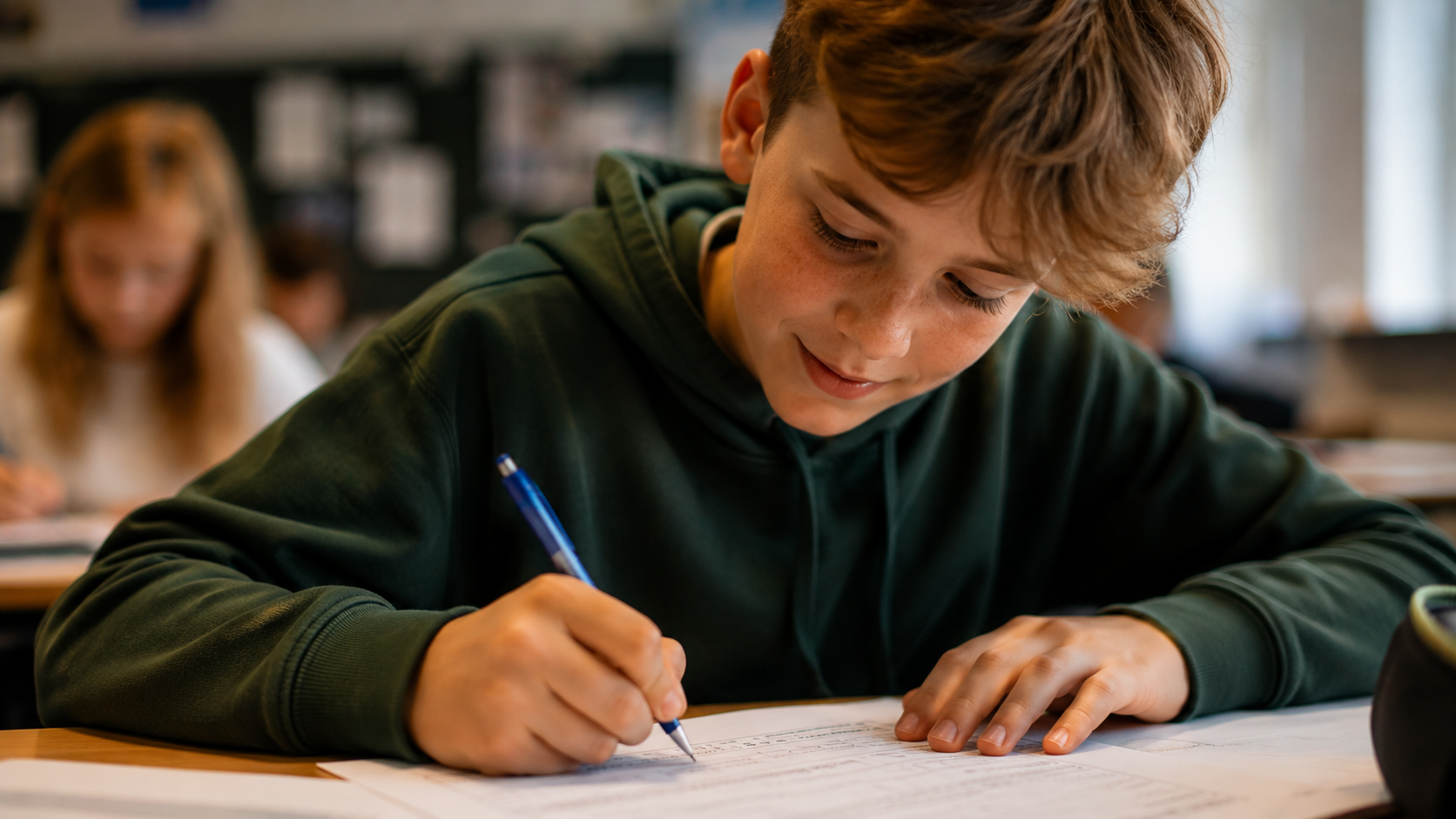
Depending on the guide, those activities may include storyboards, creative writing tasks, character profiles, script writing, creature profiles, synopsis writing, and more. Tasks that might feel like a chore when assigned cold feel like a natural continuation of something students have just enjoyed and been moved by. The resistance that teachers often encounter with written tasks dissolves when the task is connected to an experience students are still emotionally invested in.
This is why teachers consistently report that their most disengaged students, including those with learning difficulties, autism, and mild to severe disabilities, complete these activities with more enthusiasm and investment than they bring to traditional written tasks. The movie lowers the barriers. The guide gives students somewhere meaningful to take the energy that follows.
Find the Right Movie for Your Classroom
Browse the full collection of movie guides on TPT, covering animation, drama, science fiction, historical movies, and more, across every grade level from 1 to 12.
Browse the TPT Store →Every movie guide in the store will have its own blog post. I am working through the full collection — Take a look at what I've already done.
References