By Mr Hull's Movie Guides
Watch the Trailer
Why Watch This Movie With Your Students
Here's what your students naturally take away from the movie, whether through themes, values, ideas, or perspectives.
😰 Anxiety gets a fully realized character arc, not just a warning label. Anxiety takes over convinced she is helping Riley succeed, and the movie takes the time to show why that logic feels convincing before showing what it costs. It treats anxiety as understandable rather than simply bad.
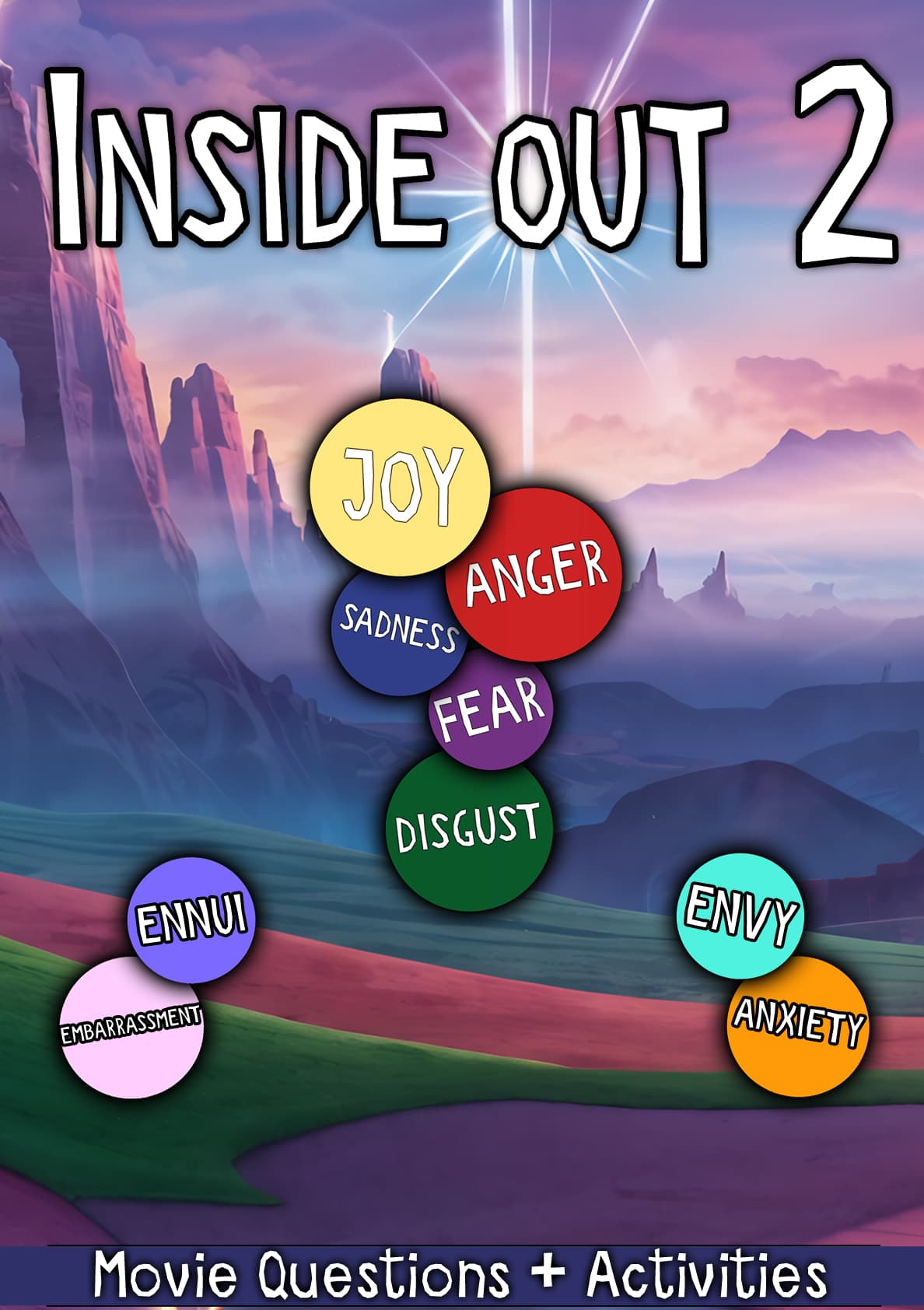
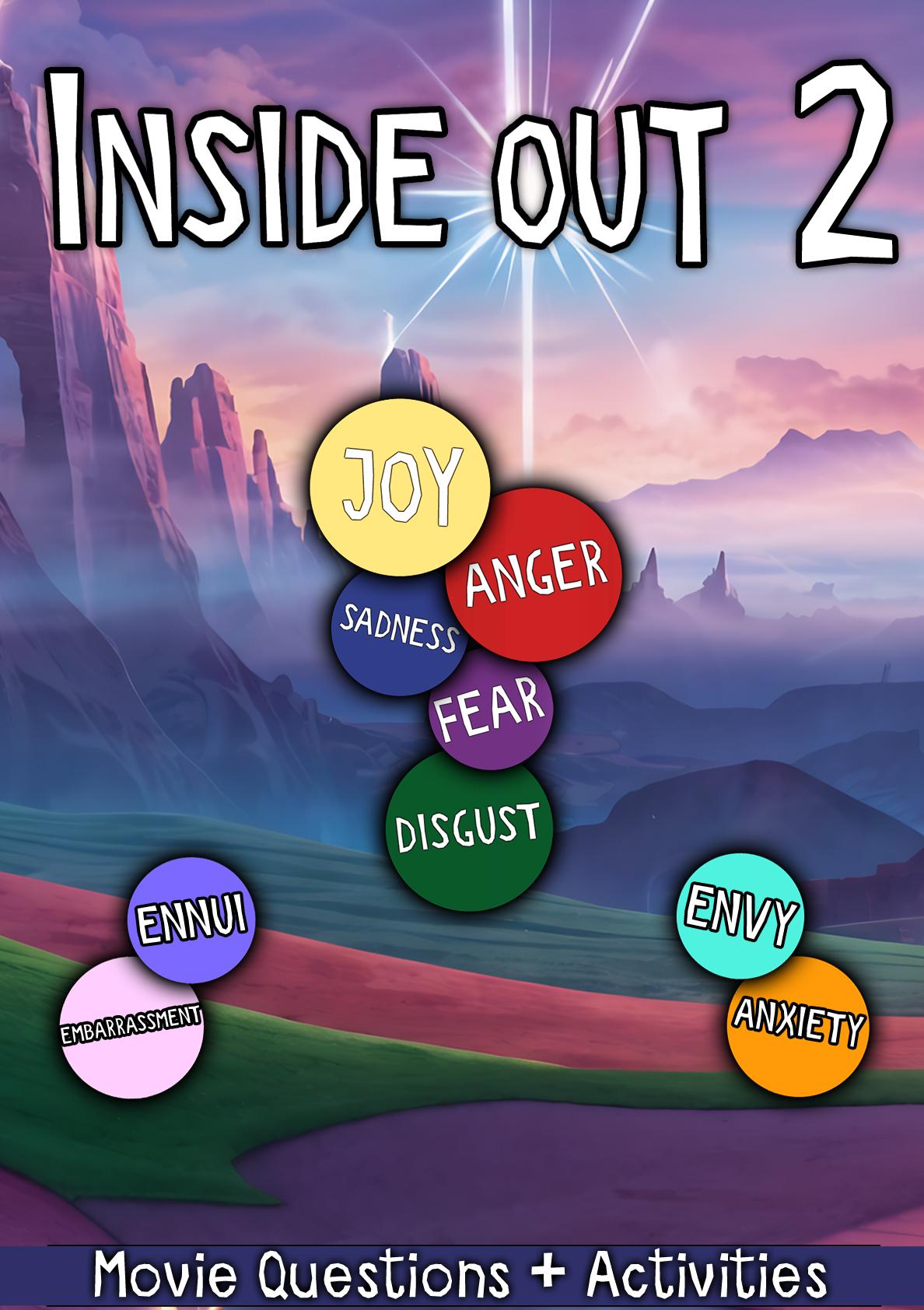
🎢 Four new emotions arrive at once, and each gets a distinct identity. Envy, Embarrassment, and Ennui join Anxiety as fully formed characters with their own motivations rather than being lumped together as vague teenage moodiness. Each one gets a specific role to play in Riley's story, giving students a wider emotional vocabulary than the first movie's five core feelings.
🏒 A hockey tryout becomes the pressure point for the whole story. Riley's drive to make the team and fit in with older players gives every emotion a concrete stake in the outcome. It grounds the movie's internal conflict in a situation students recognize, where a single high pressure moment can make every insecurity feel urgent at once.
🪞 The movie asks what it means to have a stable sense of self. Riley's belief system, built from her core memories, gets challenged directly when Anxiety tries to bury anything that contradicts the version of Riley she thinks will be accepted. The movie treats a sense of self as something built from many, sometimes contradictory, experiences rather than one tidy story.
🤝 Friendship pressure is treated honestly rather than simply resolved. Riley's loyalty to her original friends gets tested against her desire to impress a new group, and the movie does not pretend that tension disappears easily. It gives students a recognizable version of the choice between staying true to old friendships and chasing acceptance from a new one.
Age Suitability and Content
This movie is rated PG.
📋 A free editable parent permission slip is available for this movie. It explains the educational benefits of watching movies in class and includes a space for parental consent. → Download Free Permission Slip on TpT (Free resource)
⚠️ Things to be aware of:
- Brief moments of peril during the story's climax.
- No sexual content, strong language, or substance use.
How My Movie Guide Helps You Teach It
📚 English Language Arts Teachers. Inside Out 2 works well for ELA classes practicing narrative writing, sequencing, and character analysis. The guide's storyboard and synopsis task has students identify and sequence the movie's key scenes before writing about them, and the comprehension questions come in three differentiated sets, including a multiple choice option, to match different reading and writing levels.
🗣️ ESL and ELL Teachers. The movie's visual storytelling and clear emotional stakes make it accessible to English language learners, and the guide's 30-question multiple choice set gives ESL and ELL students a more manageable way to follow the plot without needing to produce full sentence responses.
🎬 Substitute Teachers and Cover Lessons. With the comprehension questions, storyboard and synopsis task, character worksheets, and discussion questions all organized and ready to go, a substitute has everything needed to run the session without any prep. Answer keys are included for the comprehension question sets. A substitute can manage the lesson without having seen the movie.
🏠 Homeschool Parents. Inside Out 2's focus on anxiety, fitting in, and figuring out who you are makes it a natural movie for a parent to watch alongside a tween or young teenager, opening up conversation well beyond the plot itself. The guide's character worksheets, which ask students to connect each new emotion to the original five, give that conversation real structure. The group emotion task is written for five students, so it would need adapting for a single learner, for example by working through each emotion together rather than assigning them out.
💙 SEL Teachers. The movie's personification of anxiety, envy, embarrassment, and boredom gives an SEL class a concrete way to name and discuss emotions that are often hard to talk about directly. The guide's group and individual character worksheets ask students to connect each new emotion to the original five and explain how it could serve a positive purpose, giving structure to a conversation about emotional regulation that goes beyond the movie itself.
🌟 Supporting All Learners Movie guides can be a wonderfully calm fit for students with autism, learning difficulties, and mild to severe disabilities. The structured format gives every student a clear purpose during viewing, easing uncertainty and allowing them to engage at their own pace. If you teach in a special education or learning support setting, you may find this guide a gentle and practical resource. Find out more about why movies work for diverse learners.
What's Inside the Guide
This is a 20-page classroom-ready resource.
Part 1. Comprehension Questions
Three differentiated sets of questions in chronological order, with answer keys included for all three: 50 full sentence questions, a shorter 30 full sentence question set, and a 30 question multiple choice set that also works well for ESL and ELL students.
Part 2. Storyboard and Synopsis
Students sketch a 9 scene storyboard of what they consider the movie's most important moments with a brief description for each, then use that storyboard to write a full synopsis of the movie.
Part 3. Character Worksheets
A group activity for five students, each assigned one of the original five emotions, connecting it to one of the new emotions introduced in the movie. A sixth, individual task asks students to choose one new emotion and write about how it looks, how it connects to the others, a scene where it appears, and a way it could lead to a positive outcome.
Part 4. Discussion Questions
Five pair work discussion questions for students to talk through before a whole class discussion.
“This was an easy resource to use while we watched Inside Out 2 for SEL means. It was also more interactive for a movie worksheet”
— Brie H.
“The movie questions are great, kept me students engaged with the learning as the movie played. This resource also includes some great summary/reflection activities!”
— Breana M.
What Makes This Guide Different
This guide gives teachers three separate comprehension question sets rather than one, so the same lesson can be adjusted for a mixed ability class or a group that needs a lighter multiple choice option without any extra prep. The storyboard and synopsis task moves students past straightforward recall into sequencing and summarizing the story in their own words.
The character worksheets are built specifically around this movie's premise, asking students to connect each new emotion introduced in Inside Out 2 back to the original five from the first movie, then think through how that emotion could serve a positive purpose rather than only a disruptive one.
Mr Hull's Movie Guides has been creating classroom-ready movie resources since 2017. Browse 390+ guides covering movies for every grade level, subject, and occasion at the Mr Hull's Movie Guides TPT Store.