By Mr Hull's Movie Guides
Watch the Trailer

What's Inside the Guide
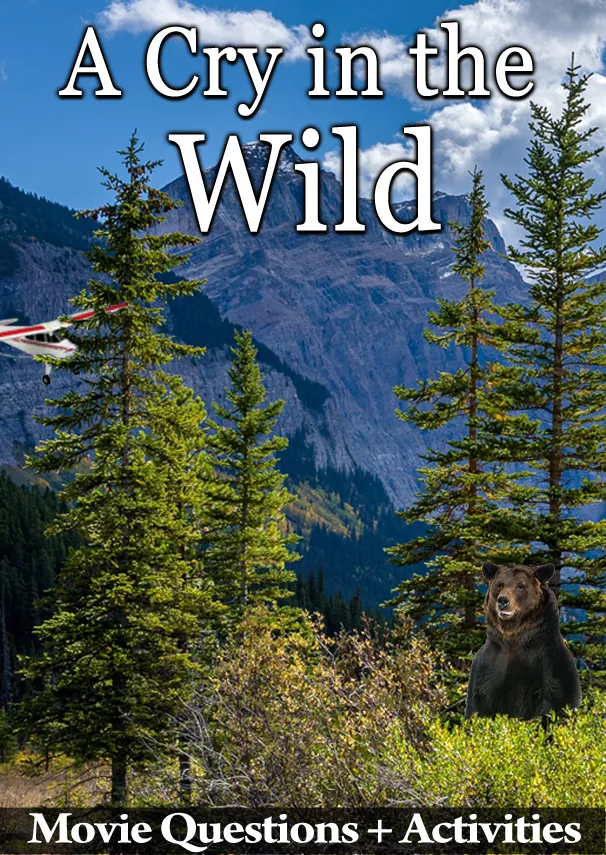
This is a 11-page classroom-ready resource.
Two full sets of comprehension questions in chronological order for differentiation. Answer keys are included for both sets.
- 30 question set requiring full sentence answers.
- 30 multiple choice question set with 3 possible answers. The multiple choice set works well for ESL and ELL students.
This part covers two activities.
- Imagining documenting Brian's experience by drawing an area map of his camp and its important features, explaining why he chose that location, then writing up his thoughts and feelings from the first day and night.
- A newspaper article about Brian using information from the previous task, including a drawing.
- A six scene storyboard of what they consider the most important parts of the movie, with a brief description for each scene.
- A synopsis of the movie, written using the storyboard as a guide.
“Loved using this at the end of our novel unit for Hatchet!”
— Kelly J.
“I am a high school teacher in a mild to moderate special education setting. My students thoroughly enjoyed this resource, and it proved to be extremely helpful in supporting their learning.”
— Nadia R.
Why Watch This Movie With Your Students
Here's what your students naturally take away from the movie, whether through themes, values, ideas, or perspectives.
🪓 Shows survival built through trial and error. Brian's first attempts at finding food fail, including eating berries that make him sick, before he learns to copy what he observes in the natural world around him. Students see resourcefulness develop gradually rather than arriving all at once.
🛠️ Follows one character's resourcefulness under pressure. With only a hatchet, Brian has to build fire, shelter, and tools from scratch in the Yukon wilderness. The movie stays close to his problem solving the entire way through.
💔 Threads in the emotional weight of a family divorce. While Brian is isolated in the wilderness, flashbacks to his parents' separation resurface, giving him something to process beyond physical survival. It adds a layer of emotional realism to a story that could otherwise be pure adventure.
🐻 Puts a real physical threat into the story. Brian is forced into a dangerous confrontation with a bear defending its den, raising the stakes of his isolation. It is a tense sequence that underscores how much danger surrounds him.
📻 Builds toward rescue through Brian's own actions. When a storm lifts the sunken plane back to the surface, Brian retrieves the survival kit and its emergency transmitter, which is what ultimately leads to him being found. His rescue is a direct result of his persistence rather than luck alone.
📖 Adapts a widely read classroom novel. Based on Gary Paulsen's Newbery Award winning book Hatchet, the movie gives students a visual companion to a story many will have already encountered in an ELA unit. It offers a clear opportunity for book to movie comparison.
Age Suitability and Content
This movie is rated PG.
⚠️ Things to be aware of:
- The pilot dies of a heart attack early in the movie, and Brian later encounters the decomposing body while retrieving the survival kit.
- Brian gets into a physical struggle with a bear defending its den.
- A brief scene shows Brian skinny dipping with rear nudity.
- Mild language is used a few times during moments of distress.
- There is no sexual content or substance use in the movie.
📋 A free editable parent permission slip is available for this movie. It explains the educational benefits of watching movies in class and includes a space for parental consent. → Download Free Permission Slip on TpT (Free resource)
Note for educators: Movie details and age ratings in this post are sourced from IMDb, Common Sense Media, and Wikipedia to help ensure accuracy.
How My Movie Guide Helps You Teach It
Click your subject below to see how this guide supports it:
📚 English Language Arts Teachers
🗣️ ESL and ELL Teachers
🔬 Science Teachers
🎬 Substitute Teachers and Cover Lessons
🏠 Homeschool Parents
💙 SEL Teachers
🌍 Geography Teachers
🔭 STEM Teachers
🌟 Supporting All Learners A movie gives students a story to follow, and the guide gives them questions to work through as they watch. For students with autism, learning difficulties, and mild to severe disabilities, that combination provides a clear focus for the lesson and a concrete way to show understanding. The format can be useful in special education and learning support classrooms, where teachers need activities that give students a defined task during viewing. Find out more about why movies work for diverse learners.
How These Guides Work: From Movie to Lesson
Watching a movie is not a break from learning. It reaches students through sight, sound, and story at once, engaging the brain in ways text alone does not, and the structured work around it is what turns the viewing into a genuine lesson. You can read the research behind this on the Why Movies Work page.
- A Teacher Notes and General Directions page opens the guide with a brief overview of everything inside: what the movie is about, then each part of the guide in order with a short description of what it entails. You know what to expect from the whole resource before you hand out a single page, so you can pick up the guide cold and teach it the same day.
- Answer keys are included for the comprehension question sets, so grading is quick and you are not rewatching the movie to check answers. Some guides also include example answers for the creative and written activities.
- Print and go: classroom ready, with no additional preparation needed. Print one the morning you need it and the lesson is ready.
- Substitute and first-timer friendly. A guide can be handed to a substitute or picked up by a teacher covering the topic for the first time. Nobody running the session needs to have seen the movie.
- Differentiated comprehension sets. Most guides include two or three question sets at different difficulty levels, and most include a multiple-choice option that works well for ESL and ELL students. One class set covers your strongest readers, your strugglers, and your language learners without separate prep.
- Activities that go beyond recall. Each guide includes structured activities that ask students to engage with the movie, not just watch it, ranging from creative and written tasks to discussion and critical thinking questions depending on the guide. That variety matters in a mixed classroom: a student who freezes on a written question set may show real understanding through a drawing or a creative task, and a confident writer gets room to go beyond recall. For the teacher, it turns a movie session into work you can grade: comprehension questions show whether students followed the plot, and the activities beyond them show whether they understood it.