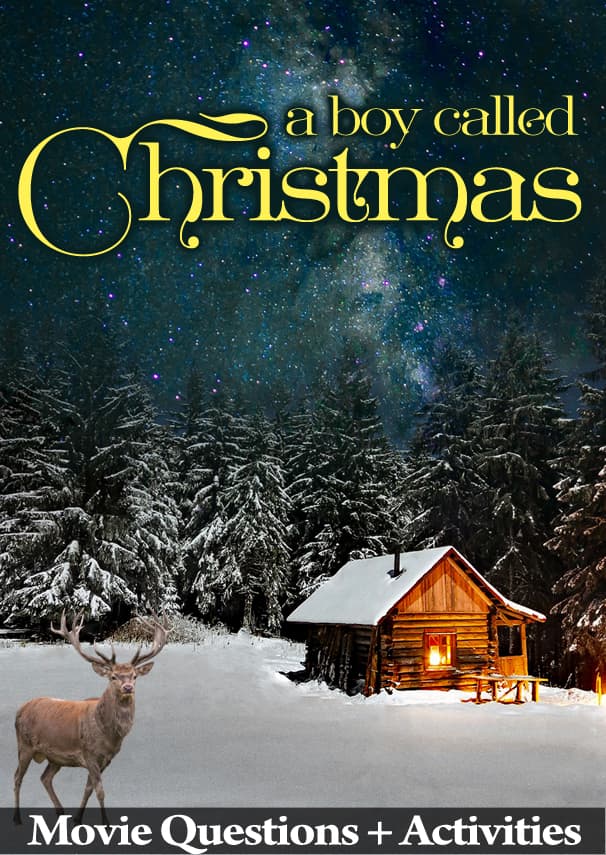
By Mr Hull's Movie Guides

Watch the Trailer

Why Watch This Movie With Your Students
Here's what your students naturally take away from the movie, whether through themes, values, ideas, or perspectives.
🎅 Kurt Russell plays a genuinely different kind of Santa. This Santa is gruff, impatient, and has real personality. He is not the jolly figure of most Christmas movies. Watching Teddy and Kate win him over gives the movie its emotional core, He is a more interesting character to follow than the standard jolly version.
🛷 The stakes are specific and the pace is quick. The problem is clear from early on: no hat, no bag, no reindeer, no Christmas. The movie moves fast to solve it, which keeps the story tightly focused and gives students a lot of plot to track and sequence in their comprehension work.
👨👧👦 It handles grief without making that the whole story. Kate and Teddy are spending their first Christmas without their father, and that loss runs quietly through the whole movie. It is present enough to feel real without overwhelming the adventure, which makes it accessible for students who may have experienced loss themselves.
✍️ The creative writing tasks connect directly to the story's world. Designing an alarm system to catch Santa, writing a diary entry from one of the three main characters' perspectives, and inventing a new toy and gift wrapping for the elves all ask students to step inside the movie's logic and think creatively within it.
🎄 It works well as a low-stress Christmas lesson. The movie is on Netflix, runs under two hours, and tells a complete story with a clear beginning, middle, and end. For teachers looking for a purposeful activity in the days before the Christmas break, it keeps the mood of the season while giving students real comprehension and writing work to do.
Age Suitability and Content
This movie is rated PG.
⚠️ Things to be aware of:
- Violence: Mostly cartoonish mayhem, including a sleigh crash, elf scuffles, a baseball bat threat, and a chainsaw brandished briefly. Characters fall and crash without serious injury.
- Language: 'Hell,' 'damn,' and 'dammit.' A character almost says 's--t.' Occasional mild name-calling.
- Themes: Kate and Teddy are grieving their recently deceased father. Sad scenes related to loss.
- Alcohol: A passing joke about 'Christmas beer' and a background character passed out in a pub.
- Sexual content: A married couple kisses. A jailhouse musical number has mildly suggestive background performers.
- No drug use.
📋 A free editable parent permission slip is available for this movie. It explains the educational benefits of watching movies in class and includes a space for parental consent. → Download Free Permission Slip on TpT (Free resource)
Note for educators: Movie details and age ratings in this post are sourced from IMDb, Common Sense Media, and Wikipedia to help ensure accuracy.
How My Movie Guide Helps You Teach It
📚 English Language Arts Teachers. The Christmas Chronicles suits ELA classes looking for a Christmas activity with genuine writing substance. The guide covers comprehension, narrative diary writing, and creative design tasks, with three differentiated comprehension sets to support mixed-ability classes.
🗣️ ESL and ELL Teachers. The multiple choice comprehension set is designed to work well with ESL and ELL students. The movie's fast-moving plot, clear cause and effect, and visual storytelling make it accessible to students still developing their English fluency.
🎬 Substitute Teachers and Cover Lessons. The guide is print-ready and includes a content page and easy teacher directions. Students work through the comprehension questions while watching and move into the creative writing activities once the movie ends. No preparation or prior knowledge of the movie is needed to run the lesson.
🏠 Homeschool Parents. The Christmas Chronicles is a comfortable home viewing choice across a wide age range, and the three differentiated comprehension sets give families flexibility to match the activity to the child's level. The creative writing tasks in Part 2, including designing an alarm system and inventing a new toy, are open-ended enough to work as standalone projects.
🌟 Supporting All Learners Movie guides can be a wonderfully calm fit for students with autism, learning difficulties, and mild to severe disabilities. The structured format gives every student a clear purpose during viewing, easing uncertainty and allowing them to engage at their own pace. If you teach in a special education or learning support setting, you may find this guide a gentle and practical resource. Find out more about why movies work for diverse learners.
What's Inside the Guide
This is a 12-page classroom-ready resource.
Part 1: Comprehension Questions
Three differentiated sets covering the movie in chronological order. The first has 35 questions requiring full sentence answers. The second is a shorter version with 25 of those questions. The third is 25 multiple choice questions with three options each, designed to work well with ESL and ELL students. Answer keys included for all three sets.
Part 2: Creative Writing
Three creative tasks. First, students design an alarm system to catch Santa, including a visual diagram and written explanation of how it works. Second, students choose one of the three main characters (Santa, Teddy, or Kate) and write a diary entry about their Christmas Eve adventure from that character's perspective. Third, students help Santa and the elves design a new toy and its gift wrapping, describing how the toy works and what the wrapping looks like.
“Great documents for a pre-holiday activity that does not involve prep work. Students really enjoyed it. Simple and effective.”
— Alixe A.
“This not only engaged my kids, but it is what allowed me to get approval to show the movie!”
— Stephanie B.
How These Guides Work: From Movie to Lesson
Watching a movie is not a break from learning. It reaches students through sight, sound, and story at once, engaging the brain in ways text alone does not, and the structured work around it is what turns the viewing into a genuine lesson. You can read the research behind this on the Why Movies Work page.
- A Teacher Notes and General Directions page opens the guide with a brief overview of everything inside: what the movie is about, then each part of the guide in order with a short description of what it entails. You know what to expect from the whole resource before you hand out a single page, so you can pick up the guide cold and teach it the same day.
- Answer keys are included for the comprehension question sets, so grading is quick and you are not rewatching the movie to check answers. Some guides also include example answers for the creative and written activities.
- Print and go: classroom ready, with no additional preparation needed. Print one the morning you need it and the lesson is ready.
- Substitute and first-timer friendly. A guide can be handed to a substitute or picked up by a teacher covering the topic for the first time. Nobody running the session needs to have seen the movie.
- Differentiated comprehension sets. Most guides include two or three question sets at different difficulty levels, and most include a multiple-choice option that works well for ESL and ELL students. One class set covers your strongest readers, your strugglers, and your language learners without separate prep.
- Activities that go beyond recall. Each guide includes structured activities that ask students to engage with the movie, not just watch it, ranging from creative and written tasks to discussion and critical thinking questions depending on the guide. That variety matters in a mixed classroom: a student who freezes on a written question set may show real understanding through a drawing or a creative task, and a confident writer gets room to go beyond recall. For the teacher, it turns a movie session into work you can grade: comprehension questions show whether students followed the plot, and the activities beyond them show whether they understood it.