By Mr Hull's Movie Guides
Watch the Trailer
What's Inside the Guide
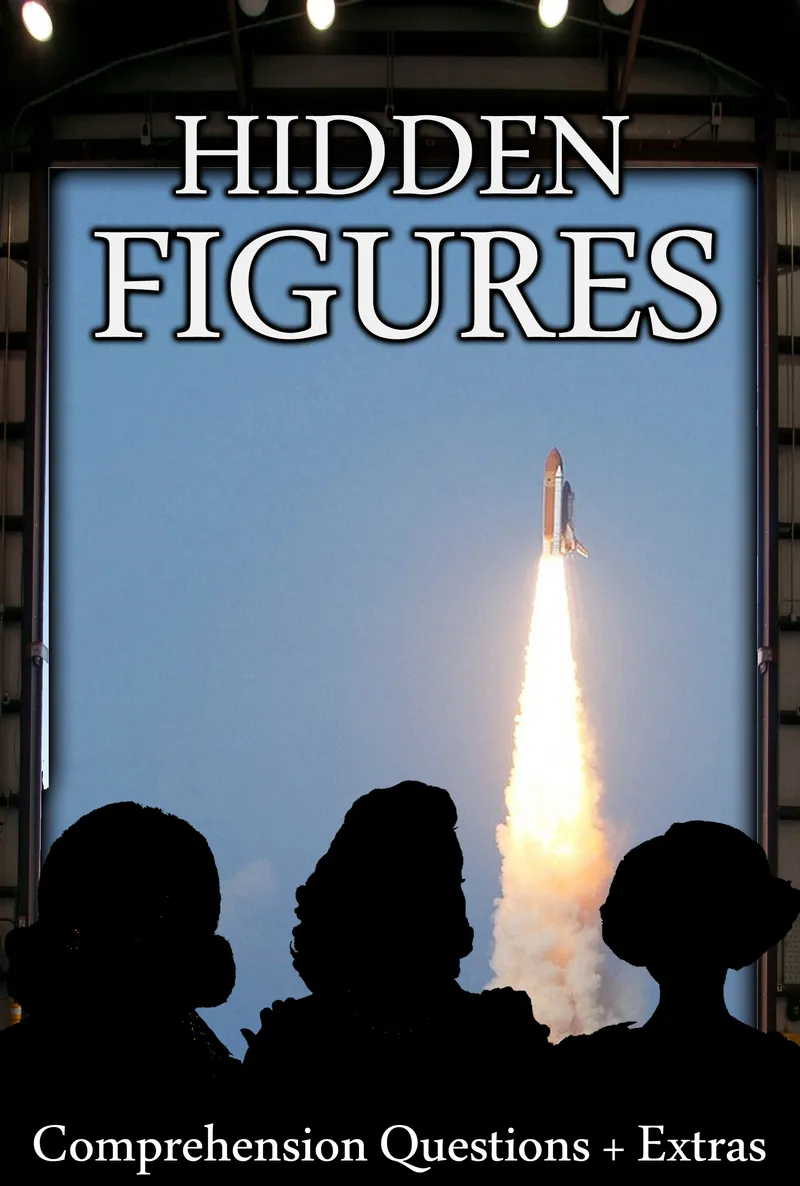
This is a 14-page classroom-ready resource.
Two differentiated sets of questions in chronological order. Answer keys are included for both sets.
- 31 question set requiring full sentence answers.
- 31 multiple choice question set, each with three possible answers, suited to differentiation and ESL students.
- A 9-scene storyboard of what they consider the most important moments in the movie, with a brief description for each scene.
- A synopsis of the movie, written using their storyboard as a guide, in their own words.
Six short answer questions focused on the racial inequality African Americans faced during the Civil Rights era, drawing directly on the events and characters in the movie. These questions are designed to prompt genuine reflection and work well as the basis for class discussion once completed.
A structured essay question asking students to write about how Katherine Johnson, Mary Jackson, and Dorothy Vaughan overcame racial inequality, broke through institutional barriers, and contributed, often without recognition, to the civil rights movement and the American space programme.
“Great addition to my unit on women in science. I adapted questions and certain activities to the purpose of my unit. Relevant complement.”
— Alixe A.
“Very engaging thought-provoking discussion questions. Paired well with the Hidden Figures movie and our virtual visit to the National Civil Rights Museum.”
— Evangelina M.
Why Watch This Movie With Your Students
Here's what your students naturally take away from the movie, whether through themes, values, ideas, or perspectives.
🚀 A true story with genuine stakes. This is not a dramatised version of history that softens the edges. The discrimination Katherine, Dorothy, and Mary faced was real, systemic, and daily. Showing students a story where the personal and the historical are this tightly woven makes the Civil Rights era feel immediate rather than distant.
🧮 Maths as a superpower. Katherine Johnson's work is central to the plot, and the movie treats her mathematical ability with genuine respect. Students who struggle to see why maths matters watch a woman use it to put a man in orbit and earn the trust of an entire space programme.
✊ Three fully drawn protagonists. Katherine, Dorothy, and Mary each have their own arc, their own obstacles, and their own victories. Students see three different ways of responding to injustice, from Katherine's quiet precision to Mary's determination to argue her case in court, which gives the movie real emotional range.
🤝 Friendship at the centre of the story. The relationship between the three women is the emotional core of the movie. Their loyalty to each other, and the way they celebrate one another's wins as their own, gives students a model of solidarity that resonates well beyond the 1960s setting.
💬 It opens up difficult conversations naturally. The movie depicts segregation, institutional racism, and gender discrimination without sensationalising any of it. Because the tone stays grounded and the characters remain dignified throughout, students can engage with hard topics without being overwhelmed by them.
Age Suitability and Content
This movie is rated PG.
⚠️ Things to be aware of:
- Mild language throughout, including 'damn', 'hell', 'bastard', and 'Jesus Christ' used as an exclamation. The word 'Negro' and 'colored' are used in their historical context, including on signs for segregated bathrooms and facilities.
- Racial discrimination is depicted throughout, including segregated workplaces, libraries, schools, and bathrooms. These scenes are portrayed honestly but without graphic violence.
- Arguments and raised voices in a small number of scenes. No physical violence.
- One scene in which adults drink alcohol and make a joking reference to getting a little tipsy.
- Mild romance: a few kisses, some slow dancing, and light flirtatious dialogue. Nothing sexual.
- No drug use. No sexual content beyond the above.
📋 A free editable parent permission slip is available for this movie. It explains the educational benefits of watching movies in class and includes a space for parental consent. → Download Free Permission Slip on TpT (Free resource)
Note for educators: Movie details and age ratings in this post are sourced from IMDb, Common Sense Media, and Wikipedia to help ensure accuracy.
How My Movie Guide Helps You Teach It
Click your subject below to see how this guide supports it:
📚 English Language Arts Teachers
🗣️ ESL and ELL Teachers
🔬 Science Teachers
🌐 Social Studies Teachers
🎬 Substitute Teachers and Cover Lessons
🏠 Homeschool Parents
🔭 STEM Teachers
🌟 Supporting All Learners A movie gives students a story to follow, and the guide gives them questions to work through as they watch. For students with autism, learning difficulties, and mild to severe disabilities, that combination provides a clear focus for the lesson and a concrete way to show understanding. The format can be useful in special education and learning support classrooms, where teachers need activities that give students a defined task during viewing. Find out more about why movies work for diverse learners.
Science teachers should note that this guide is not a science curriculum resource. It works well for accountability during the movie and as a cross-curricular activity, but it does not cover scientific concepts or terminology in any depth.
How These Guides Work: From Movie to Lesson
Watching a movie is not a break from learning. It reaches students through sight, sound, and story at once, engaging the brain in ways text alone does not, and the structured work around it is what turns the viewing into a genuine lesson. You can read the research behind this on the Why Movies Work page.
- A Teacher Notes and General Directions page opens the guide with a brief overview of everything inside: what the movie is about, then each part of the guide in order with a short description of what it entails. You know what to expect from the whole resource before you hand out a single page, so you can pick up the guide cold and teach it the same day.
- Answer keys are included for the comprehension question sets, so grading is quick and you are not rewatching the movie to check answers. Some guides also include example answers for the creative and written activities.
- Print and go: classroom ready, with no additional preparation needed. Print one the morning you need it and the lesson is ready.
- Substitute and first-timer friendly. A guide can be handed to a substitute or picked up by a teacher covering the topic for the first time. Nobody running the session needs to have seen the movie.
- Differentiated comprehension sets. Most guides include two or three question sets at different difficulty levels, and most include a multiple-choice option that works well for ESL and ELL students. One class set covers your strongest readers, your strugglers, and your language learners without separate prep.
- Activities that go beyond recall. Each guide includes structured activities that ask students to engage with the movie, not just watch it, ranging from creative and written tasks to discussion and critical thinking questions depending on the guide. That variety matters in a mixed classroom: a student who freezes on a written question set may show real understanding through a drawing or a creative task, and a confident writer gets room to go beyond recall. For the teacher, it turns a movie session into work you can grade: comprehension questions show whether students followed the plot, and the activities beyond them show whether they understood it.