By Mr Hull's Movie Guides
Watch the Trailer
What's Inside the Guide
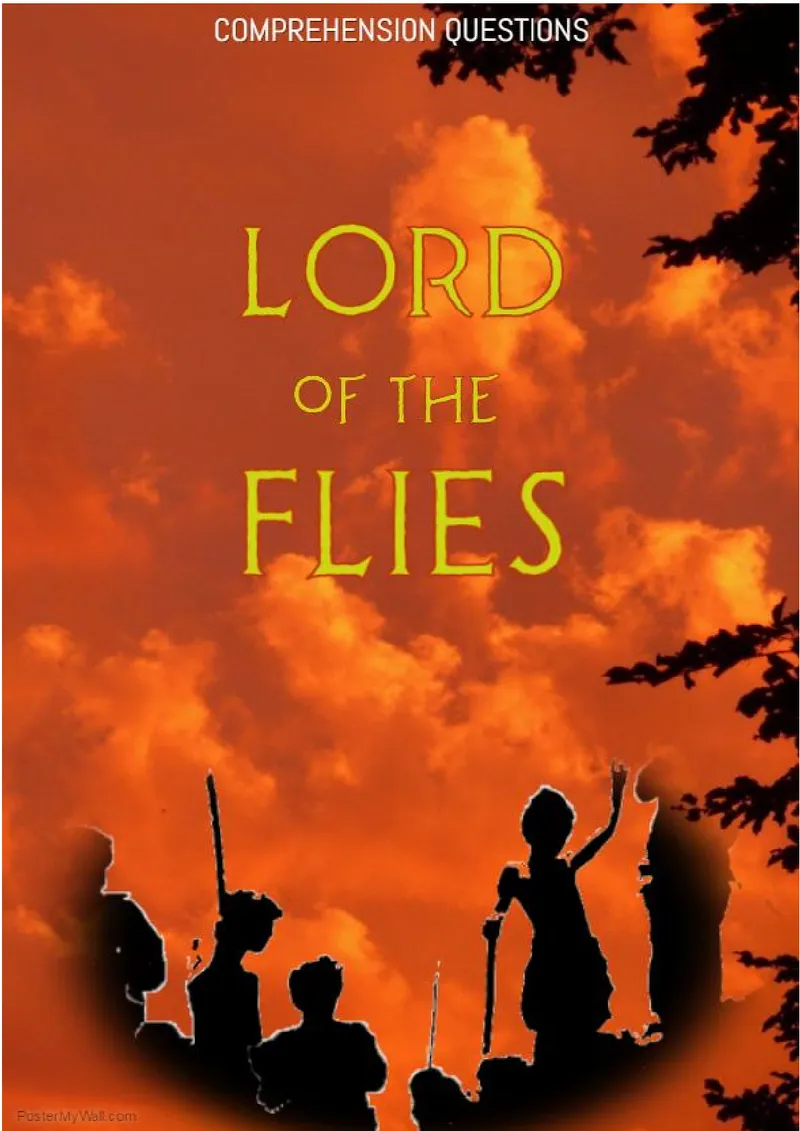
This is a 7-page classroom-ready resource.
23 comprehension questions in chronological order, requiring students to track the key events, characters, and turning points of the movie. Answer key included.
3 short answer questions that move students from comprehension into analysis, asking them to think about the movie's themes and the choices the characters make. Example answers included, with a note that some answers may vary.
A creative group or individual task in which students imagine they have been stranded on a deserted island with three friends. They must produce:
- A map of the island.
- A design for their camp.
- A detailed daily chores list.
- A survival and rescue guide.
“A good resource to use to end the novel unit. The students enjoy viewing the movie.”
— Alice K.
“Very engaging and helpful to keep the students focused on our end-of-unit movie. Thank you!”
— Kimberly H.
Why Watch This Movie With Your Students
Here's what your students naturally take away from the movie, whether through themes, values, ideas, or perspectives.
🏝️ A thought experiment students cannot easily dismiss. The premise is simple enough that students engage with it immediately: what would you do? But the movie complicates that question as it goes. By the end, the easy answers have been taken away, and the uncomfortable ones remain.
⚖️ Power and leadership examined through action, not lecture. Ralph and Jack represent two very different ideas about how a group should be led. Students watch those ideas compete in real time, which makes the abstract themes of authority, democracy, and mob behaviour concrete and discussable.
📖 A strong companion to the novel. The 1990 version makes deliberate changes from Golding's original, which gives students something to analyse rather than simply re-watch. The differences between book and movie are worth examining in their own right.
🧠 It asks students to think about their own behaviour. The scenario is close enough to real life that students cannot watch it from a comfortable distance. When the group turns on individuals, or silences dissent, students recognise those patterns. That recognition is what makes the story genuinely unsettling.
👥 The collapse of order happens gradually, not all at once. One of the most instructive things about the movie is how incremental the descent is. Students can trace the exact moments when decisions go wrong, which makes it a useful text for thinking about how groups lose their way and what it takes to hold a community together.
🎭 Symbolism students can see. The conch, the fire, the painted faces: the movie makes Golding's symbolism visible in a way that helps students who found it abstract on the page. Watching the symbols play out on screen gives them a concrete reference point for the novel's themes.
Age Suitability and Content
This movie is rated 15.
⚠️ Things to be aware of:
- Significant violence throughout, including boys fighting, stabbing, and killing each other with spears, rocks, and knives. Characters are murdered on screen. Scenes include visible blood, wounds, and dead bodies.
- Animal violence shown on screen: the boys hunt and kill boars and other animals. One scene shows a boar's head being cut off with a knife and placed on a stake.
- Strong language throughout, including multiple uses of 'f--k' and its variations, 's--t', 'd--k', 'bulls--t', 'goddamn', and other profanity.
- Bullying is depicted, including sustained targeting of a character nicknamed 'Piggy'. One child has a visual impairment and is treated cruelly by the group.
- Boys are frequently shirtless and shown in underwear. Brief sexual references in dialogue, including a comment about a character's genitals. Nothing explicit.
- No alcohol, drugs, or smoking. No sexual content beyond the above.
📋 A free editable parent permission slip is available for this movie. It explains the educational benefits of watching movies in class and includes a space for parental consent. → Download Free Permission Slip on TpT (Free resource)
Note for educators: Movie details and age ratings in this post are sourced from IMDb, Common Sense Media, and Wikipedia to help ensure accuracy.
How My Movie Guide Helps You Teach It
Click your subject below to see how this guide supports it:
📚 English Language Arts Teachers
🌐 Social Studies Teachers
🎬 Substitute Teachers and Cover Lessons
🏠 Homeschool Parents
🌟 Supporting All Learners A movie gives students a story to follow, and the guide gives them questions to work through as they watch. For students with autism, learning difficulties, and mild to severe disabilities, that combination provides a clear focus for the lesson and a concrete way to show understanding. The format can be useful in special education and learning support classrooms, where teachers need activities that give students a defined task during viewing. Find out more about why movies work for diverse learners.
This guide is not a Social Studies curriculum resource. It works well for accountability during the movie and as a companion to a unit on power, governance, or society, but it does not cover civics or political theory content directly.
How These Guides Work: From Movie to Lesson
Watching a movie is not a break from learning. It reaches students through sight, sound, and story at once, engaging the brain in ways text alone does not, and the structured work around it is what turns the viewing into a genuine lesson. You can read the research behind this on the Why Movies Work page.
- A Teacher Notes and General Directions page opens the guide with a brief overview of everything inside: what the movie is about, then each part of the guide in order with a short description of what it entails. You know what to expect from the whole resource before you hand out a single page, so you can pick up the guide cold and teach it the same day.
- Answer keys are included for the comprehension question sets, so grading is quick and you are not rewatching the movie to check answers. Some guides also include example answers for the creative and written activities.
- Print and go: classroom ready, with no additional preparation needed. Print one the morning you need it and the lesson is ready.
- Substitute and first-timer friendly. A guide can be handed to a substitute or picked up by a teacher covering the topic for the first time. Nobody running the session needs to have seen the movie.
- Differentiated comprehension sets. Most guides include two or three question sets at different difficulty levels, and most include a multiple-choice option that works well for ESL and ELL students. One class set covers your strongest readers, your strugglers, and your language learners without separate prep.
- Activities that go beyond recall. Each guide includes structured activities that ask students to engage with the movie, not just watch it, ranging from creative and written tasks to discussion and critical thinking questions depending on the guide. That variety matters in a mixed classroom: a student who freezes on a written question set may show real understanding through a drawing or a creative task, and a confident writer gets room to go beyond recall. For the teacher, it turns a movie session into work you can grade: comprehension questions show whether students followed the plot, and the activities beyond them show whether they understood it.