By Mr Hull's Movie Guides
Watch the Trailer

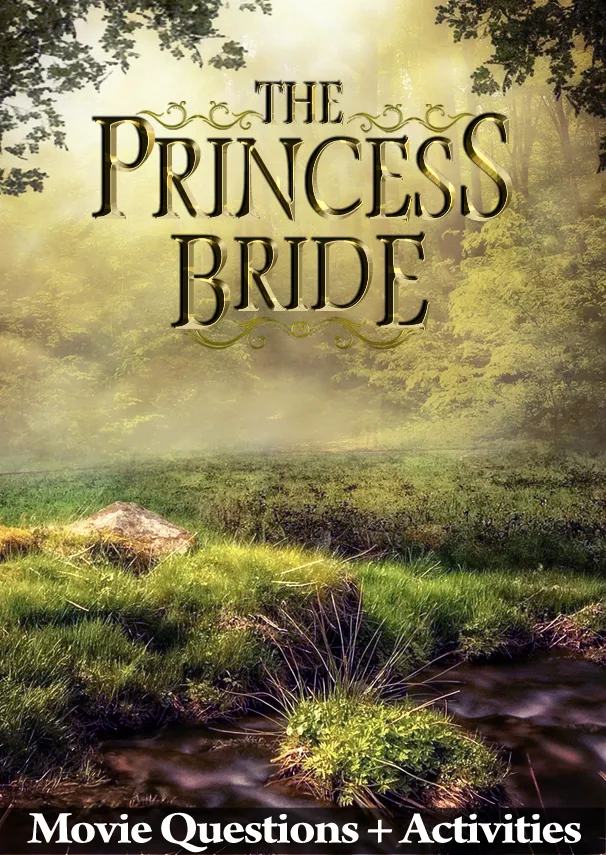
What's Inside the Guide
This is a 14-page classroom-ready resource.
Two differentiated sets of 30 questions each, written in chronological order. Answer keys are included for both sets.
- Full sentence answer question set.
- Multiple choice question set with three options per question.
- A 9-scene storyboard where students illustrate and summarise key events in order.
- A structured synopsis of the movie, written using their completed storyboard.
This part covers four activities.
- Strategy plans written from the perspectives of Inigo, Fezzik, and Vizzini as they face the masked man.
- A warning sign for the Fire Swamp based on specific details from the movie.
- A diary entry as either Westley aboard the ship of the Dread Pirate Roberts or Buttercup during her engagement to Prince Humperdinck.
- Miracle Max's recipe for a mostly dead patient, with students adding ingredients, equipment, and method.
“This resource has a great way to assess student learning on "an as you go" method. The timing and breaks for discussion was fantastic!”
— Georgia N.
“This was a great resource to turn out for a quick film study for my grade 8 students. We ended our melodrama unit with The Princess Bride and I used it as an introduction to some narrative writing!”
— Maura L.
Why Watch This Movie With Your Students
Here's what your students naturally take away from the movie, whether through themes, values, ideas, or perspectives.
⚔️ A fast-moving story with genuinely memorable characters. The Princess Bride packs sword fights, a giant, an evil genius, and a revenge-driven swordsman into a 98-minute fairy tale. The characters are distinct enough that students can keep track of them and care about what happens to them.
✍️ Vivid, specific details that support creative writing. The Fire Swamp, the Cliffs of Insanity, and Miracle Max's workshop are described in enough detail that students have real material to write from. The movie gives specific names, rules, and consequences that students can use in their work.
📖 A story-within-a-story structure worth examining. The grandfather-grandson framing device gives teachers a clear entry point for discussing narrative perspective and how the way a story is told shapes how an audience receives it. It is an unusual structure that students notice and can talk about.
🤝 Themes that go beyond the fairy tale surface. Loyalty, integrity, courage, and the cost of living for revenge all run through the story. Characters face genuine choices and pay real consequences, which gives students something worth examining beyond the plot.
😂 Humour that works across age groups. The comedy in The Princess Bride is written into the script rather than relying on slapstick or references that date quickly. Students in Years 7 through 12 tend to find different things funny in it, which keeps the viewing session from feeling like a chore.
🎭 A book adaptation with a faithful screenplay. William Goldman wrote both the original novel and the screenplay, which makes it a useful text for exploring how stories move from page to screen. The core story, characters, and dialogue are closely aligned across both versions.
Age Suitability and Content
This movie is rated PG.
⚠️ Things to be aware of:
- Violence: sword fights including one to the death with blood shown, a torture machine used on a character who screams and convulses and is presumed dead, creature attacks including a rodent that bites a character's shoulder, a death by poisoning, and a character stabbed with blood visible through clothing. The comedic and fairy tale tone softens much of the impact.
- Language: 'son of a bitch' is said once, along with mild insults and name-calling throughout.
- Alcohol: a character is shown drunk in one scene, with references to his history of heavy drinking.
- A character briefly holds a knife to her chest in a reference to taking her own life. The moment is not dwelt on.
- No sexual content beyond a few kisses and one passing verbal reference to a character's appearance. No drug use.
📋 A free editable parent permission slip is available for this movie. It explains the educational benefits of watching movies in class and includes a space for parental consent. → Download Free Permission Slip on TpT (Free resource)
Note for educators: Movie details and age ratings in this post are sourced from IMDb, Common Sense Media, and Wikipedia to help ensure accuracy.
How My Movie Guide Helps You Teach It
Click your subject below to see how this guide supports it:
📚 English Language Arts Teachers
🗣️ ESL and ELL Teachers
🎬 Substitute Teachers and Cover Lessons
🏠 Homeschool Parents
🎭 Theater Teachers
💙 SEL Teachers
🌟 Supporting All Learners A movie gives students a story to follow, and the guide gives them questions to work through as they watch. For students with autism, learning difficulties, and mild to severe disabilities, that combination provides a clear focus for the lesson and a concrete way to show understanding. The format can be useful in special education and learning support classrooms, where teachers need activities that give students a defined task during viewing. Find out more about why movies work for diverse learners.
How These Guides Work: From Movie to Lesson
Watching a movie is not a break from learning. It reaches students through sight, sound, and story at once, engaging the brain in ways text alone does not, and the structured work around it is what turns the viewing into a genuine lesson. You can read the research behind this on the Why Movies Work page.
- A Teacher Notes and General Directions page opens the guide with a brief overview of everything inside: what the movie is about, then each part of the guide in order with a short description of what it entails. You know what to expect from the whole resource before you hand out a single page, so you can pick up the guide cold and teach it the same day.
- Answer keys are included for the comprehension question sets, so grading is quick and you are not rewatching the movie to check answers. Some guides also include example answers for the creative and written activities.
- Print and go: classroom ready, with no additional preparation needed. Print one the morning you need it and the lesson is ready.
- Substitute and first-timer friendly. A guide can be handed to a substitute or picked up by a teacher covering the topic for the first time. Nobody running the session needs to have seen the movie.
- Differentiated comprehension sets. Most guides include two or three question sets at different difficulty levels, and most include a multiple-choice option that works well for ESL and ELL students. One class set covers your strongest readers, your strugglers, and your language learners without separate prep.
- Activities that go beyond recall. Each guide includes structured activities that ask students to engage with the movie, not just watch it, ranging from creative and written tasks to discussion and critical thinking questions depending on the guide. That variety matters in a mixed classroom: a student who freezes on a written question set may show real understanding through a drawing or a creative task, and a confident writer gets room to go beyond recall. For the teacher, it turns a movie session into work you can grade: comprehension questions show whether students followed the plot, and the activities beyond them show whether they understood it.