By Mr Hull's Movie Guides

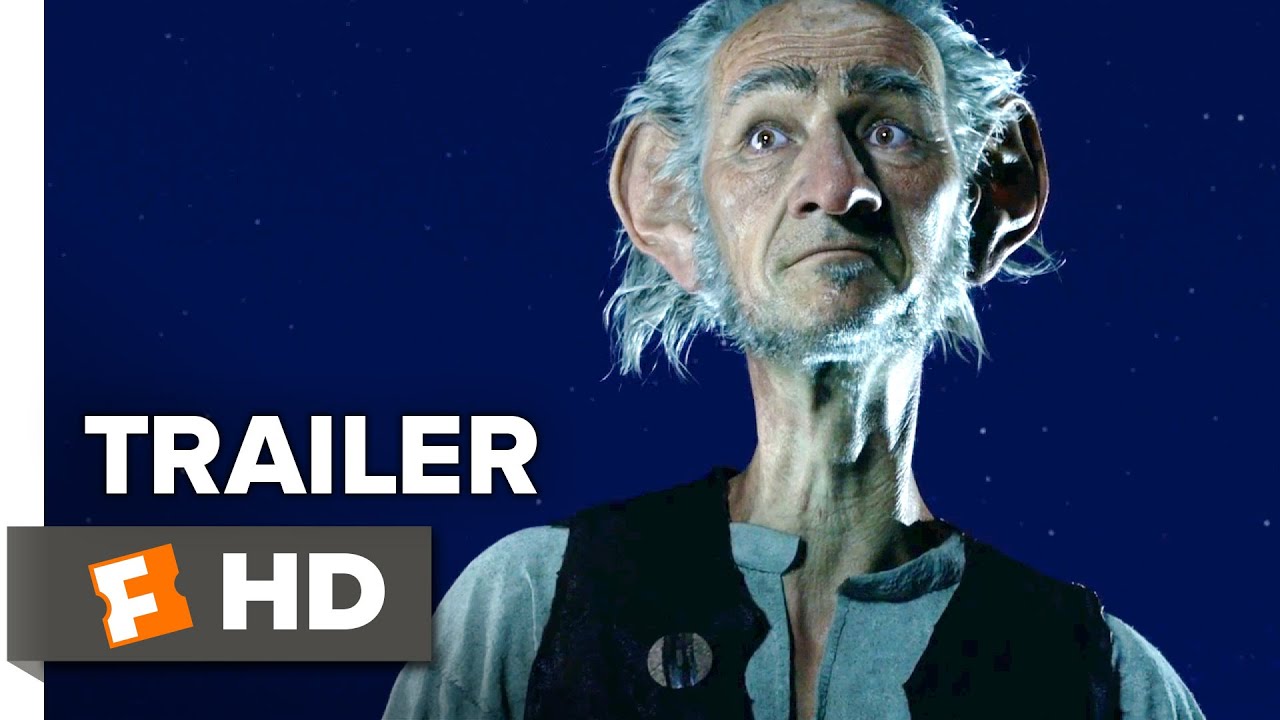
Watch the Trailer
Why Watch This Movie With Your Students
Here's what your students naturally take away from the movie, whether through themes, values, ideas, or perspectives.
🫙 The BFG catches dreams in jars and delivers them while children sleep. Dream Country is one of the most visually distinctive settings in the movie, and the dream-catching sequences give the story a logic of its own. The BFG understands dreams the way a craftsman understands materials, which makes his character more interesting than a generic gentle giant.
🗣️ The BFG speaks in Dahl's invented 'gobblefunk' language throughout. Words are inverted, mixed up, and recombined in ways that are deliberately funny and surprisingly consistent. 'Human beans,' 'whizzpopping,' 'scrumdiddlyumptious', the language is one of the most memorable things about both the book and the movie, and gives ELA classes something specific to work with about how words convey character.
👧 Sophie is not a passive character. She is frightened at the start and adjusts quickly. She pushes the BFG when he needs pushing, comes up with the plan to involve the Queen, and holds her own in a world where everything is scaled to make her insignificant. Her determination is what moves the story forward in the second half.
🤝 The friendship works because both characters need each other. The BFG is isolated and bullied. Sophie has no one who would notice she was gone. Their bond isn't sentimental; it's practical at first and genuine by the end. That arc from mutual need to real friendship is something students at this grade level can recognize and write about clearly.
👑 The Queen of England scene is a set piece worth analyzing. The BFG and Sophie's audience with the Queen is the movie's comic high point. The contrast between the BFG's scale and manner and the formal world of Buckingham Palace produces some of the best humor in the movie, and the scene turns on whether the Queen will believe what she is being told.
📖 The movie works as both a standalone viewing and a novel companion. Spielberg's adaptation is faithful enough that classes who have read the Dahl novel will recognize the story beat for beat. For teachers using the novel as a read-aloud or class text, the movie gives students a second version of the same story to compare and discuss.
Age Suitability and Content
This movie is rated PG.
⚠️ Things to be aware of:
- The other giants are human-eaters, and the movie makes clear that children have been eaten before, though nothing is shown.
- The BFG is bullied and physically harmed by the larger giants.
- Flatulence humor appears throughout and is played for laughs.
- No language, no sexual content.
📋 A free editable parent permission slip is available for this movie. It explains the educational benefits of watching movies in class and includes a space for parental consent. → Download Free Permission Slip on TpT (Free resource)
Note for educators: Movie details and age ratings in this post are sourced from IMDb, Common Sense Media, and Wikipedia to help ensure accuracy.
How My Movie Guide Helps You Teach It
📚 English Language Arts Teachers. The BFG is a strong ELA choice for classes reading Roald Dahl, studying fantasy as a genre, or working on character analysis and book-to-screen comparison. The invented gobblefunk language gives classes something specific to discuss about voice and word choice, and the friendship arc between Sophie and the BFG is clear enough for students at this grade level to trace and analyze in writing. The guide covers a range of writing tasks, from comprehension through to creative and descriptive work, with differentiated question sets for mixed-ability classes.
🗣️ ESL and ELL Teachers. The guide is tagged for ESL and ELL students. The drawing-based tasks in Parts 2 and 3 are accessible regardless of English proficiency, and the character writing activity has clear, structured prompts that scaffold the writing without removing the challenge. The movie's strong visual storytelling also supports comprehension for students still building their English vocabulary.
🎬 Substitute Teachers and Cover Lessons. The guide is self-contained and requires no setup from the class teacher. The two differentiated question sets cover a range of ability levels, and the creative and character tasks in Parts 2 and 3 give students structured independent work to continue after the viewing. Elizabeth B. specifically noted using it as emergency sub plans.
🏠 Homeschool Parents. The BFG works well for home learners across the upper elementary range. The differentiated question sets give families flexibility to match the activity to the learner's level, and the dream-making and character tasks in Parts 2 and 3 make engaging standalone projects that connect naturally to the Roald Dahl source novel.
🌟 Supporting All Learners Movie guides can be a wonderfully calm fit for students with autism, learning difficulties, and mild to severe disabilities. The structured format gives every student a clear purpose during viewing, easing uncertainty and allowing them to engage at their own pace. If you teach in a special education or learning support setting, you may find this guide a gentle and practical resource. Find out more about why movies work for diverse learners.
What's Inside the Guide
This is a 14-page classroom-ready resource.
Part 1: Comprehension Questions
Two differentiated question sets covering the movie in chronological order, both with answer keys included. Students can complete 45 full sentence answer questions or 25 full sentence answer questions, with 20 questions removed from the longer set for the shorter version.
Part 2: Creativity
Two creative tasks. In the first, students draw a dream inside a bottle and write who it is for and what it is about. In the second, students write and illustrate a plan for the Queen explaining how to capture the man-eating giants, including drawings to support their plan.
Part 3: Characters
Students draw and write about three characters: the BFG, Sophie, and Fleshlumpeater. For each character they describe what the character looks like, write about their personality, and note something interesting about their behavior, motivation, and what they like to do. Can be completed individually or assigned one character per student in a group of three.
Part 4: Word Search
A 20-word search based on vocabulary from the movie, with questions to answer for some of the words.
“Great activities to accompany the movie and book! My students were fully engaged in the movie, but they still managed to answer questions as they watched. Thanks!”
— Jennifer M.
“Great resource! I left this as part of some emergency sub plans and it was a great set of activities!”
— Elizabeth B.
How These Guides Work: From Movie to Lesson
Watching a movie is not a break from learning. It reaches students through sight, sound, and story at once, engaging the brain in ways text alone does not, and the structured work around it is what turns the viewing into a genuine lesson. You can read the research behind this on the Why Movies Work page.
- A Teacher Notes and General Directions page opens the guide with a brief overview of everything inside: what the movie is about, then each part of the guide in order with a short description of what it entails. You know what to expect from the whole resource before you hand out a single page, so you can pick up the guide cold and teach it the same day.
- Answer keys are included for the comprehension question sets, so grading is quick and you are not rewatching the movie to check answers. Some guides also include example answers for the creative and written activities.
- Print and go: classroom ready, with no additional preparation needed. Print one the morning you need it and the lesson is ready.
- Substitute and first-timer friendly. A guide can be handed to a substitute or picked up by a teacher covering the topic for the first time. Nobody running the session needs to have seen the movie.
- Differentiated comprehension sets. Most guides include two or three question sets at different difficulty levels, and most include a multiple-choice option that works well for ESL and ELL students. One class set covers your strongest readers, your strugglers, and your language learners without separate prep.
- Activities that go beyond recall. Each guide includes structured activities that ask students to engage with the movie, not just watch it, ranging from creative and written tasks to discussion and critical thinking questions depending on the guide. That variety matters in a mixed classroom: a student who freezes on a written question set may show real understanding through a drawing or a creative task, and a confident writer gets room to go beyond recall. For the teacher, it turns a movie session into work you can grade: comprehension questions show whether students followed the plot, and the activities beyond them show whether they understood it.