By Mr Hull's Movie Guides

Watch the Trailer
Why Watch This Movie With Your Students
Here's what your students naturally take away from the movie, whether through themes, values, ideas, or perspectives.
🤫 Entirely wordless storytelling. The Snowman tells its story without a single line of dialogue or narration. Students follow the plot entirely through animation and music, which makes it a genuine exercise in reading visual information rather than passive watching.
📖 Faithful adaptation of a classic picture book. Raymond Briggs' 1978 picture book and the 1982 animation share the same wordless approach, making this a strong pairing for book-to-screen comparison. The movie extends the story slightly, adding Santa Claus and the North Pole party, which gives students something to analyze about adaptation choices.
🎼 A score that carries the emotional weight. Howard Blake's orchestral soundtrack, including the well-known 'Walking in the Air,' does the narrative work that dialogue would normally handle. The relationship between music and mood is clear enough that even younger students can discuss how the score signals what characters are feeling.
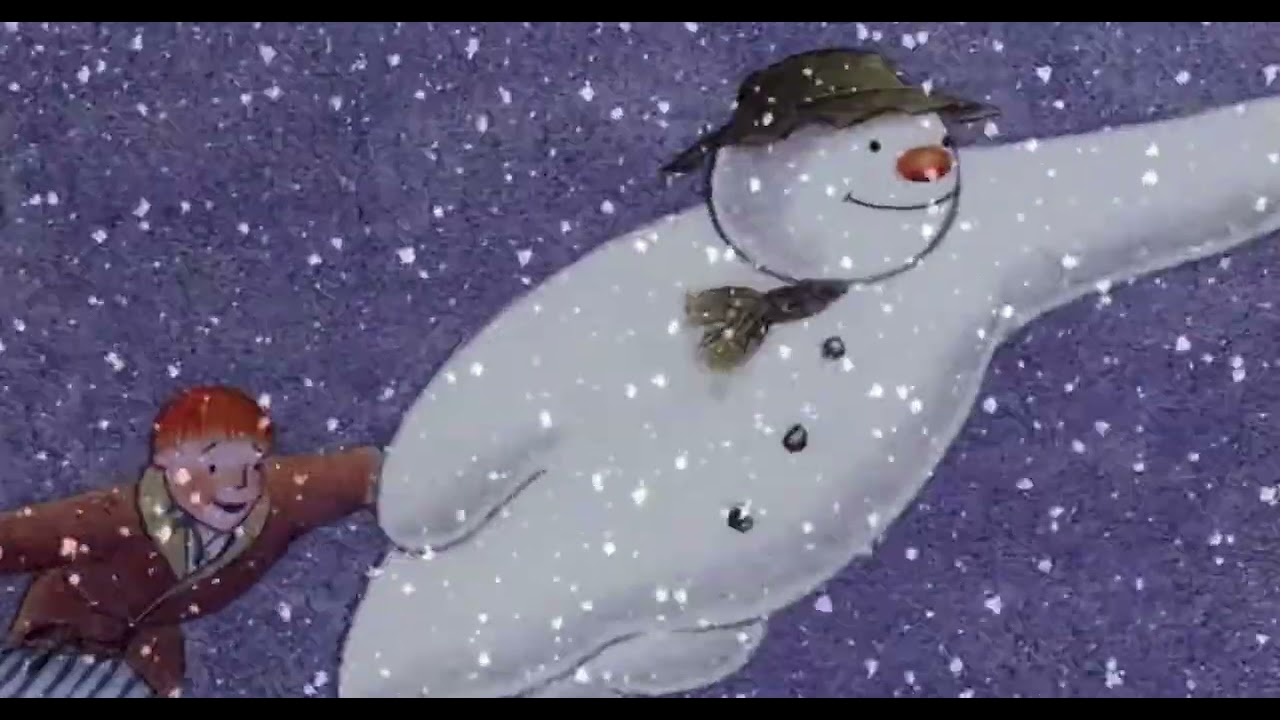
✏️ The animation style itself is a teaching moment. The broad-strokes watercolor style deliberately echoes the look of Briggs' illustrated book. Students who are studying illustration, visual art, or the relationship between image and meaning have a clear example to analyze.
❄️ A bittersweet ending that earns a real response. The Snowman melts, and the movie does not soften that. The final scene, in which the boy returns to the garden to find only a scarf and a patch of snow, is short and quiet, but students at every grade level tend to feel it. It gives ELA classes something real to write about.
⏱️ Twenty-six minutes, which fits a single lesson. The runtime is short enough to watch, respond to, and write about in one class period. That makes it practical for teachers who want the benefits of a movie without committing multiple sessions to it.
Age Suitability and Content
This movie is rated G.
⚠️ Things to be aware of:
- The snowman briefly holds a pipe in his mouth. Wine and champagne bottles appear momentarily during the North Pole party scene.
- The snowman melts at the end, which may upset younger or more sensitive students, though the boy's reaction is calm.
- Brief moments of nervousness when the snowman gets too close to a fire and during the night flight, but both pass quickly.
- No language concerns, no violence, and no sexual content.
Note for educators: Movie details and age ratings in this post are sourced from IMDb, Common Sense Media, and Wikipedia to help ensure accuracy.
How My Movie Guide Helps You Teach It
📚 English Language Arts Teachers. The Snowman is a natural fit for ELA classes working on inference, visual literacy, or book-to-screen adaptation. Because the movie has no dialogue or narration, students must read the animation to follow the story, making comprehension an active skill rather than a passive one. The guide supports both analytical writing (comprehension and sequencing) and creative writing, with differentiated question sets for mixed-ability classes.
🗣️ ESL and ELL Teachers. The wordless format makes The Snowman accessible to English language learners at every level, since understanding the story requires no listening comprehension at all. The multiple choice comprehension set is designed to work well with ESL and ELL students, providing a structured way to engage with the story without relying on spoken or written English as the primary input.
🎬 Substitute Teachers and Cover Lessons. At 26 minutes and with no dialogue to follow, The Snowman is a practical choice for substitute lessons. The guide is self-contained and requires no prior setup from the class teacher, and the differentiated question sets mean it can be used across a range of ability levels without additional preparation.
🏠 Homeschool Parents. The short runtime and gentle content make The Snowman a comfortable choice for home learners across a wide age range. The differentiated question sets give families flexibility to match the activity to the child's level, and the creative writing task works equally well as a standalone project.
🎨 Art Teachers. The Snowman's watercolor animation style is a direct reference to Briggs' original illustrations, and Art teachers working on illustration, picture book design, or visual storytelling have a clear example to discuss. The guide also includes a snowman design and drawing task, giving students a structured creative activity connected to what they have seen.
🌟 Supporting All Learners Movie guides can be a wonderfully calm fit for students with autism, learning difficulties, and mild to severe disabilities. The structured format gives every student a clear purpose during viewing, easing uncertainty and allowing them to engage at their own pace. If you teach in a special education or learning support setting, you may find this guide a gentle and practical resource. Find out more about why movies work for diverse learners.
What's Inside the Guide
This is a 7-page classroom-ready resource.
Part 1: Comprehension Questions
Three differentiated question sets covering the movie in chronological order. Students can complete either 15 or 32 full sentence answer questions, or 15 multiple choice questions. All three sets include answer keys.
Part 2: Creativity
Students design and draw their own snowman, then write about an adventure they imagine having together if their snowman came to life. This combines a visual art task with a narrative creative writing prompt.
“This was a great companion to the classic film and helped keep students actively engaged while watching. The questions and activities prompted strong conversations about the story and visuals. It was simple to use and worked well for a festive but purposeful lesson.”
— Linda T.
“This is a great resource to use when you're getting close to winter break.”
— Morgan B.
How These Guides Work: From Movie to Lesson
Watching a movie is not a break from learning. It reaches students through sight, sound, and story at once, engaging the brain in ways text alone does not, and the structured work around it is what turns the viewing into a genuine lesson. You can read the research behind this on the Why Movies Work page.
- A Teacher Notes and General Directions page opens the guide with a brief overview of everything inside: what the movie is about, then each part of the guide in order with a short description of what it entails. You know what to expect from the whole resource before you hand out a single page, so you can pick up the guide cold and teach it the same day.
- Answer keys are included for the comprehension question sets, so grading is quick and you are not rewatching the movie to check answers. Some guides also include example answers for the creative and written activities.
- Print and go: classroom ready, with no additional preparation needed. Print one the morning you need it and the lesson is ready.
- Substitute and first-timer friendly. A guide can be handed to a substitute or picked up by a teacher covering the topic for the first time. Nobody running the session needs to have seen the movie.
- Differentiated comprehension sets. Most guides include two or three question sets at different difficulty levels, and most include a multiple-choice option that works well for ESL and ELL students. One class set covers your strongest readers, your strugglers, and your language learners without separate prep.
- Activities that go beyond recall. Each guide includes structured activities that ask students to engage with the movie, not just watch it, ranging from creative and written tasks to discussion and critical thinking questions depending on the guide. That variety matters in a mixed classroom: a student who freezes on a written question set may show real understanding through a drawing or a creative task, and a confident writer gets room to go beyond recall. For the teacher, it turns a movie session into work you can grade: comprehension questions show whether students followed the plot, and the activities beyond them show whether they understood it.