By Mr Hull's Movie Guides

Watch the Trailer
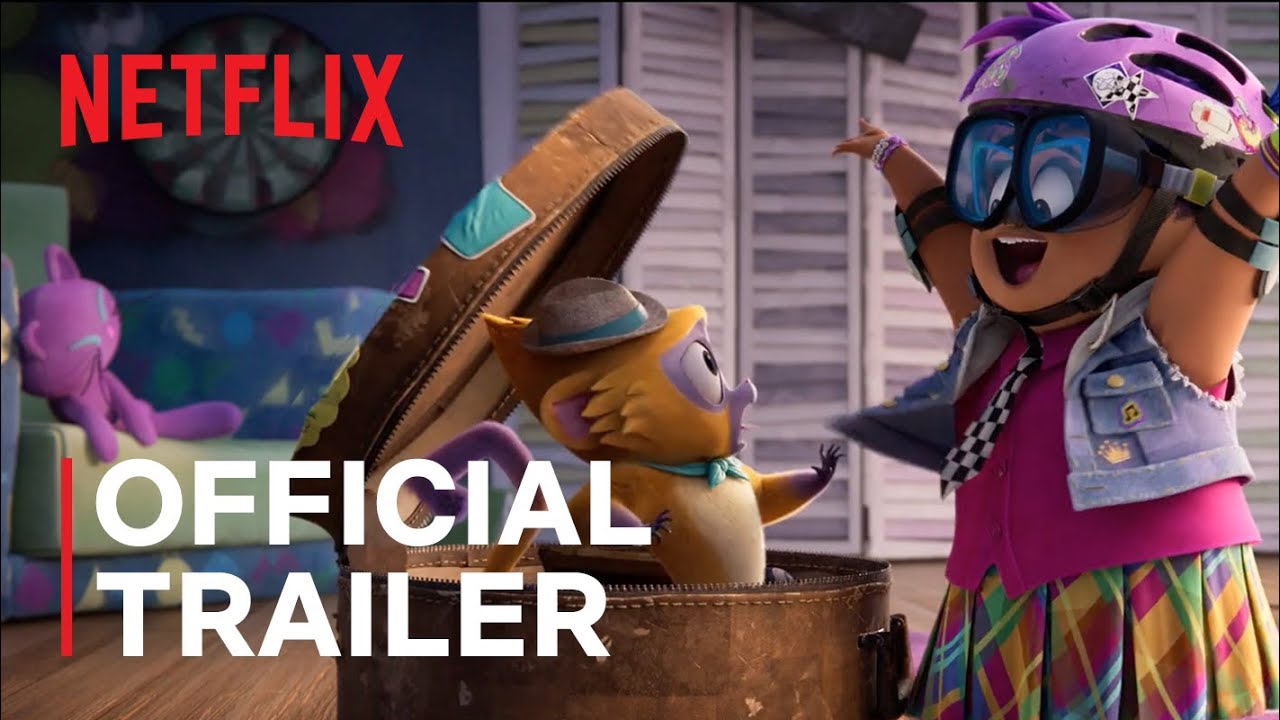
Why Watch This Movie With Your Students
Here's what your students naturally take away from the movie, whether through themes, values, ideas, or perspectives.
🎵 Music is the emotional language of the story. Every significant relationship in the movie is expressed through music. Andres and Vivo perform together, Andres wrote his love for Marta into a song he never sent, and Vivo's journey is literally about delivering that song. Students who study music or who respond to storytelling through sound have a lot to engage with here beyond the plot.
🌍 The movie is rooted in specific, real cultural traditions. Havana's plaza music scene, Cuban son, Latin rhythms, and the cultural identity of Miami's Cuban community are all present in the story. The setting is not generic Latin America but a specific world with its own details, which gives students something concrete to explore if they want to learn more about the cultures the movie draws from.
🦎 Vivo is an unusual protagonist who earns the story he carries. A kinkajou is not a typical animated hero. Vivo has no powers, no special abilities, and no experience of the world beyond the plaza where he has always lived. His courage in the movie comes purely from love and loyalty, which makes his journey more emotionally grounded than most animated adventure stories.
💔 Loss is handled with honesty and warmth. Andres dies early in the movie and his death is not softened. Vivo's grief is real and present throughout the story. For younger students encountering loss as a topic in class, the movie offers a way into that conversation that is sad without being frightening, and that resolves with connection rather than despair.
🎭 Gabi is a character worth discussing in her own right. Andres's grandniece is energetic, creative, and comfortable being different from the girls around her. She does not fit the mold of her Sand Dollar Scout troop and does not particularly care. Her confidence in who she is, alongside her genuine affection for Vivo, gives the movie a second coming-of-age thread that runs parallel to Vivo's own story.
Age Suitability and Content
This movie is rated PG.
⚠️ Things to be aware of:
- A character dies in his sleep early in the movie; his limp hand is briefly visible.
- Mild peril: a large snake pursues Vivo and Gabi; characters are caught in a storm on a raft in the Everglades; predator animals make threatening comments.
- No language, no sexual content, no substance use.
📋 A free editable parent permission slip is available for this movie. It explains the educational benefits of watching movies in class and includes a space for parental consent. → Download Free Permission Slip on TpT (Free resource)
Note for educators: Movie details and age ratings in this post are sourced from IMDb, Common Sense Media, and Wikipedia to help ensure accuracy.
How My Movie Guide Helps You Teach It
📚 English Language Arts Teachers. Vivo is a strong ELA option for elementary classes working on narrative comprehension, sentence writing, sequencing, and character response. The story has a clear emotional arc that gives students something to track and write about. The guide covers two differentiated comprehension sets plus writing tasks, making it adaptable for a range of abilities within the same class.
🗣️ ESL and ELL Teachers. The multiple choice comprehension set works well with ESL and ELL students. The movie's visual storytelling is strong and the plot is easy to follow through image and action, with music carrying much of the emotional content. The rhyming word activity in Part 2 also offers a low-stakes entry point for students still building vocabulary.
🎬 Substitute Teachers and Cover Lessons. Vivo is a cheerful, self-contained movie with a clear story and positive themes. The guide is organized across three labeled parts and works as a cover lesson with no setup required from the substitute.
🏠 Homeschool Parents. Vivo is a great pick for home learners in the elementary range, particularly around Hispanic Heritage Month or in units on music and cultural traditions. The guide's three parts cover comprehension, writing, rhyming, and a storyboard sequence that can be spread across more than one session.
🎵 Music Teachers. Music is at the center of Vivo, from the Cuban son traditions Andres plays in the Havana plaza to the original songs written by Lin-Manuel Miranda and performed throughout the story. Music teachers will find the movie a natural fit for discussions about how musical traditions connect to cultural identity and how music communicates emotion. The guide does not include music-specific activities, but the comprehension questions give students a structured way to engage with the movie's musical storytelling.
🌟 Supporting All Learners Movie guides can be a wonderfully calm fit for students with autism, learning difficulties, and mild to severe disabilities. The structured format gives every student a clear purpose during viewing, easing uncertainty and allowing them to engage at their own pace. If you teach in a special education or learning support setting, you may find this guide a gentle and practical resource. Find out more about why movies work for diverse learners.
What's Inside the Guide
This is a 12-page classroom-ready resource.
Part 1: Comprehension Questions
Two differentiated question sets covering the movie in chronological order. The first contains 30 questions requiring full sentence answers. The second contains 30 multiple choice questions with three options each, suited to younger students and ESL and ELL learners. Answer keys are included for both sets.
Part 2: Writing and Word Search (lower grades)
Students write sentences using each letter of the word VIVO, then write about moments in the movie where they felt sad, happy, and excited. A rhyming word activity follows, connecting pairs of words from the movie (Bird/Word, Snake/Lake, Sing/Wing, Boat/Goat, Drums/Thumbs). The section ends with a word search containing 15 words to find, 5 of which require clues to be answered first. Answer key included.
Part 3: Storyboard and Synopsis (upper grades)
Students create a 9-scene storyboard illustrating what they consider the most important events in the movie, with a short written description for each scene. They then use their completed storyboard to write a full synopsis of the movie, practicing narrative sequencing and written expression.
“I used this as a sub plan in my Spanish class. It was a great activity to make sure my students stay attentive to the movie!”
— Kasey M.
“I used this to help students in a culture class understand the plot of the movie and follow along. ”
— Amanda A.
How These Guides Work: From Movie to Lesson
Watching a movie is not a break from learning. It reaches students through sight, sound, and story at once, engaging the brain in ways text alone does not, and the structured work around it is what turns the viewing into a genuine lesson. You can read the research behind this on the Why Movies Work page.
- A Teacher Notes and General Directions page opens the guide with a brief overview of everything inside: what the movie is about, then each part of the guide in order with a short description of what it entails. You know what to expect from the whole resource before you hand out a single page, so you can pick up the guide cold and teach it the same day.
- Answer keys are included for the comprehension question sets, so grading is quick and you are not rewatching the movie to check answers. Some guides also include example answers for the creative and written activities.
- Print and go: classroom ready, with no additional preparation needed. Print one the morning you need it and the lesson is ready.
- Substitute and first-timer friendly. A guide can be handed to a substitute or picked up by a teacher covering the topic for the first time. Nobody running the session needs to have seen the movie.
- Differentiated comprehension sets. Most guides include two or three question sets at different difficulty levels, and most include a multiple-choice option that works well for ESL and ELL students. One class set covers your strongest readers, your strugglers, and your language learners without separate prep.
- Activities that go beyond recall. Each guide includes structured activities that ask students to engage with the movie, not just watch it, ranging from creative and written tasks to discussion and critical thinking questions depending on the guide. That variety matters in a mixed classroom: a student who freezes on a written question set may show real understanding through a drawing or a creative task, and a confident writer gets room to go beyond recall. For the teacher, it turns a movie session into work you can grade: comprehension questions show whether students followed the plot, and the activities beyond them show whether they understood it.