By Mr Hull's Movie Guides

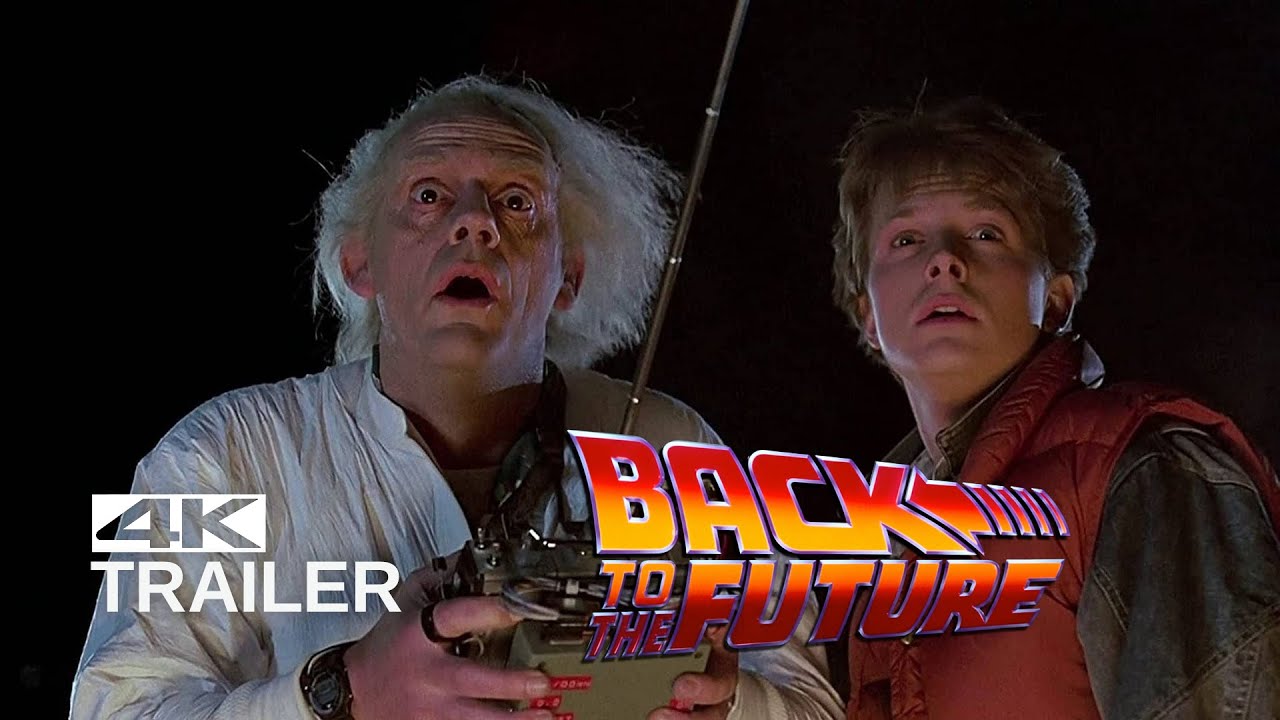
Watch the Trailer
Why Watch This Movie With Your Students
Here's what your students naturally take away from the movie, whether through themes, values, ideas, or perspectives.
⏰ Every choice Marty makes in 1955 directly changes what 1985 looks like. The cause-and-effect logic is unusually clean and trackable. Students can follow exactly how each decision ripples forward, which makes the movie a natural text for analyzing narrative structure, consequence, and the relationship between character choices and outcomes.
📅 1955 and 1985 sit side by side throughout the movie. Marty's experience of arriving in 1955 draws constant attention to what has and hasn't changed: the technology, the music, the attitudes, the price of a Pepsi. That contrast is built into the storytelling and gives classes an accessible way into discussions about historical change.
🦸 George McFly's arc is the emotional spine of the story. The movie isn't just about getting Marty home. It's about his father learning to stand up for himself. George goes from a timid, bullied teenager to someone capable of punching Biff and winning the girl, and the movie earns that change step by step. It gives students something real to write about when analyzing character development.
🤝 The Marty and Doc friendship crosses a significant age gap. Doc Brown is eccentric, brilliant, and completely committed to a project nobody else believes in. Marty is the only person who takes him seriously. Their friendship is the warmest relationship in the movie and runs counter to the idea that mentorship only flows one way.
🎸 The 1955 setting gives the movie a genuine sense of place. Hill Valley in 1955 is carefully detailed, from the diner where Marty orders a Tab and gets laughed at to the gymnasium where he ends up playing Johnny B. Goode. The period setting isn't just backdrop; it's the source of most of the movie's humor and a lot of its dramatic tension.
⚡ The ending is a genuine race against a deadline. The final sequence, getting the DeLorean up to 88 miles per hour before the lightning strikes the clock tower at exactly the right moment, is built around a precise and comprehensible problem. Students who have tracked the logic of the movie up to that point understand exactly what is at stake and why the timing matters.
Age Suitability and Content
This movie is rated PG.
⚠️ Things to be aware of:
- In the opening scene, armed men shoot at Doc with automatic weapons; Doc appears to have been killed.
- Bullying is a significant theme throughout. Biff attempts to sexually assault Lorraine in a parked car; the scene is largely off-camera but the intent is clear. A boy also spies on a girl undressing through a window.
- Language includes 'shit,' 'asshole,' 'bastards,' 'son of a bitch,' and a handful of racial slurs used by background characters in the 1950s-set scenes.
- Two underage teens briefly try whiskey and a cigarette. Adults drink beer and vodka. A reference to 'reefer' is made.
- A girl is shown undressing to her underwear briefly. Teen romantic storylines include a mother developing a crush on her future son, played for awkward comedy.
📋 A free editable parent permission slip is available for this movie. It explains the educational benefits of watching movies in class and includes a space for parental consent. → Download Free Permission Slip on TpT (Free resource)
Note for educators: Movie details and age ratings in this post are sourced from IMDb, Common Sense Media, and Wikipedia to help ensure accuracy.
How My Movie Guide Helps You Teach It
📚 English Language Arts Teachers. Back to the Future is a strong ELA text for classes working on cause and effect, narrative structure, or character development. The time travel mechanics make the cause-and-effect logic unusually visible and traceable, and George McFly's transformation from the beginning of the movie to the end is a clear, well-constructed character arc. The guide covers a wide range of writing, from comprehension through to creative and narrative tasks, with differentiated question sets for mixed-ability classes.
🗣️ ESL and ELL Teachers. The guide is explicitly tagged for ESL and ELL students, and the multiple choice question set is noted as working well for English language learners. The movie's clear narrative logic and strong visual storytelling also make it accessible for students who may find dialogue-heavy movies more difficult to follow.
🌐 Social Studies Teachers. The contrast between Hill Valley in 1955 and Hill Valley in 1985 is built into the movie's structure, making it a natural prompt for discussing how American culture, technology, and daily life changed across three decades. Social Studies teachers covering post-war America or cultural history may find the juxtaposition useful as a discussion anchor. The guide does not include Social Studies-specific activities, but the comprehension questions keep students accountable during the viewing and give them a record of the details they will need for that kind of comparison.
🎬 Substitute Teachers and Cover Lessons. At 116 minutes, Back to the Future spans two class periods, and the guide is self-contained with no setup required from the class teacher. The differentiated question sets cover a range of ability levels, and the creative writing and crossword activities in Parts 3 and 4 give students structured work to continue independently after the viewing.
🏠 Homeschool Parents. Back to the Future is a practical choice for home learners across the upper elementary to high school range. The differentiated question sets give families flexibility to match the difficulty to the learner, and the creative writing tasks in Part 3 make strong standalone projects that connect naturally to the movie's central ideas.
🔭 STEM Teachers. The DeLorean time machine, the Flux Capacitor, and Doc Brown's experiments give STEM classes a springboard for discussing the physics of time travel and the relationship between scientific imagination and engineering. The guide's comprehension questions give students a structured framework for engaging with the movie's scientific ideas.
🌟 Supporting All Learners Movie guides can be a wonderfully calm fit for students with autism, learning difficulties, and mild to severe disabilities. The structured format gives every student a clear purpose during viewing, easing uncertainty and allowing them to engage at their own pace. If you teach in a special education or learning support setting, you may find this guide a gentle and practical resource. Find out more about why movies work for diverse learners.
What's Inside the Guide
This is a 18-page classroom-ready resource.
Part 1: Comprehension Questions
Three differentiated question sets covering the movie in chronological order, all with answer keys included. Students can complete 50 full sentence answer questions, 30 full sentence answer questions, or 29 multiple choice questions with three possible answers plus one final full sentence question. The multiple choice set is noted as working well with ESL and ELL students.
Part 2: Storyboard and Synopsis
Students create a 9-scene storyboard illustrating key events from the movie, with a short description for each scene explaining the main idea it represents. They then use their storyboard as a guide to write a synopsis of the movie.
Part 3: Creativity
Two creative writing tasks. In the first, students imagine they are Doc's assistant during the early development of the time machine. Doc is explaining how it works, its features, and what not to do in the past or future; students write a recount of what he said. In the second, students choose a date to travel to and write about their own time travel adventure.
Part 4: Crossword
A 20-clue crossword puzzle based on the movie, included as a fun consolidation activity.
“Love the range of activities in this product. It is nice to have the short answer to use a movie watching guide and then the long answer reflection page. Kids loved the crossword too.”
— Jennifer B.
“Great movie guide, used with ESL students. They enjoyed it, easy to use.”
— Mackenzie H.
How These Guides Work: From Movie to Lesson
Watching a movie is not a break from learning. It reaches students through sight, sound, and story at once, engaging the brain in ways text alone does not, and the structured work around it is what turns the viewing into a genuine lesson. You can read the research behind this on the Why Movies Work page.
- A Teacher Notes and General Directions page opens the guide with a brief overview of everything inside: what the movie is about, then each part of the guide in order with a short description of what it entails. You know what to expect from the whole resource before you hand out a single page, so you can pick up the guide cold and teach it the same day.
- Answer keys are included for the comprehension question sets, so grading is quick and you are not rewatching the movie to check answers. Some guides also include example answers for the creative and written activities.
- Print and go: classroom ready, with no additional preparation needed. Print one the morning you need it and the lesson is ready.
- Substitute and first-timer friendly. A guide can be handed to a substitute or picked up by a teacher covering the topic for the first time. Nobody running the session needs to have seen the movie.
- Differentiated comprehension sets. Most guides include two or three question sets at different difficulty levels, and most include a multiple-choice option that works well for ESL and ELL students. One class set covers your strongest readers, your strugglers, and your language learners without separate prep.
- Activities that go beyond recall. Each guide includes structured activities that ask students to engage with the movie, not just watch it, ranging from creative and written tasks to discussion and critical thinking questions depending on the guide. That variety matters in a mixed classroom: a student who freezes on a written question set may show real understanding through a drawing or a creative task, and a confident writer gets room to go beyond recall. For the teacher, it turns a movie session into work you can grade: comprehension questions show whether students followed the plot, and the activities beyond them show whether they understood it.