By Mr Hull's Movie Guides

Watch the Trailer
What's Inside the Guide
This is a 12-page classroom-ready resource.
Two sets of differentiated comprehension questions presented in chronological order with the movie. Answer keys are included for both sets.
- 32 question set requiring full sentence answers.
- 30 multiple choice question set with three possible answers each plus two additional full sentence questions. The multiple choice set works well with ESL and ELL students.
This part covers two activities.
- Imagining themselves as part of the Ember community during Assignment Day, rolling a dice to be assigned a job before writing a diary entry about their first day in that role.
- Inventing three problematic scenarios that could occur within their assigned job, explaining what each problem is, why it likely happened, and how to fix it.
- A six scene storyboard covering what they consider the movie's most important moments, with a brief description written for each scene.
- A full synopsis of the movie, written using their completed storyboard as a guide.
“LOVE using this with my Dystopian film & lit elective!”
— Amy M.
Why Watch This Movie With Your Students
Here's what your students naturally take away from the movie, whether through themes, values, ideas, or perspectives.
🕯️ A city that chose denial over truth. For two hundred years Ember has run on a failing generator and dwindling supplies, and most of its adult population would rather trust that everything is fine than face what is happening. Students see how institutional denial takes hold and what it costs the people who go along with it.
🔍 A mystery solved entirely through inference. Lina and Doon have no adult to explain the way out of Ember to them. They have to reconstruct a torn, incomplete document piece by piece, testing ideas and discarding wrong guesses as they go.
📖 A direct line to a bestselling novel study. The movie is based on Jeanne DuPrau's bestselling 2003 novel of the same name, which makes it a natural pairing for a class that has read the book or is about to. Students can compare how the story changes in adaptation, from pacing to which details make it to the screen and which do not.
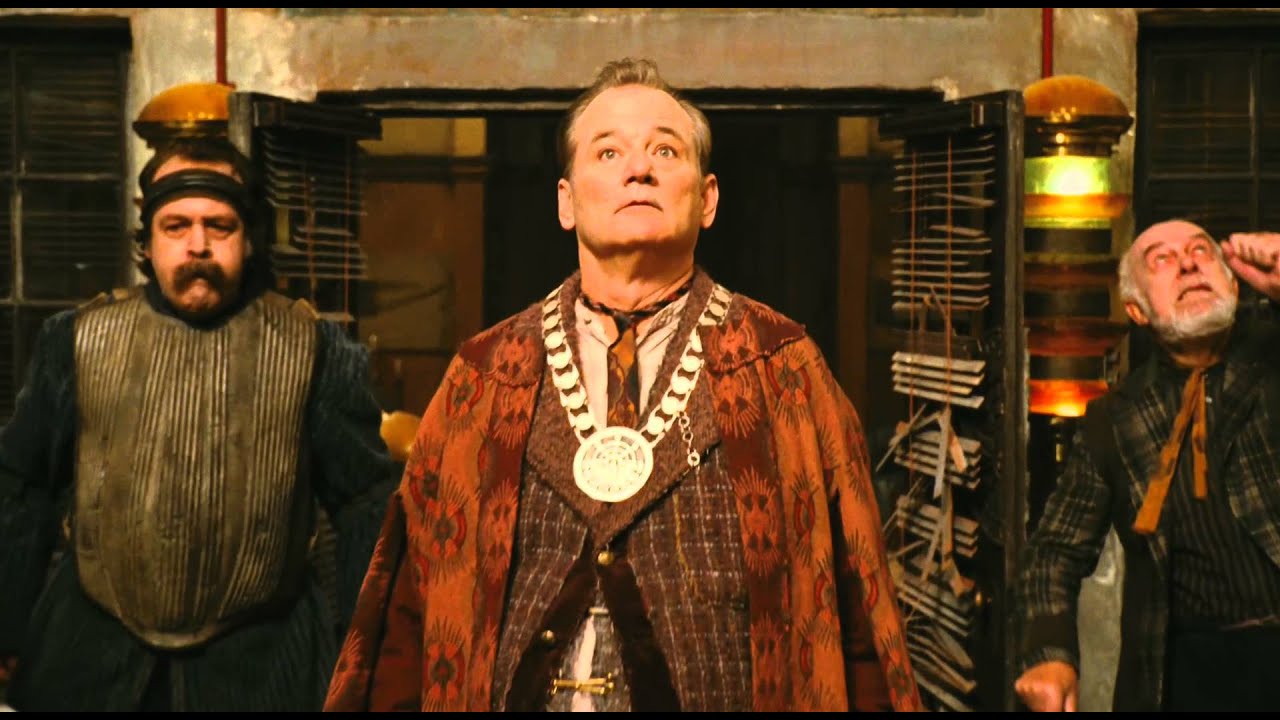
👑 A mayor who chooses self-interest over his own city. Mayor Cole hoards food for himself while the rest of Ember goes hungry, and uses his authority to protect that secret rather than the people he governs. His corruption gives students a concrete example of power used against the public it is meant to serve.
🧭 Two teenagers who act when the adults around them will not. Lina and Doon are the ones willing to question what everyone else accepts, and their persistence carries the movie's investigation from a lost document to an actual way out. Their initiative sits in direct contrast to the resignation of most of the grown-ups around them.
🌅 A story that ends in genuine uncertainty. The two teens escape to the surface and see a sunrise, but their letter home is only just landing at their families' feet as the movie ends. Students are left to think about what happens next rather than being handed a resolved ending.
Age Suitability and Content
This movie is rated PG.
⚠️ Things to be aware of:
- Contains several tense chase and pursuit scenes, including sequences with a large, aggressive mole.
- One scene involves a man's fingers being broken, shown off screen.
- One character's death by drowning is discussed but not shown, and another character dies of natural causes.
- Contains no sexual content and no substance use.
- Contains no strong language.
📋 A free editable parent permission slip is available for this movie. It explains the educational benefits of watching movies in class and includes a space for parental consent. → Download Free Permission Slip on TpT (Free resource)
Note for educators: Movie details and age ratings in this post are sourced from IMDb, Common Sense Media, and Wikipedia to help ensure accuracy.
How My Movie Guide Helps You Teach It
Click your subject below to see how this guide supports it:
📚 English Language Arts Teachers
🗣️ ESL and ELL Teachers
🌐 Social Studies Teachers
🎬 Substitute Teachers and Cover Lessons
🏠 Homeschool Parents
🔭 STEM Teachers
🌟 Supporting All Learners A movie gives students a story to follow, and the guide gives them questions to work through as they watch. For students with autism, learning difficulties, and mild to severe disabilities, that combination provides a clear focus for the lesson and a concrete way to show understanding. The format can be useful in special education and learning support classrooms, where teachers need activities that give students a defined task during viewing. Find out more about why movies work for diverse learners.
How These Guides Work: From Movie to Lesson
Watching a movie is not a break from learning. It reaches students through sight, sound, and story at once, engaging the brain in ways text alone does not, and the structured work around it is what turns the viewing into a genuine lesson. You can read the research behind this on the Why Movies Work page.
- A Teacher Notes and General Directions page opens the guide with a brief overview of everything inside: what the movie is about, then each part of the guide in order with a short description of what it entails. You know what to expect from the whole resource before you hand out a single page, so you can pick up the guide cold and teach it the same day.
- Answer keys are included for the comprehension question sets, so grading is quick and you are not rewatching the movie to check answers. Some guides also include example answers for the creative and written activities.
- Print and go: classroom ready, with no additional preparation needed. Print one the morning you need it and the lesson is ready.
- Substitute and first-timer friendly. A guide can be handed to a substitute or picked up by a teacher covering the topic for the first time. Nobody running the session needs to have seen the movie.
- Differentiated comprehension sets. Most guides include two or three question sets at different difficulty levels, and most include a multiple-choice option that works well for ESL and ELL students. One class set covers your strongest readers, your strugglers, and your language learners without separate prep.
- Activities that go beyond recall. Each guide includes structured activities that ask students to engage with the movie, not just watch it, ranging from creative and written tasks to discussion and critical thinking questions depending on the guide. That variety matters in a mixed classroom: a student who freezes on a written question set may show real understanding through a drawing or a creative task, and a confident writer gets room to go beyond recall. For the teacher, it turns a movie session into work you can grade: comprehension questions show whether students followed the plot, and the activities beyond them show whether they understood it.