By Mr Hull's Movie Guides
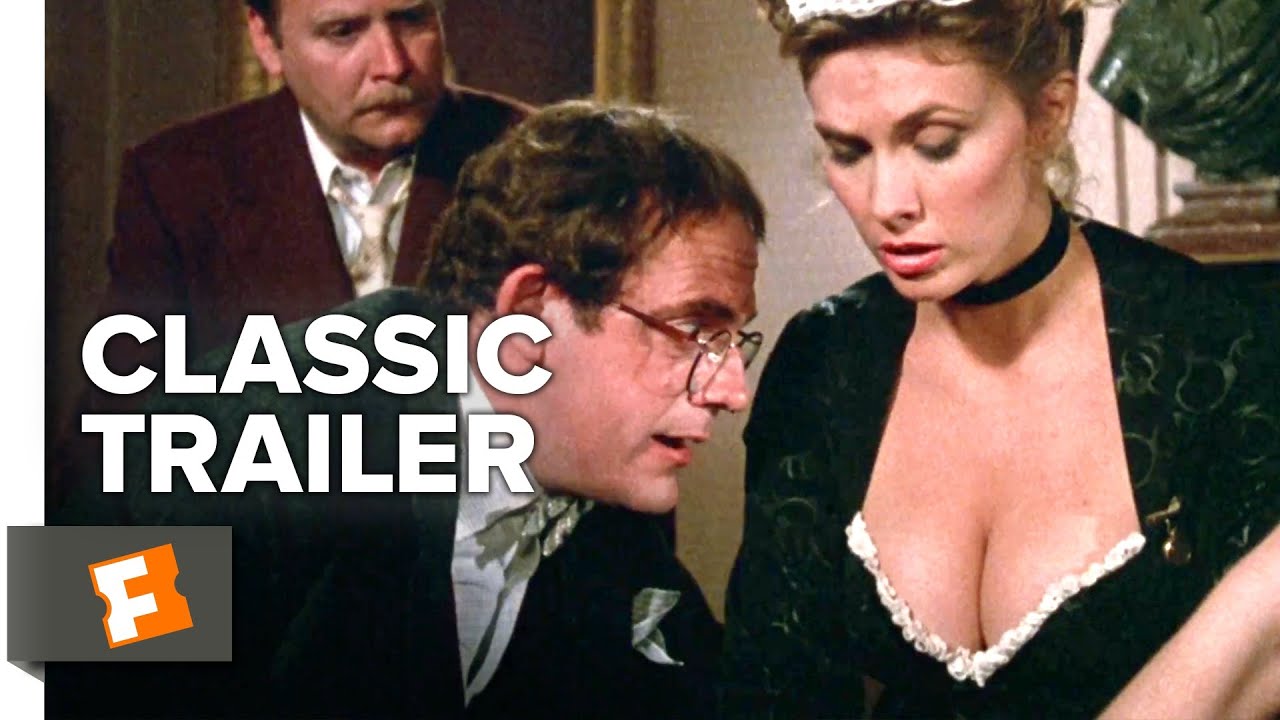
Watch the Trailer
Why Watch This Movie With Your Students
Here's what your students naturally take away from the movie, whether through themes, values, ideas, or perspectives.
🎲 A board game turned into a working mystery plot. The movie takes the six characters, six weapons, and mansion setting of the board game and builds an actual, functioning murder mystery around them. Students see how a simple set of game pieces can be expanded into a full narrative with motives, timing, and clues.
🔀 Three different solutions to the same mystery. Rather than settling on one ending, the movie walks through three separate resolutions to who committed the murders and why, presenting two as possibilities before revealing the account it treats as accurate. Students see firsthand how the same set of clues can be reassembled into multiple different, internally consistent explanations.
🕵️ Deduction laid out in real time. Wadsworth walks the group, and the audience, through the night's events step by step, connecting each victim and weapon to a specific guest's secret. Students follow a full chain of reasoning from evidence to conclusion rather than being handed the answer outright.
🗣️ Comedy built on rapid, layered dialogue. The humor relies heavily on quick verbal exchanges, wordplay, and characters talking over each other rather than physical gags alone. Students get a clear example of comedic writing that depends on timing and language rather than simple slapstick.
🏚️ A single setting used for a full story. Nearly the entire movie takes place inside one mansion, with the story building tension and complexity without ever changing location. Students see how much narrative ground a writer can cover within one confined, well used setting.
🎭 An ensemble cast with no single lead. The six guests, along with Wadsworth and the maid Yvette, are each given roughly equal screen time and a distinct, fully developed secret. Students see a story structured around a group rather than one central main character.
Age Suitability and Content
This movie is rated PG.
⚠️ Things to be aware of:
- Contains cartoonish murders throughout, including characters shown with blood from gunshot and stab wounds.
- Includes frequent sexual innuendo and double entendres, including references to a character running a brothel.
- Includes visual gags involving a maid's revealing uniform, with male characters shown staring at her body.
- Includes one use of a period-accurate slur referencing a character's presumed sexual orientation.
- Includes characters drinking alcohol and smoking cigarettes and pipes throughout.
- Includes a small number of mild profanities.
📋 A free editable parent permission slip is available for this movie. It explains the educational benefits of watching movies in class and includes a space for parental consent. → Download Free Permission Slip on TpT (Free resource)
Note for educators: Movie details and age ratings in this post are sourced from IMDb, Common Sense Media, and Wikipedia to help ensure accuracy.
How My Movie Guide Helps You Teach It
📚 English Language Arts Teachers. Clue gives an ELA class a tightly constructed example of farce, dense wordplay, and mystery-genre mechanics, all built from a board game's premise into a full working plot. The guide is built for ELA with differentiated comprehension questions at multiple difficulty levels and writing tasks that push beyond simple recall.
🗣️ ESL and ELL Teachers. The movie's exaggerated physical comedy and visual sight gags carry a good deal of the humor even when the rapid, dense dialogue is hard to catch in full. The multiple choice question set may work well with ESL and ELL students, giving them a structured way to track the story alongside their classmates.
🎬 Substitute Teachers and Cover Lessons. Everything a substitute needs is self-contained and organized, with three sets of differentiated comprehension questions, discussion and character writing, and a storyboard and synopsis task. Answer keys and example answers are included, so a substitute can run the full session without having seen the movie.
🏠 Homeschool Parents. With three levels of comprehension questions, a storyboard and synopsis task, and a character writing activity, the guide gives a homeschool parent a ready-made structure for a single student to work through independently. The discussion questions are written for pairs or a class, so a parent working with one student would need to adapt them into a written response or a conversation between parent and student instead.
🌟 Supporting All Learners Movie guides can be a wonderfully calm fit for students with autism, learning difficulties, and mild to severe disabilities. The structured format gives every student a clear purpose during viewing, easing uncertainty and allowing them to engage at their own pace. If you teach in a special education or learning support setting, you may find this guide a gentle and practical resource. Find out more about why movies work for diverse learners.
What's Inside the Guide
This is a 15-page classroom-ready resource.
Part 1: Comprehension Questions
Three sets of differentiated comprehension questions in chronological order, including 45 questions requiring full sentence answers, a second set of 30 full sentence questions (15 removed from the 45 question set for differentiation), and 30 multiple choice questions with 3 possible answers each. The multiple choice questions may also work well with ESL and ELL students. Answer keys are included.
Part 2: Discussion and Character Writing
Students answer five critical thinking questions for class discussion, which could work well in pairs, with example answers included. Students also write about one of the characters following guided question prompts and include a drawing of their chosen character.
Part 3: Storyboard and Synopsis
Students create a 9 scene storyboard illustrating pivotal events from the movie, with a short description explaining the main idea each scene represents, using the movie questions to help with sequencing. Using their storyboards as a guide, students then write a synopsis of the movie.
“Kids these days do not know how to just sit and watch a movie, so this helped them stay engaged and on task.”
— Write on Target (TPT Seller)
How These Guides Work: From Movie to Lesson
Watching a movie is not a break from learning. It reaches students through sight, sound, and story at once, engaging the brain in ways text alone does not, and the structured work around it is what turns the viewing into a genuine lesson. You can read the research behind this on the Why Movies Work page.
- A Teacher Notes and General Directions page opens the guide with a brief overview of everything inside: what the movie is about, then each part of the guide in order with a short description of what it entails. You know what to expect from the whole resource before you hand out a single page, so you can pick up the guide cold and teach it the same day.
- Answer keys are included for the comprehension question sets, so grading is quick and you are not rewatching the movie to check answers. Some guides also include example answers for the creative and written activities.
- Print and go: classroom ready, with no additional preparation needed. Print one the morning you need it and the lesson is ready.
- Substitute and first-timer friendly. A guide can be handed to a substitute or picked up by a teacher covering the topic for the first time. Nobody running the session needs to have seen the movie.
- Differentiated comprehension sets. Most guides include two or three question sets at different difficulty levels, and most include a multiple-choice option that works well for ESL and ELL students. One class set covers your strongest readers, your strugglers, and your language learners without separate prep.
- Activities that go beyond recall. Each guide includes structured activities that ask students to engage with the movie, not just watch it, ranging from creative and written tasks to discussion and critical thinking questions depending on the guide. That variety matters in a mixed classroom: a student who freezes on a written question set may show real understanding through a drawing or a creative task, and a confident writer gets room to go beyond recall. For the teacher, it turns a movie session into work you can grade: comprehension questions show whether students followed the plot, and the activities beyond them show whether they understood it.