By Mr Hull's Movie Guides

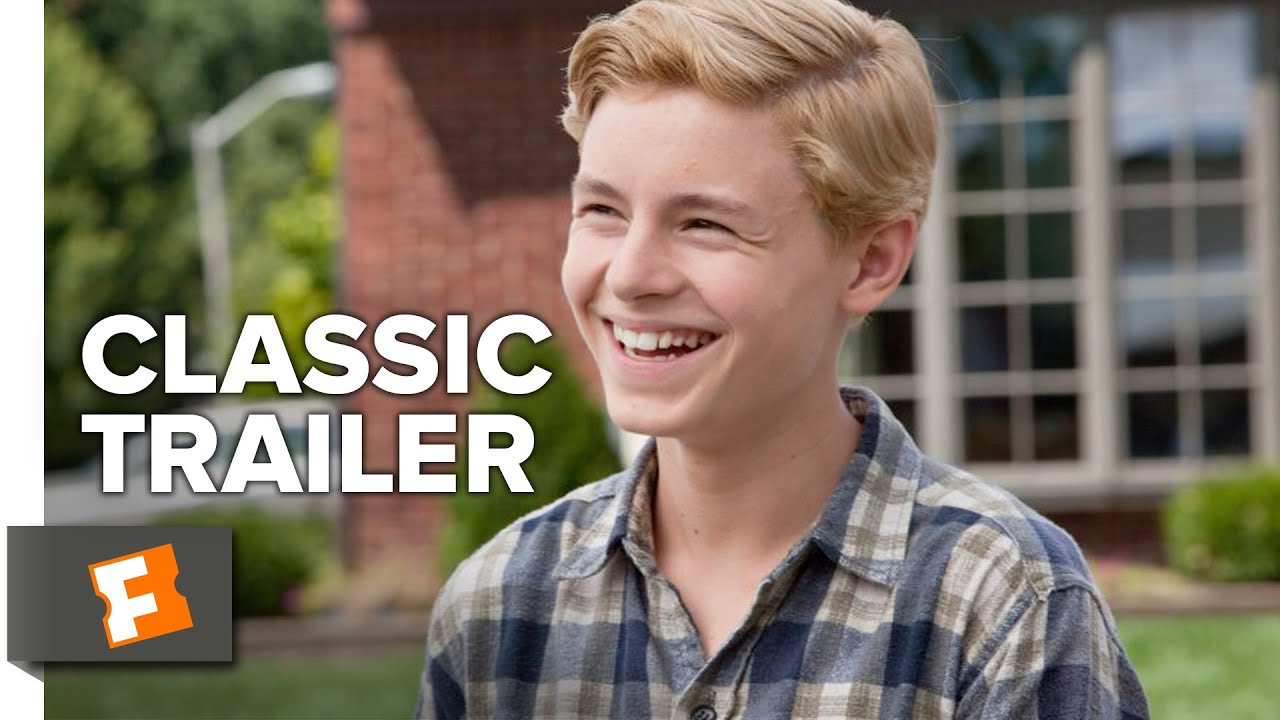
Watch the Trailer
Why Watch This Movie With Your Students
Here's what your students naturally take away from the movie, whether through themes, values, ideas, or perspectives.
🔄 The movie shows the same scenes from two different points of view. Juli's version of an event and Bryce's version are often surprising when placed side by side. A moment that reads as romantic from one angle reads as awkward obligation from the other. That structural choice is the movie's central lesson about perspective and assumption, and it is immediately discussable.
🌳 Juli's attachment to the sycamore tree is the movie's most specific image. She climbs it every day because from the top she can see something the people below her can't. When the tree is cut down to make way for construction, the movie treats it as a genuine loss rather than a comic subplot. Her protest, which makes the local newspaper, is the clearest example of her character and her willingness to stand alone.
🏚️ Class and family reputation shape everything. Bryce's father looks down on Juli's family because their yard is untidy and they have less money. That prejudice shapes how Bryce relates to Juli for years, and the movie is specific about the cost of absorbing a parent's snobbery without questioning it. When Bryce finally does question it, the change in him is earned.
👴 Juli's relationship with her uncle complicates the story. Her uncle Daniel has an intellectual disability and lives in a care facility. Juli visits him regularly and clearly loves him. Bryce's first reaction to learning this reveals something about him that the movie does not let pass without consequence. The subplot adds weight to the movie's argument about what it means to see another person.
💡 The moment of reversal is the emotional payoff. When Bryce finally wants what Juli has been offering for years, she is no longer sure she wants him. The movie earns this reversal because it has spent its whole running time showing exactly what changed in each of them and why. Students who have followed both perspectives understand the ending in a way that a single-perspective story would not allow.
📖 The novel and the movie share the same dual-perspective structure. Wendelin Van Draanen's book alternates between Juli's and Bryce's chapters, and the movie preserves that approach. Classes that have read the novel have a direct and faithful visual companion to work with, and the book-to-screen comparison is particularly accessible because the structural choice is the same in both versions.
Age Suitability and Content
This movie is rated PG.
⚠️ Things to be aware of:
- A father slaps his daughter in one scene. Adults drink at dinner.
- Language includes one use of 'jacksh--t,' plus 'hell,' 'crap,' and 'goddamn.'
- Period-accurate language includes 'retarded' and 'retard' used in reference to Juli's uncle, reflecting attitudes of the 1963 setting.
- No sexual content and no significant violence.
📋 A free editable parent permission slip is available for this movie. It explains the educational benefits of watching movies in class and includes a space for parental consent. → Download Free Permission Slip on TpT (Free resource)
Note for educators: Movie details and age ratings in this post are sourced from IMDb, Common Sense Media, and Wikipedia to help ensure accuracy.
How My Movie Guide Helps You Teach It
📚 English Language Arts Teachers. Flipped is a strong ELA choice for classes working on point of view, perspective, or book-to-screen adaptation. The dual-perspective structure makes the relationship between narrative voice and meaning directly visible: the same events produce different stories depending on whose interior experience is being accessed. The guide covers a range of writing, from comprehension and sequencing through to journalism and diary writing, with differentiated question sets for mixed-ability classes.
🗣️ ESL and ELL Teachers. The multiple choice question set works well with ESL and ELL students. The movie's clear cause-and-effect structure and strong visual storytelling also support comprehension for English language learners, and the 1960s suburban setting provides familiar enough social dynamics that the story translates across cultural contexts.
🎬 Substitute Teachers and Cover Lessons. The guide is self-contained and requires no setup from the class teacher. The three differentiated question sets cover a range of ability levels without additional preparation, and the writing tasks in Part 3 give students structured independent work to continue after the viewing.
🏠 Homeschool Parents. Flipped works well for home learners across the upper elementary and middle school range. The differentiated question sets give families flexibility to match the activity to the learner's level, and the newspaper article and diary entry tasks in Part 3 make strong standalone writing projects.
🌟 Supporting All Learners Movie guides can be a wonderfully calm fit for students with autism, learning difficulties, and mild to severe disabilities. The structured format gives every student a clear purpose during viewing, easing uncertainty and allowing them to engage at their own pace. If you teach in a special education or learning support setting, you may find this guide a gentle and practical resource. Find out more about why movies work for diverse learners.
What's Inside the Guide
This is a 15-page classroom-ready resource.
Part 1: Comprehension Questions
Three differentiated question sets covering the movie in chronological order, all with answer keys included. Students can complete 40 full sentence answer questions, 30 full sentence answer questions, or 30 multiple choice questions with three possible answers each. The multiple choice set works well with ESL and ELL students.
Part 2: Storyboard and Synopsis
Students create a 9-scene storyboard illustrating pivotal events from the movie, with a short description for each scene explaining the main idea it represents. They then use their completed storyboard as a guide to write a synopsis of the movie.
Part 3: Newspaper Article and Diary Entries
Two writing tasks. In the first, students write the newspaper article they imagine was published about Juli's refusal to leave the sycamore tree, including a picture. In the second, students write a diary entry from both Juli's and Bryce's perspectives on the evening of the Mayfield Boosters Club Auction, taking into account each character's personality and their experience of that day.
“This resource was incredibly helpful in guiding students through the major plot points and character development in the movie!”
— Nichole M.
“This was a great way to keep my students engaged.”
— Alicia H.
How These Guides Work: From Movie to Lesson
Watching a movie is not a break from learning. It reaches students through sight, sound, and story at once, engaging the brain in ways text alone does not, and the structured work around it is what turns the viewing into a genuine lesson. You can read the research behind this on the Why Movies Work page.
- A Teacher Notes and General Directions page opens the guide with a brief overview of everything inside: what the movie is about, then each part of the guide in order with a short description of what it entails. You know what to expect from the whole resource before you hand out a single page, so you can pick up the guide cold and teach it the same day.
- Answer keys are included for the comprehension question sets, so grading is quick and you are not rewatching the movie to check answers. Some guides also include example answers for the creative and written activities.
- Print and go: classroom ready, with no additional preparation needed. Print one the morning you need it and the lesson is ready.
- Substitute and first-timer friendly. A guide can be handed to a substitute or picked up by a teacher covering the topic for the first time. Nobody running the session needs to have seen the movie.
- Differentiated comprehension sets. Most guides include two or three question sets at different difficulty levels, and most include a multiple-choice option that works well for ESL and ELL students. One class set covers your strongest readers, your strugglers, and your language learners without separate prep.
- Activities that go beyond recall. Each guide includes structured activities that ask students to engage with the movie, not just watch it, ranging from creative and written tasks to discussion and critical thinking questions depending on the guide. That variety matters in a mixed classroom: a student who freezes on a written question set may show real understanding through a drawing or a creative task, and a confident writer gets room to go beyond recall. For the teacher, it turns a movie session into work you can grade: comprehension questions show whether students followed the plot, and the activities beyond them show whether they understood it.