By Mr Hull's Movie Guides

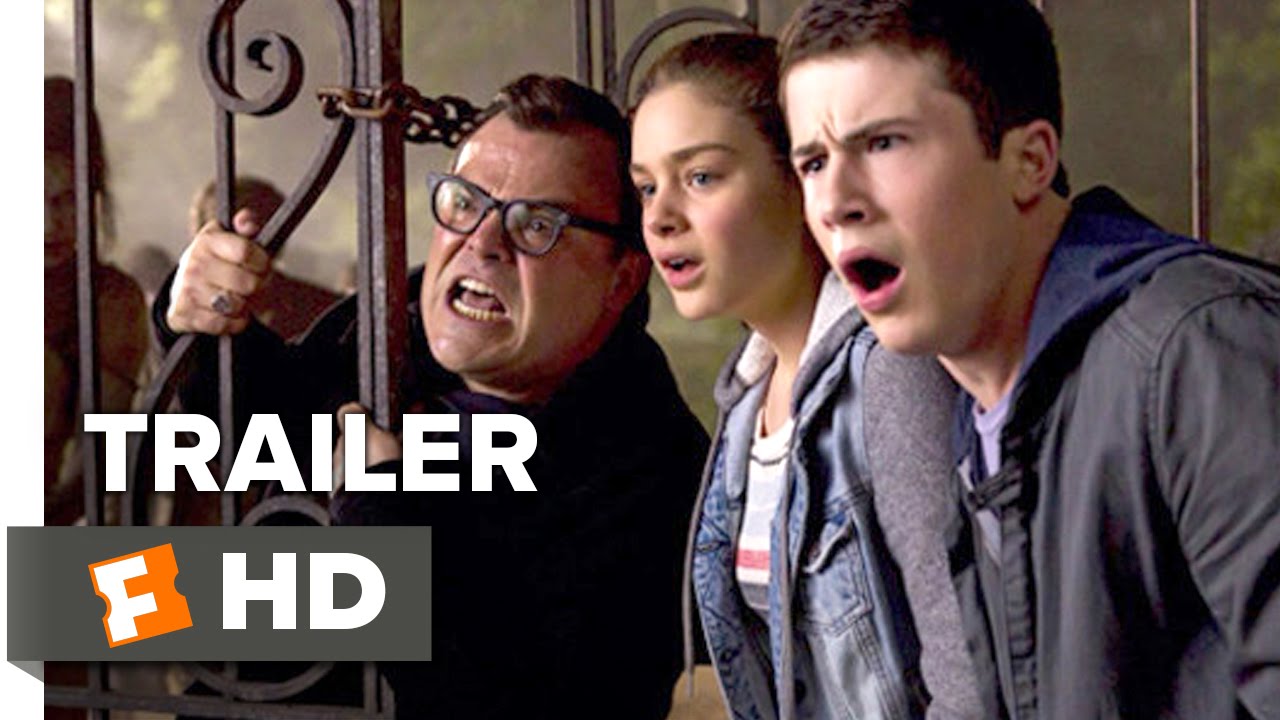
Watch the Trailer
Why Watch This Movie With Your Students
Here's what your students naturally take away from the movie, whether through themes, values, ideas, or perspectives.
📚 R.L. Stine is a character in his own fictional universe. The movie puts the real author inside a story populated by his own creations and asks what it would mean to be responsible for the monsters you invented. That meta-layer gives ELA classes something specific to discuss about authorship, imagination, and the relationship between a writer and their work.
🔓 The premise that stories have power is built into the plot mechanics. The monsters are not loose because of magic or accident in a vague sense. They are loose because a specific book was opened. Every action in the movie follows from that causal chain, which gives students a clear and trackable narrative structure to follow and analyze.
🎃 The monster roster draws from across the Goosebumps series. The abominable snowman, the werewolf of Fever Swamp, the lawn gnomes, the zombie cheerleaders, the giant praying mantis, and Slappy all appear. For students who have read the books, the movie functions as a kind of reunion. For those who haven't, it introduces them to a range of creatures each with their own logic and origin.
😂 The tone is comic rather than genuinely scary. The movie is aware of its own absurdity and plays it for laughs as much as for chills. Slappy is menacing but also funny. The monster attacks are chaotic and visually inventive rather than threatening. The balance makes it accessible to students at the lower end of the grade range without feeling condescending to older students.
🤝 Stine's relationship with Hannah drives the emotional center of the story. Without giving away the twist, the father-daughter dynamic between Stine and Hannah turns out to be more complicated than it first appears, and the movie uses that revelation to give the story emotional stakes that go beyond monster-chasing.
✍️ The movie is a celebration of the Goosebumps books and of reading. Stine's manuscripts are treated as genuinely powerful objects, worth locking up, worth protecting, worth fighting over. The movie makes a clear case that stories matter, which is a useful frame for an ELA classroom discussion about why what we read and write has significance.
Age Suitability and Content
This movie is rated PG.
⚠️ Things to be aware of:
- Monster chase sequences and scary creature imagery throughout, designed to be exciting rather than disturbing.
- No language beyond mild insults, no sexual content, and no violence beyond cartoon-level monster mayhem.
📋 A free editable parent permission slip is available for this movie. It explains the educational benefits of watching movies in class and includes a space for parental consent. → Download Free Permission Slip on TpT (Free resource)
Note for educators: Movie details and age ratings in this post are sourced from IMDb, Common Sense Media, and Wikipedia to help ensure accuracy.
How My Movie Guide Helps You Teach It
📚 English Language Arts Teachers. Goosebumps is a good fit for ELA classes working on creative writing, narrative structure, or the relationship between authors and their work. The meta-premise gives students a concrete frame for discussing authorship, and the three writing tasks in Part 3 cover descriptive, genre, and narrative writing in sequence. The guide includes differentiated comprehension question sets for mixed-ability classes.
🗣️ ESL and ELL Teachers. The multiple choice question set works well with ESL and ELL students. The movie's fast-paced visual storytelling and clear cause-and-effect plot also support comprehension for English language learners, since the monster action is communicated primarily through what is shown on screen.
🎬 Substitute Teachers and Cover Lessons. The guide is self-contained and requires no setup from the class teacher. The two differentiated question sets cover a range of ability levels without additional preparation, and the storyboard and writing tasks give students structured independent work to continue after the viewing.
🏠 Homeschool Parents. Goosebumps works well for home learners across the upper elementary and middle school range, particularly around Halloween. The two question sets give families flexibility to match the activity to the learner, and the monster design and book review tasks in Part 3 make engaging standalone creative projects.
🌟 Supporting All Learners Movie guides can be a wonderfully calm fit for students with autism, learning difficulties, and mild to severe disabilities. The structured format gives every student a clear purpose during viewing, easing uncertainty and allowing them to engage at their own pace. If you teach in a special education or learning support setting, you may find this guide a gentle and practical resource. Find out more about why movies work for diverse learners.
What's Inside the Guide
This is a 12-page classroom-ready resource.
Part 1: Comprehension Questions
Two differentiated question sets covering the movie in chronological order, both with answer keys included. Students can complete 30 multiple choice questions with three possible answers each, or 30 full sentence answer questions. The multiple choice set works well with ESL and ELL students.
Part 2: Storyboard and Synopsis
Students create a 9-scene storyboard illustrating pivotal events from the movie, with a short description for each scene. They then use their completed storyboard as a guide to write a synopsis of the movie.
Part 3: Creative and Essay Writing
Three connected writing tasks. First, students imagine R.L. Stine has asked them to invent a new monster for one of his books: they complete a monster profile and draw it. Second, students imagine Stine was so impressed that he used their monster in a book, and they write a review of that imaginary book as though they have read it. Third, students choose one of five characters (Zach, Hannah, Champ, R.L. Stine, or Slappy) and write a recount of events starting from the moment the first book is opened.
“I absolutely LOVE this resource! It was the perfect assignment for my 8th graders to do during the busy week prior to Fall Break because it was easy enough to not overwhelm them, yet engaging enough to hold their attention all hour! Thank you so much for sharing this resource!”
— Chandler W.
“Movie guide was perfect to help my students stay focused as they watched the Goosebumps movie after completing a unit based around the idea of fear.”
— Bridget G.
How These Guides Work: From Movie to Lesson
Watching a movie is not a break from learning. It reaches students through sight, sound, and story at once, engaging the brain in ways text alone does not, and the structured work around it is what turns the viewing into a genuine lesson. You can read the research behind this on the Why Movies Work page.
- A Teacher Notes and General Directions page opens the guide with a brief overview of everything inside: what the movie is about, then each part of the guide in order with a short description of what it entails. You know what to expect from the whole resource before you hand out a single page, so you can pick up the guide cold and teach it the same day.
- Answer keys are included for the comprehension question sets, so grading is quick and you are not rewatching the movie to check answers. Some guides also include example answers for the creative and written activities.
- Print and go: classroom ready, with no additional preparation needed. Print one the morning you need it and the lesson is ready.
- Substitute and first-timer friendly. A guide can be handed to a substitute or picked up by a teacher covering the topic for the first time. Nobody running the session needs to have seen the movie.
- Differentiated comprehension sets. Most guides include two or three question sets at different difficulty levels, and most include a multiple-choice option that works well for ESL and ELL students. One class set covers your strongest readers, your strugglers, and your language learners without separate prep.
- Activities that go beyond recall. Each guide includes structured activities that ask students to engage with the movie, not just watch it, ranging from creative and written tasks to discussion and critical thinking questions depending on the guide. That variety matters in a mixed classroom: a student who freezes on a written question set may show real understanding through a drawing or a creative task, and a confident writer gets room to go beyond recall. For the teacher, it turns a movie session into work you can grade: comprehension questions show whether students followed the plot, and the activities beyond them show whether they understood it.