By Mr Hull's Movie Guides
Watch the Trailer

Why Watch This Movie With Your Students
Here's what your students naturally take away from the movie, whether through themes, values, ideas, or perspectives.
🐰 Introduces a story about family legacy versus personal ambition. A young rabbit is expected to take over a role passed down for generations, but wants something different for his own life. Students can discuss the tension between honoring a legacy and choosing your own path.
🥁 Follows a character chasing an unconventional dream. Rather than becoming the next Easter Bunny, he wants to be a drummer, a goal that has nothing to do with the responsibility everyone expects of him. Students see ambition framed as something personal rather than inherited.
🤝 Builds an unlikely friendship between two very different characters. A talking rabbit and a directionless young adult end up relying on each other, each pushing the other toward a version of themselves they had been avoiding. Students see how an unexpected partnership can prompt real personal growth.
🐣 Introduces a genuine villain plot that raises the stakes. A trusted second in command schemes to seize control while the rightful leader is away, giving the story real consequences rather than a low conflict, purely comedic plot. Students stay engaged as the two friends have to actively stop the takeover.
👨👦 Explores two parallel father son relationships. Both main characters are navigating what their fathers expect of them, offering students two versions of the same central conflict to compare. Students can examine how each relationship resolves differently by the end.
🏆 Resolves with reconciliation rather than a clean escape from responsibility. The main character does not simply abandon his family duty to become a drummer, he finds a way to reconcile his ambition with his responsibility. Students see growth framed as compromise rather than as choosing one path and rejecting the other entirely.
Age Suitability and Content
This movie is rated PG.
⚠️ Things to be aware of:
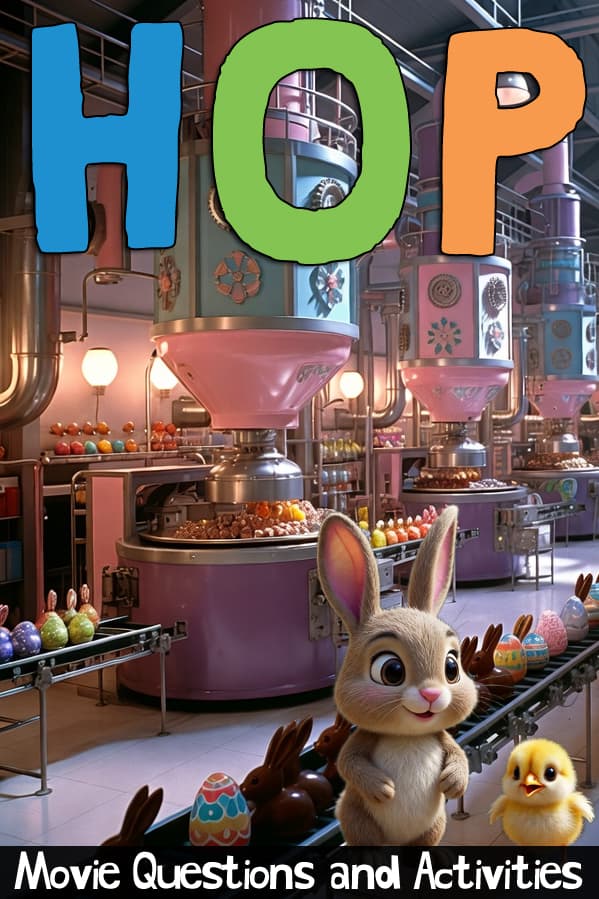
- Includes several scenes of slapstick peril, including a character placed on a conveyor belt toward a candy making machine.
- A few mild insults are used between characters, including words like stupid and idiot.
- Includes a brief scene at a location associated with adult content and a few lines of innuendo that are unlikely to register with younger viewers.
- No drinking, drug use, or smoking of any kind.
📋 A free editable parent permission slip is available for this movie. It explains the educational benefits of watching movies in class and includes a space for parental consent. → Download Free Permission Slip on TpT (Free resource)
Note for educators: Movie details and age ratings in this post are sourced from IMDb, Common Sense Media, and Wikipedia to help ensure accuracy.
How My Movie Guide Helps You Teach It
📚 English Language Arts Teachers. This movie's clear sequence of events, from E.B.'s escape to the final showdown at the candy factory, gives students a strong foundation for sequencing and synopsis work, while its two parallel main characters offer plenty to compare in a character study. The guide includes two sets of differentiated comprehension questions along with a scene by scene storyboard task and a synopsis writing activity built directly from that sequencing work.
🗣️ ESL and ELL Teachers. The movie's simple, comedic dialogue and visual storytelling make the plot easy to follow even for students still building their English. The multiple choice question set is written with this in mind and works well alongside the guide's other comprehension activities for ESL and ELL learners.
🎬 Substitute Teachers and Cover Lessons. Hand this one to a substitute and walk away. The comprehension questions, storyboard and synopsis task, and word puzzles are all self contained with answer keys included for the comprehension sets and puzzles, so a substitute can run the full session without having seen the movie.
🏠 Homeschool Parents. This movie's blend of comedy and a genuine father son storyline makes it a natural pick for an Easter themed home learning session. The guide's mix of comprehension questions, storyboard and synopsis writing, and word puzzles gives a homeschool parent a ready made lesson with very little prep.
💙 SEL Teachers. This movie gives students two characters working through the fear of disappointing a parent, one avoiding a role he feels unprepared for, the other trying to prove he can finally take on responsibility. The comprehension questions keep students accountable while they watch both characters move from avoidance toward honest compromise with their families.
🌟 Supporting All Learners Movie guides can be a wonderfully calm fit for students with autism, learning difficulties, and mild to severe disabilities. The structured format gives every student a clear purpose during viewing, easing uncertainty and allowing them to engage at their own pace. If you teach in a special education or learning support setting, you may find this guide a gentle and practical resource. Find out more about why movies work for diverse learners.
What's Inside the Guide
This is a 14-page classroom-ready resource.
Part 1: Comprehension Questions
Two differentiated sets of comprehension questions in chronological order. The first set has 35 questions requiring full sentence answers, the second has 35 multiple choice questions with three answer options each, which also works well for ESL and ELL students. Answer keys are included for both sets.
Part 2: Storyboard and Synopsis
Students create a nine scene storyboard illustrating pivotal events from the movie, with a short description explaining the main idea of each scene, using the comprehension questions to guide sequencing. Using their storyboards as a guide, students then write a synopsis of the movie.
Part 3: Fun Puzzles
A word search with 15 words or connected words, where students first unscramble 10 of the words before answering 5 clues for the rest. Also includes a range of short word puzzles covering true or false statements, matching quotes with characters, describing characters with words, ordering events, and odd one out. Answers are included.
How These Guides Work: From Movie to Lesson
Watching a movie is not a break from learning. It reaches students through sight, sound, and story at once, engaging the brain in ways text alone does not, and the structured work around it is what turns the viewing into a genuine lesson. You can read the research behind this on the Why Movies Work page.
- A Teacher Notes and General Directions page opens the guide with a brief overview of everything inside: what the movie is about, then each part of the guide in order with a short description of what it entails. You know what to expect from the whole resource before you hand out a single page, so you can pick up the guide cold and teach it the same day.
- Answer keys are included for the comprehension question sets, so grading is quick and you are not rewatching the movie to check answers. Some guides also include example answers for the creative and written activities.
- Print and go: classroom ready, with no additional preparation needed. Print one the morning you need it and the lesson is ready.
- Substitute and first-timer friendly. A guide can be handed to a substitute or picked up by a teacher covering the topic for the first time. Nobody running the session needs to have seen the movie.
- Differentiated comprehension sets. Most guides include two or three question sets at different difficulty levels, and most include a multiple-choice option that works well for ESL and ELL students. One class set covers your strongest readers, your strugglers, and your language learners without separate prep.
- Activities that go beyond recall. Each guide includes structured activities that ask students to engage with the movie, not just watch it, ranging from creative and written tasks to discussion and critical thinking questions depending on the guide. That variety matters in a mixed classroom: a student who freezes on a written question set may show real understanding through a drawing or a creative task, and a confident writer gets room to go beyond recall. For the teacher, it turns a movie session into work you can grade: comprehension questions show whether students followed the plot, and the activities beyond them show whether they understood it.