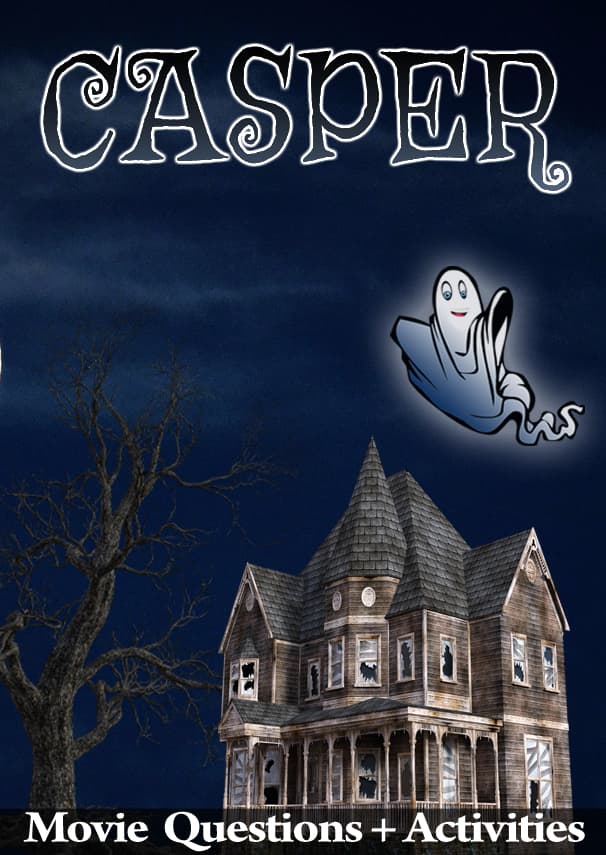
By Mr Hull's Movie Guides

Watch the Trailer

Why Watch This Movie With Your Students
Here's what your students naturally take away from the movie, whether through themes, values, ideas, or perspectives.
🔍 First Impressions Can Be Wrong. The neighborhood kids are afraid of Mr. Nebbercracker because he yells at them and keeps any toy that lands on his lawn. The story later reveals the reason behind his behavior, which the kids had not guessed when they assumed the worst about him.
🤝 Three Friends, Three Contributions. DJ, Chowder, and Jenny each bring something different to the fight against the house. Jenny forces the house to release them at a key moment, and Chowder uses an excavator in the final confrontation.
🕯️ A Haunting Rooted in Loss. The house's story is tied to a marriage and a death, and it is revealed late in the movie. The climax centers on putting that spirit to rest.
🎃 A Halloween Setting and a Scary House. The story takes place around Halloween and ends with the kids going trick-or-treating. It is an animated comedy horror movie, with a house that chases people down the street and swallows those it catches.
🧨 Kids Taking Matters Into Their Own Hands. With DJ's parents away and the police dismissing their report, the kids come up with their own plan to stop the house. It involves cold medicine to put the house to sleep and, in the end, dynamite to destroy it.
Age Suitability and Content
This movie is rated PG.
⚠️ Things to be aware of:
- Frightening sequences and mild fantasy violence, strongest in the last 20 minutes.
- Mild language such as crap and screw, plus name-calling and potty humor.
- Brief alcohol use.
- Mild puberty and romance references, with no nudity.
📋 A free editable parent permission slip is available for this movie. It explains the educational benefits of watching movies in class and includes a space for parental consent. → Download Free Permission Slip on TpT (Free resource)
Note for educators: Movie details and age ratings in this post are sourced from IMDb, Common Sense Media, and Wikipedia to help ensure accuracy.
How My Movie Guide Helps You Teach It
📚 English Language Arts Teachers. The movie gives an ELA class a mystery of clues and assumptions with a late reveal, so students can track how the kids' understanding of the house changes. Students build sequencing through the storyboard, scene selection and summarizing through the mini synopsis, descriptive writing through the monster house design, and vocabulary through the crossword and word search. Three differentiated comprehension question sets keep mixed-ability classes accountable throughout.
🗣️ ESL and ELL Teachers. The story is told through clear visual action, such as a house chasing people down a street, which gives learners context for following the plot. The questions follow the movie in chronological order, and the multiple choice set works well with ESL and ELL students.
🎬 Substitute Teachers and Cover Lessons. With teacher directions, organized materials, three comprehension question sets, a storyboard, and a monster house design task, the guide gives a substitute everything needed to run the session. Answer keys are included for the comprehension question sets and the crossword, and a substitute can manage the lesson without having seen the movie.
🏠 Homeschool Parents. The movie's scary neighborhood mystery suits home viewing for older elementary and middle school students, and its theme of first impressions gives a parent something to talk through afterward. The guide works well for a single student, with three question sets to match their level, a storyboard, a monster house design task, and a crossword and word search.
💙 SEL Teachers. An SEL lesson on first impressions, perspective-taking, and grief has a clear story to work from, as the kids' fear of Mr. Nebbercracker gives way to understanding why he acted as he did. There are no dedicated SEL activities in the guide, though the comprehension questions give students a structured task and keep them accountable while they watch.
🌟 Supporting All Learners Movie guides can be a wonderfully calm fit for students with autism, learning difficulties, and mild to severe disabilities. The structured format gives every student a clear purpose during viewing, easing uncertainty and allowing them to engage at their own pace. If you teach in a special education or learning support setting, you may find this guide a gentle and practical resource. Find out more about why movies work for diverse learners.
What's Inside the Guide
This is a 16-page classroom-ready resource.
The questions follow the movie in chronological order, in three sets for differentiation. Answer keys are included.
- 35 question set requiring full sentence answers.
- 25 question set requiring full sentence answers (10 removed from the 35 question set).
- 25 multiple choice question set with 3 possible answers per question, which may also work well with ESL and ELL students.
Two tasks built on the movie's pivotal scenes.
- A nine scene storyboard illustrating pivotal events from the beginning, middle, and end of the movie, with a short sentence describing the action in each scene, using the movie questions to guide sequencing.
- A mini synopsis where students choose one scene from each part of their storyboard (beginning, middle, and end), write the box number, and write a short paragraph about what happens in that scene.
A design task and two linked word puzzles.
- Students draw and label their own monster house, then answer four short questions about it. The questions are open-ended, so answers will vary.
- A 15-question crossword whose answers are the words to find in the word search. An answer key is included.
- A word search containing the crossword answers.
How These Guides Work: From Movie to Lesson
Watching a movie is not a break from learning. It reaches students through sight, sound, and story at once, engaging the brain in ways text alone does not, and the structured work around it is what turns the viewing into a genuine lesson. You can read the research behind this on the Why Movies Work page.
- A Teacher Notes and General Directions page opens the guide with a brief overview of everything inside: what the movie is about, then each part of the guide in order with a short description of what it entails. You know what to expect from the whole resource before you hand out a single page, so you can pick up the guide cold and teach it the same day.
- Answer keys are included for the comprehension question sets, so grading is quick and you are not rewatching the movie to check answers. Some guides also include example answers for the creative and written activities.
- Print and go: classroom ready, with no additional preparation needed. Print one the morning you need it and the lesson is ready.
- Substitute and first-timer friendly. A guide can be handed to a substitute or picked up by a teacher covering the topic for the first time. Nobody running the session needs to have seen the movie.
- Differentiated comprehension sets. Most guides include two or three question sets at different difficulty levels, and most include a multiple-choice option that works well for ESL and ELL students. One class set covers your strongest readers, your strugglers, and your language learners without separate prep.
- Activities that go beyond recall. Each guide includes structured activities that ask students to engage with the movie, not just watch it, ranging from creative and written tasks to discussion and critical thinking questions depending on the guide. That variety matters in a mixed classroom: a student who freezes on a written question set may show real understanding through a drawing or a creative task, and a confident writer gets room to go beyond recall. For the teacher, it turns a movie session into work you can grade: comprehension questions show whether students followed the plot, and the activities beyond them show whether they understood it.