By Mr Hull's Movie Guides

Watch the Trailer
Why Watch This Movie With Your Students
Here's what your students naturally take away from the movie, whether through themes, values, ideas, or perspectives.
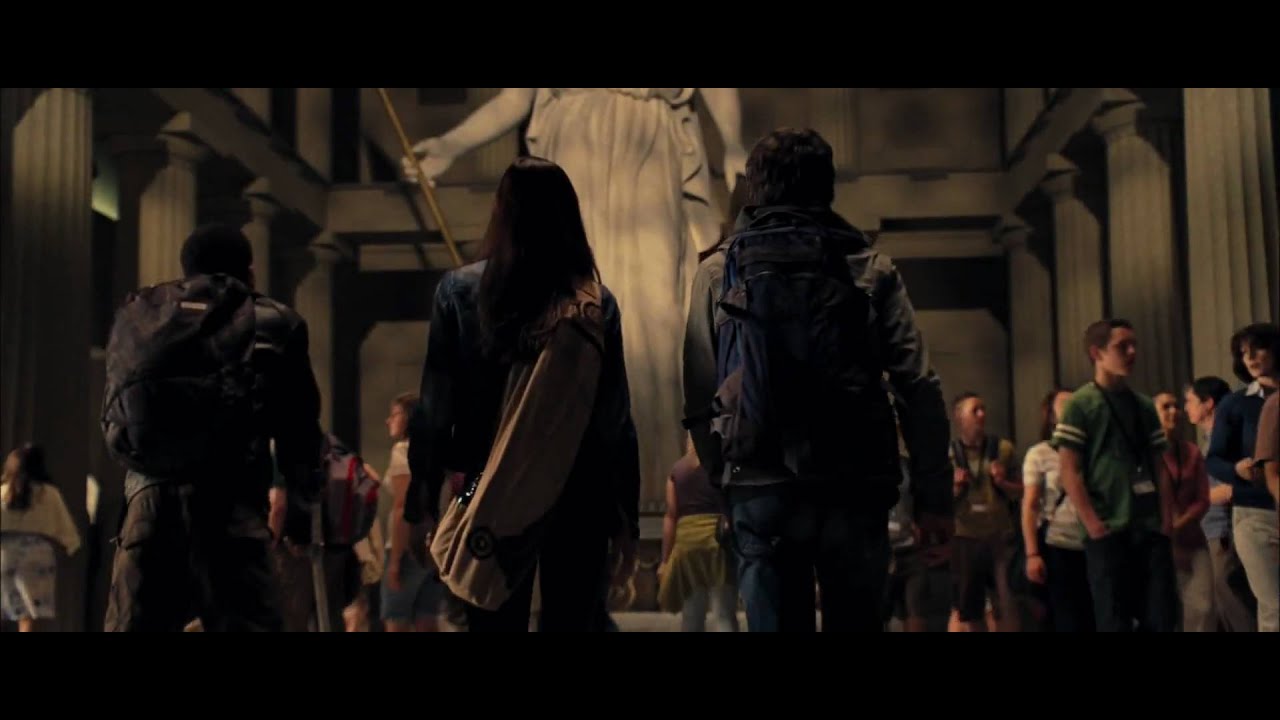
🏛️ Greek mythology transplanted into the present day. The movie's central conceit is that the Olympian gods still exist, hidden just behind everyday American life. Recognizable mythology, from Medusa's gaze to the three-headed dog Cerberus, appears in shopping centers, casinos, and city landmarks. Students who have studied ancient Greece will encounter those myths in a new context rather than as static classroom material.
⚡ A hero who doesn't fit the standard mold. Percy struggles with dyslexia and ADHD throughout the story, traits that have made school difficult and led teachers and peers to underestimate him. The movie's reveal is that these are signs of his demigod heritage rather than shortcomings. His brain is wired to read ancient Greek, and his distractibility is a survival reflex. That reframing is explicit and runs through the whole story.
📚 A book adaptation that makes different choices. The 2010 movie diverges from Rick Riordan's novel in significant ways: the characters are older, several plot points are changed, and the tone is more action-focused than the book's wry humor. For classes that have read the novel, those differences are a concrete starting point for discussing what adaptation involves and what gets prioritized when a story moves from page to screen.
🤝 A trio built on friendship and complementary strengths. Percy, Grover, and Annabeth each bring distinct abilities and backgrounds to the quest. Annabeth is the strategist, trained in combat and steeped in mythology; Grover is the loyal protector who has been watching over Percy for years. The three characters work together not by being similar but by compensating for each other's gaps, which gives the teamwork dimension of the story something concrete to point to.
🌍 Ancient stories in familiar modern settings. The movie places its mythological locations in real American geography: the Underworld below Los Angeles, the Lotus Casino in Las Vegas, the final showdown at the top of the Empire State Building. This grounding in recognizable places makes the mythology feel immediate rather than distant, and gives students a map they can trace from ancient world to modern context.
👨👩👦 A story about complicated family loyalty. Percy's driving motivation is saving his mother, who is taken to the Underworld early in the story. The movie also explores what it means to be the child of an absent parent, a god who has been forbidden from making direct contact, and how that absence shapes a person's sense of identity. These family dynamics add emotional weight to what is otherwise a fast-moving adventure.
Age Suitability and Content
This movie is rated PG.
⚠️ Things to be aware of:
- Fantasy violence throughout: sword fights, monster battles including a hydra and a Minotaur, and combat in the Underworld. Some scenes are intense but nothing is gory.
- Several creatures are designed to be frightening, including a demonic Fury, Medusa, and a version of Hades with skeletal wings emerging from fire.
- Percy's mother appears to be killed early in the story, though she is later rescued.
- The Lotus Casino sequence involves flowers with a mind-altering effect that makes patrons lose track of time. Characters including teens are shown in a bar-like environment.
- A character drinks beer in multiple scenes. Mild language: 'ass' used a few times.
- Brief romantic content: characters kiss, and one character flirts throughout the movie.
- No sexual content beyond mild flirtation.
📋 A free editable parent permission slip is available for this movie. It explains the educational benefits of watching movies in class and includes a space for parental consent. → Download Free Permission Slip on TpT (Free resource)
Note for educators: Movie details and age ratings in this post are sourced from IMDb, Common Sense Media, and Wikipedia to help ensure accuracy.
How My Movie Guide Helps You Teach It
📚 English Language Arts Teachers. Percy Jackson is a strong ELA fit for classes studying mythology, book-to-movie adaptation, or hero's journey story structure. The guide covers a wide range of writing objectives, from three differentiated comprehension sets through to creative narrative tasks, with enough scaffolding for mixed-ability classes.
🗣️ ESL and ELL Teachers. The multiple choice question set is designed to work well for ESL and ELL students, using clear language and a three-option format that reduces the writing load while keeping students accountable. The movie's action-driven storytelling and strong visual sequences also help comprehension for students still developing English reading fluency.
🌐 Social Studies Teachers. On TPT, Social Studies covers Ancient History, which is the direct subject connection here. Teachers running Greek mythology units frequently use this movie as a capstone viewing experience, and the movie's references to specific gods, monsters, and mythological locations give students a chance to apply prior knowledge. The guide does not include Social Studies-specific activities, but the comprehension questions give students a structured task during the viewing.
🎬 Substitute Teachers and Cover Lessons. The guide is structured and self-contained, making it a practical choice for substitute teachers. Students can work through all four parts independently without needing additional setup or explanation.
🏠 Homeschool Parents. The three differentiated question sets and range of creative writing tasks make this a flexible option for homeschool families at different ability levels. The movie's mythology connections also give parents a natural bridge into further study of ancient Greece.
📜 History Teachers. Ancient History teachers covering Greek mythology will find the movie a useful complement to primary source study. The movie portrays a wide range of Olympian gods, mythological creatures, and classic Greek narrative conventions in a format that tends to hold student attention well. The guide's comprehension questions are the primary accountability tool for History use; there are no dedicated history activities in the guide.
🌟 Supporting All Learners Movie guides can be a wonderfully calm fit for students with autism, learning difficulties, and mild to severe disabilities. The structured format gives every student a clear purpose during viewing, easing uncertainty and allowing them to engage at their own pace. If you teach in a special education or learning support setting, you may find this guide a gentle and practical resource. Find out more about why movies work for diverse learners.
What's Inside the Guide
This is a 16-page classroom-ready resource.
Part 1: Comprehension Questions
Three differentiated sets of questions in chronological order. The first set has 40 questions requiring full sentence answers. The second set has 30 questions requiring full sentence answers (10 removed from the 40-question set for differentiation). The third set has 30 multiple choice questions with three possible answers, designed to work well for ESL and ELL students. Answer keys are included for all three sets.
Part 2: Storyboard and Synopsis
A 9-scene storyboard in which students illustrate and summarize key events in chronological order, identifying the main idea of each scene. Students then use their completed storyboard as a scaffold to write a structured synopsis of the movie, practicing narrative organization and written expression.
Part 3: Creativity
Two imaginative writing tasks tied directly to the movie's world. In the first, students imagine that one of their parents is a Greek god and write a recount of their first day at camp, including being introduced to their new weapons and powers. In the second, students imagine they are out training in the forest when a beast attacks and nearly kills them. They write a detailed account of what happened, describe and draw the beast, explain how they escaped, and identify where it took place.
Part 4: Word Search and Crossword
A 15-question crossword puzzle with an answer key. The answers to the crossword questions are also the words to find in the accompanying word search, creating a two-stage puzzle activity.
“After finishing a unit on Greek mythology, my students had a Percy Jackson movie day. This resource helped students thoughtfully follow along the movie and even anticipate what would happen next.”
— Sarah R.
“Excellent resource to wrap up a mythology! My students enjoyed working on it and it was a timesaver for me.”
— Christina P.
How These Guides Work: From Movie to Lesson
Watching a movie is not a break from learning. It reaches students through sight, sound, and story at once, engaging the brain in ways text alone does not, and the structured work around it is what turns the viewing into a genuine lesson. You can read the research behind this on the Why Movies Work page.
- A Teacher Notes and General Directions page opens the guide with a brief overview of everything inside: what the movie is about, then each part of the guide in order with a short description of what it entails. You know what to expect from the whole resource before you hand out a single page, so you can pick up the guide cold and teach it the same day.
- Answer keys are included for the comprehension question sets, so grading is quick and you are not rewatching the movie to check answers. Some guides also include example answers for the creative and written activities.
- Print and go: classroom ready, with no additional preparation needed. Print one the morning you need it and the lesson is ready.
- Substitute and first-timer friendly. A guide can be handed to a substitute or picked up by a teacher covering the topic for the first time. Nobody running the session needs to have seen the movie.
- Differentiated comprehension sets. Most guides include two or three question sets at different difficulty levels, and most include a multiple-choice option that works well for ESL and ELL students. One class set covers your strongest readers, your strugglers, and your language learners without separate prep.
- Activities that go beyond recall. Each guide includes structured activities that ask students to engage with the movie, not just watch it, ranging from creative and written tasks to discussion and critical thinking questions depending on the guide. That variety matters in a mixed classroom: a student who freezes on a written question set may show real understanding through a drawing or a creative task, and a confident writer gets room to go beyond recall. For the teacher, it turns a movie session into work you can grade: comprehension questions show whether students followed the plot, and the activities beyond them show whether they understood it.