By Mr Hull's Movie Guides

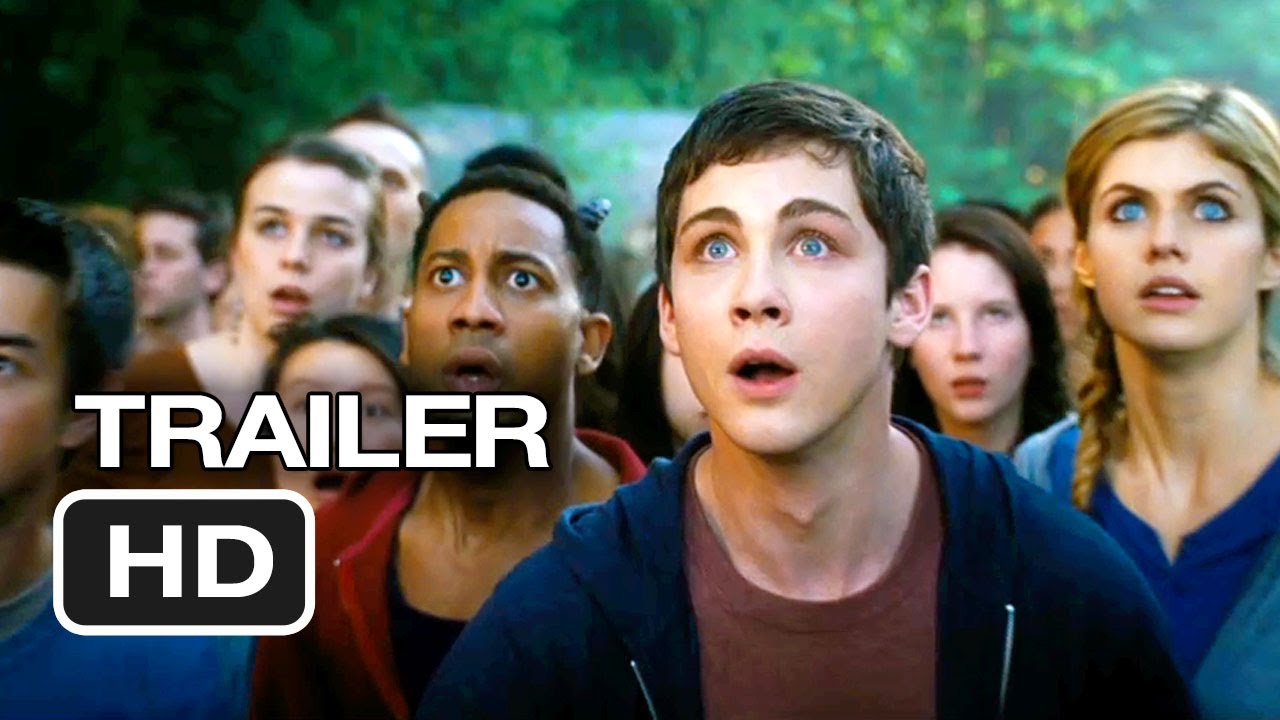
Watch the Trailer
What's Inside the Guide
This is a 16-page classroom-ready resource.
Three sets for differentiation, covering the movie in chronological order. Answer keys are included for all three sets.
- 40 question set requiring full sentence answers.
- 30 question set requiring full sentence answers, a reduced version of the first.
- 30 multiple choice question set with 3 possible answers each, which has worked well with ESL students.
- A 9 scene storyboard where students illustrate and summarize key events in chronological order.
- A structured plot summary of the movie, written using the completed storyboard.
A just for fun puzzle set built around 10 questions whose answers become the words to find in the word search, plus 5 additional hidden words. Answer key included.
Students write a short story about a quest given to one of the demigods at Camp Half-Blood, using included question prompts to help develop their story's content.
“I loved using this resource in my classroom. It was very helpful.”
— Ashley R.
“My students were engaged, and this was a great resource.”
— Sharon V.
Why Watch This Movie With Your Students
Here's what your students naturally take away from the movie, whether through themes, values, ideas, or perspectives.
⚡ Brings Greek Mythology Into a Modern Setting. The movie places gods, monsters, and legendary objects like the Golden Fleece into a world of cell phones, UPS trucks, and coffee shops. Students get to see how ancient stories can be reimagined without losing their core structure.
🐂 Introduces a Wide Range of Mythological Creatures. From the Colchis Bull to the cyclops Polyphemus, the movie draws directly from Greek mythology's most recognizable monsters. Students encounter figures they may already know from mythology units and see them dramatized in a new context.
🧭 Follows a Character Overcoming Self-Doubt to Lead. Percy has to push past his own uncertainty to make difficult decisions and protect his friends throughout the quest. His growth over the course of the story gives students a concrete example of what leadership looks like when it is uncomfortable.
👦 Challenges First Impressions Through Tyson's Character. Percy initially struggles to accept his half brother Tyson, a cyclops, because he does not fit Percy's expectations of family. The relationship gives students a way into discussing how appearances can lead people to misjudge who deserves their trust.
🛡️ Shows the Value of Relying on Others. Percy cannot complete his quest alone, and the movie repeatedly emphasizes that he needs help, support, and guidance from his friends and mentors to succeed. It offers students a clear example of teamwork built on genuine trust rather than convenience.
📖 Offers a Way Into Discussing Book to Movie Adaptation. As a movie based on the second book in Rick Riordan's popular series, it gives students a concrete case study for comparing a novel to its screen adaptation. Students familiar with the books can evaluate what changed and why.
Age Suitability and Content
This movie is rated PG.
⚠️ Things to be aware of:
- Fantasy action and peril throughout, including large-scale fight scenes and a creature that attacks Camp Half-Blood.
- A flashback depicts a young girl being killed by a cyclops, and a character is later shown dying before being revived.
- Frightening mythological creatures appear, including a giant cyclops and a resurrected villain with an intimidating design.
- Very mild language, including a couple of uses of "damn" and a character interrupted before completing a stronger word.
- No sexual content beyond brief, non-romantic looks between two characters, and no substance use of any kind.
📋 A free editable parent permission slip is available for this movie. It explains the educational benefits of watching movies in class and includes a space for parental consent. → Download Free Permission Slip on TpT (Free resource)
Note for educators: Movie details and age ratings in this post are sourced from IMDb, Common Sense Media, and Wikipedia to help ensure accuracy.
How My Movie Guide Helps You Teach It
Click your subject below to see how this guide supports it:
📚 English Language Arts Teachers
🗣️ ESL and ELL Teachers
🌐 Social Studies Teachers
🎬 Substitute Teachers and Cover Lessons
🏠 Homeschool Parents
💙 SEL Teachers
🌟 Supporting All Learners A movie gives students a story to follow, and the guide gives them questions to work through as they watch. For students with autism, learning difficulties, and mild to severe disabilities, that combination provides a clear focus for the lesson and a concrete way to show understanding. The format can be useful in special education and learning support classrooms, where teachers need activities that give students a defined task during viewing. Find out more about why movies work for diverse learners.
How These Guides Work: From Movie to Lesson
Watching a movie is not a break from learning. It reaches students through sight, sound, and story at once, engaging the brain in ways text alone does not, and the structured work around it is what turns the viewing into a genuine lesson. You can read the research behind this on the Why Movies Work page.
- A Teacher Notes and General Directions page opens the guide with a brief overview of everything inside: what the movie is about, then each part of the guide in order with a short description of what it entails. You know what to expect from the whole resource before you hand out a single page, so you can pick up the guide cold and teach it the same day.
- Answer keys are included for the comprehension question sets, so grading is quick and you are not rewatching the movie to check answers. Some guides also include example answers for the creative and written activities.
- Print and go: classroom ready, with no additional preparation needed. Print one the morning you need it and the lesson is ready.
- Substitute and first-timer friendly. A guide can be handed to a substitute or picked up by a teacher covering the topic for the first time. Nobody running the session needs to have seen the movie.
- Differentiated comprehension sets. Most guides include two or three question sets at different difficulty levels, and most include a multiple-choice option that works well for ESL and ELL students. One class set covers your strongest readers, your strugglers, and your language learners without separate prep.
- Activities that go beyond recall. Each guide includes structured activities that ask students to engage with the movie, not just watch it, ranging from creative and written tasks to discussion and critical thinking questions depending on the guide. That variety matters in a mixed classroom: a student who freezes on a written question set may show real understanding through a drawing or a creative task, and a confident writer gets room to go beyond recall. For the teacher, it turns a movie session into work you can grade: comprehension questions show whether students followed the plot, and the activities beyond them show whether they understood it.