By Mr Hull's Movie Guides
Watch the Trailer

What's Inside the Guide
This is a 6-page classroom-ready resource.
12 questions in chronological order requiring full sentence answers. Answer key included.
Students use the episode questions to help with sequencing.
- A six scene storyboard of what they believe to be the most important parts of the episode, with a brief description for each scene.
- A synopsis of the episode, written using their storyboards as a guide.
Students first discuss what they believe the overall theme of the episode to be. Based on the theme 'Belief and Magic,' they then complete four questions individually, which can later be discussed and debated as a class. Example answers included.
Why Watch This TV Episode With Your Students
Here's what your students naturally take away from the TV episode, whether through themes, values, ideas, or perspectives.
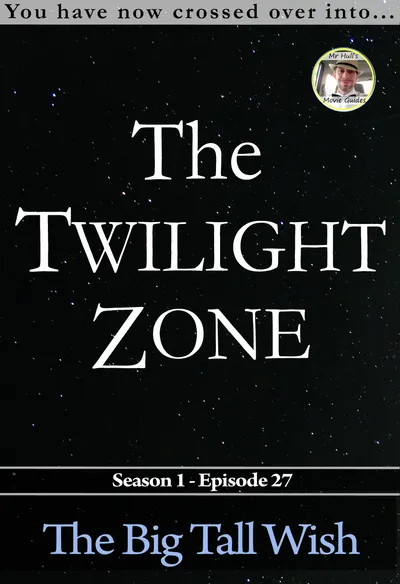
🥊 A character whose entire self worth rests on one fight. Bolie is established as a man who has given his whole career to boxing and has little to show for it beyond physical scars, making this comeback fight carry enormous weight before it even begins. Students get a clear picture of what is at stake for him beyond just winning or losing.
🌟 A child's belief presented without irony or condescension. Henry's promise to make a wish for Bolie is treated as completely sincere, and the episode never suggests his belief in magic is naive or something to be corrected. This gives students a genuine example of a story taking a child's perspective seriously rather than using it as a punchline.
🤔 An adult's refusal to believe, even when the evidence is in front of him. Bolie briefly experiences the outcome Henry wished for, winning the fight with no memory of how, yet still cannot bring himself to accept that the wish caused it. Students can examine why someone might resist believing in something even when it seems to be happening right in front of them.
↩️ A twist that undoes itself instead of confirming the fantasy. Rather than the wish simply coming true and staying true, the episode reverses its own magic the moment Bolie refuses to believe in it, and he ends up losing the fight for real. This is an unusual structure for students to examine, where the story takes back its own premise rather than resolving it in the character's favor.
😔 An ending that offers no comfort or clear resolution. Bolie and Henry are left with a quiet, sad exchange about whether magic and wishes are real, and Henry decides he will not make any more wishes. Students get an honest, unresolved ending rather than one that ties everything up neatly, useful for discussing what a story can achieve without a happy conclusion.
🎭 A groundbreaking cast for its time. The episode featured an all black principal cast, a rarity for American television in 1960, and was later recognized for its contribution to race relations on screen. Students can examine the episode as an early example of representation in a medium that mostly excluded it at the time.
Age Suitability and Content
This TV episode is rated PG.
⚠️ Things to be aware of:
- The episode includes boxing match violence, including punches and a knockdown, without excessive detail.
- A character injures his hand by punching a wall during a backstage argument.
- There is no sexual content, strong language, or substance use in the episode.
📋 A free editable parent permission slip is available for this TV episode. It explains the educational benefits of watching TV episodes in class and includes a space for parental consent. → Download Free Permission Slip on TpT (Free resource)
Note for educators: TV episode details and age ratings in this post are sourced from IMDb, Common Sense Media, and Wikipedia to help ensure accuracy.
How My Guide Helps You Teach It
Click your subject below to see how this guide supports it:
📚 English Language Arts Teachers
🗣️ ESL and ELL Teachers
🎬 Substitute Teachers and Cover Lessons
🏠 Homeschool Parents
💙 SEL Teachers
🌟 Supporting All Learners A movie gives students a story to follow, and the guide gives them questions to work through as they watch. For students with autism, learning difficulties, and mild to severe disabilities, that combination provides a clear focus for the lesson and a concrete way to show understanding. The format can be useful in special education and learning support classrooms, where teachers need activities that give students a defined task during viewing. Find out more about why movies work for diverse learners.
How These Guides Work: From TV Episode to Lesson
Watching a TV episode is not a break from learning. It reaches students through sight, sound, and story at once, engaging the brain in ways text alone does not, and the structured work around it is what turns the viewing into a genuine lesson. You can read the research behind this on the Why Movies Work page.
- A Teacher Notes and General Directions page opens the guide with a brief overview of everything inside: what the TV episode is about, then each part of the guide in order with a short description of what it entails. You know what to expect from the whole resource before you hand out a single page, so you can pick up the guide cold and teach it the same day.
- Answer keys are included for the comprehension question sets, so grading is quick and you are not rewatching the TV episode to check answers. Some guides also include example answers for the creative and written activities.
- Print and go: classroom ready, with no additional preparation needed. Print one the morning you need it and the lesson is ready.
- Substitute and first-timer friendly. A guide can be handed to a substitute or picked up by a teacher covering the topic for the first time. Nobody running the session needs to have seen the TV episode.
- Differentiated comprehension sets. Most guides include two or three question sets at different difficulty levels, and most include a multiple-choice option that works well for ESL and ELL students. One class set covers your strongest readers, your strugglers, and your language learners without separate prep.
- Activities that go beyond recall. Each guide includes structured activities that ask students to engage with the TV episode, not just watch it, ranging from creative and written tasks to discussion and critical thinking questions depending on the guide. That variety matters in a mixed classroom: a student who freezes on a written question set may show real understanding through a drawing or a creative task, and a confident writer gets room to go beyond recall. For the teacher, it turns a TV episode session into work you can grade: comprehension questions show whether students followed the plot, and the activities beyond them show whether they understood it.