By Mr Hull's Movie Guides

Watch the Trailer
Why Watch This Movie With Your Students
Here's what your students naturally take away from the movie, whether through themes, values, ideas, or perspectives.
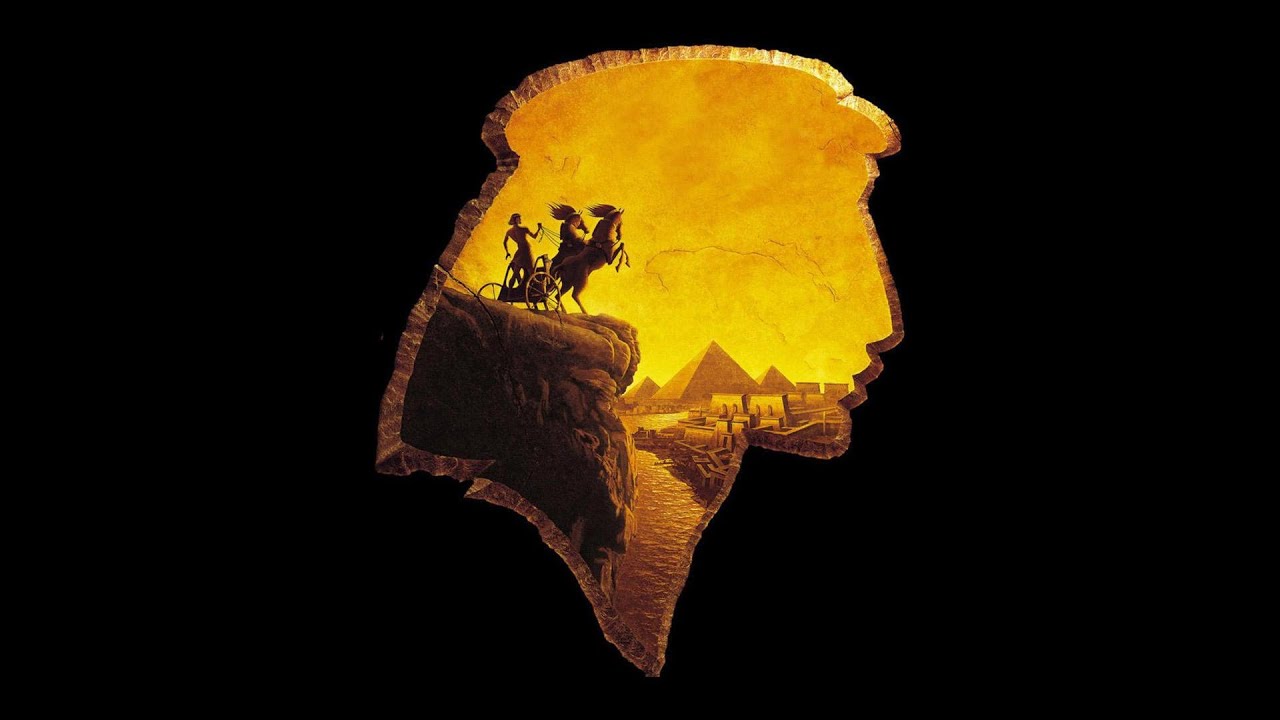
👑 Two brothers who end up on opposing sides of history. Moses and Ramses are raised together with real affection for each other, which makes their eventual conflict carry genuine emotional weight rather than a simple good versus evil setup. Students see how loyalty and morality can pull against each other.
📜 A retelling of one of history's most significant stories. The movie adapts the Book of Exodus, giving students exposure to a story that has shaped religious and cultural history for thousands of years, presented in a form built for a classroom setting.
⛓️ A clear picture of slavery and its human cost. The movie does not soften what life was like for the enslaved Hebrews, showing the physical and emotional toll of forced labor throughout Moses' journey. Students see the stakes of the story grounded in real suffering rather than abstraction.
🌊 Some of animation's most ambitious sequences. The parting of the Red Sea and the sweeping chariot race sequence are built at a scale rarely attempted in animated movies, giving students a visually striking example of what the medium can achieve.
⚖️ A story built on moral conviction rather than simple heroics. Moses' choice to return to Egypt and confront the brother he loves is framed as a decision that costs him personally, giving students a model of standing up for what is right even when it is not easy.
Age Suitability and Content
This movie is rated PG.
⚠️ Things to be aware of:
- Scenes depict enslaved people being whipped, hit, and physically abused.
- Infants are thrown into crocodile infested water during the opening sequence, and Moses later kills an overseer of enslaved people.
- The plague of the firstborn is depicted with emotional weight, including brief sounds and imagery suggesting the deaths of children.
- A brief scene shows a character's rear exposed during a chariot race.
- No strong language or sexual content.
📋 A free editable parent permission slip is available for this movie. It explains the educational benefits of watching movies in class and includes a space for parental consent. → Download Free Permission Slip on TpT (Free resource)
Note for educators: Movie details and age ratings in this post are sourced from IMDb, Common Sense Media, and Wikipedia to help ensure accuracy.
How My Movie Guide Helps You Teach It
📚 English Language Arts Teachers. The Prince of Egypt fits ELA classes studying adapted literature, character relationships, or narrative structure, since the guide's comprehension questions track the plot in chronological order alongside a storyboard and synopsis task and a quote-matching writing activity. Two sets of differentiated questions make it straightforward to place students at the right level of challenge for a mixed ability classroom.
🗣️ ESL and ELL Teachers. The multiple choice comprehension set works well with ESL and ELL students, giving them a structured, lower barrier way to follow the plot alongside the rest of the class. The quote-matching activity also gives language learners a focused way to connect vocabulary to specific moments in the story.
🌐 Social Studies Teachers. The movie's setting in ancient Egypt and its portrayal of slavery, power, and the Exodus story give Social Studies classes covering ancient civilizations a genuine connection to draw from. The guide does not include social studies specific activities beyond the comprehension questions, but those questions keep students engaged with the historical and cultural setting as it unfolds.
🎬 Substitute Teachers and Cover Lessons. The differentiated comprehension questions, storyboard, and pair work activity are self-explanatory enough for students to work through with minimal guidance, making this a solid option to leave with a substitute teacher.
🏠 Homeschool Parents. The story of Moses gives a home learning session an entry point into faith, identity, and the courage to act on your beliefs, themes that tend to open up natural conversation between a parent and child. The comprehension questions and storyboard give the session structure, and the pair work activity can be adapted for a single student by working through the quote matching together with a parent.
🎭 Theater Teachers. The movie's dramatic structure and musical numbers give Theater classes studying adapted stage productions or musical storytelling a genuine connection, particularly alongside the stage musical version of the same story. The guide does not include theater specific activities, but the comprehension questions keep students engaged with the story's structure and pacing throughout.
📜 History Teachers. History classes covering ancient Egypt or the origins of the Exodus narrative will find the movie's setting and events directly relevant to what they teach. The guide does not include history specific activities, but the comprehension questions give students a structured task that keeps them engaged with the historical setting throughout.
🌟 Supporting All Learners Movie guides can be a wonderfully calm fit for students with autism, learning difficulties, and mild to severe disabilities. The structured format gives every student a clear purpose during viewing, easing uncertainty and allowing them to engage at their own pace. If you teach in a special education or learning support setting, you may find this guide a gentle and practical resource. Find out more about why movies work for diverse learners.
What's Inside the Guide
This is a 11-page classroom-ready resource.
Part 1: Comprehension Questions
Two sets of chronological comprehension questions for differentiation: 30 questions requiring full sentence answers, and 30 multiple choice questions with 3 possible answers. Answer keys are included for both.
Part 2: Storyboard and Synopsis
Students illustrate and summarize key events from the movie in chronological order across a 9-scene storyboard, strengthening sequencing and summary skills. Using their completed storyboard as a guide, they then write a structured synopsis of the movie's plot.
Part 3: Pair Work Writing
Working in pairs, students match selected quotes from the movie to the word that best fits each one, choosing from Arrogance, Cruelty, Hope, Bravery, and Faith, with each word used only once. Students briefly explain why their chosen word fits the quote. Answers are included, though student responses may vary.
“I watched this movie and the musical for my theatre class, and I loved how easy the questions were to follow. I liked how they were offered as multiple choice and short answer.”
— Rachel L.
“It's sometimes hard to motivate students in Religion classes (I teach in a Catholic school in Alberta), particularly high school students. We cover a section on Moses and the Exodus in the course, and I have used the film The Prince of Egypt for a few years now, because even high schoolers enjoy music and animation! This resource provided me with more activities to enrich their learning rather than making them passive viewers. The most artistic were inspired by the storyboard, and the strongest writers crafted some careful plot synopses, but the activities were certainly doable by all my students and I will use this resource again.”
— Lauranna C.
How These Guides Work: From Movie to Lesson
Watching a movie is not a break from learning. It reaches students through sight, sound, and story at once, engaging the brain in ways text alone does not, and the structured work around it is what turns the viewing into a genuine lesson. You can read the research behind this on the Why Movies Work page.
- A Teacher Notes and General Directions page opens the guide with a brief overview of everything inside: what the movie is about, then each part of the guide in order with a short description of what it entails. You know what to expect from the whole resource before you hand out a single page, so you can pick up the guide cold and teach it the same day.
- Answer keys are included for the comprehension question sets, so grading is quick and you are not rewatching the movie to check answers. Some guides also include example answers for the creative and written activities.
- Print and go: classroom ready, with no additional preparation needed. Print one the morning you need it and the lesson is ready.
- Substitute and first-timer friendly. A guide can be handed to a substitute or picked up by a teacher covering the topic for the first time. Nobody running the session needs to have seen the movie.
- Differentiated comprehension sets. Most guides include two or three question sets at different difficulty levels, and most include a multiple-choice option that works well for ESL and ELL students. One class set covers your strongest readers, your strugglers, and your language learners without separate prep.
- Activities that go beyond recall. Each guide includes structured activities that ask students to engage with the movie, not just watch it, ranging from creative and written tasks to discussion and critical thinking questions depending on the guide. That variety matters in a mixed classroom: a student who freezes on a written question set may show real understanding through a drawing or a creative task, and a confident writer gets room to go beyond recall. For the teacher, it turns a movie session into work you can grade: comprehension questions show whether students followed the plot, and the activities beyond them show whether they understood it.