By Mr Hull's Movie Guides

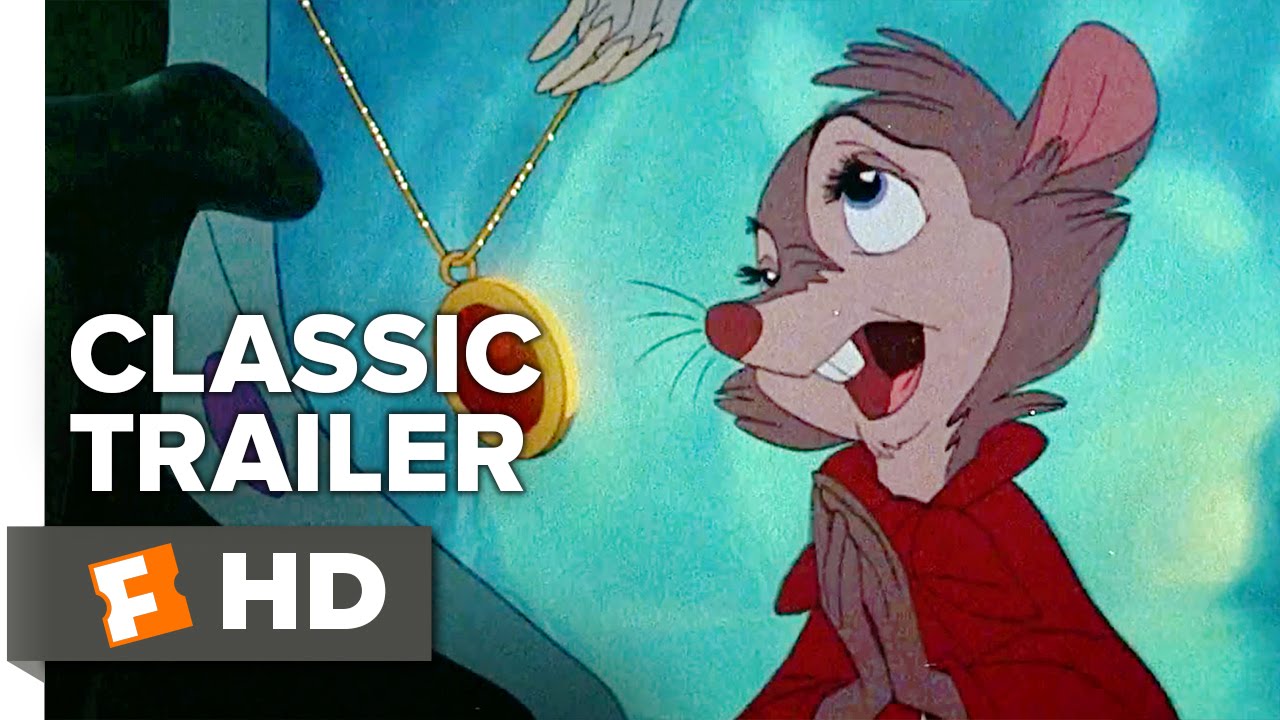
Watch the Trailer
Why Watch This Movie With Your Students
Here's what your students naturally take away from the movie, whether through themes, values, ideas, or perspectives.
🐀 Raises real questions about animal experimentation. The rats and mice of NIMH gained their intelligence through lab experiments they never agreed to, and the movie does not shy away from showing what that cost them. It gives students a concrete story to think through instead of an abstract debate about animal testing.
🏠 Centers survival and resourcefulness under a hard deadline. Mrs. Brisby has to find a way to move her family before the farmer's plow destroys their home, and her son cannot be moved because he is too sick. The clock pressure gives the story genuine stakes that students can track scene by scene.
💪 Builds its ending around a mother's courage rather than someone else's rescue. Mrs. Brisby is the one who ultimately saves her children, using her own resolve rather than depending on the rats to solve the problem for her. It gives students a female lead whose growth drives the story's climax.
⚔️ Does not soften its conflict for a young audience. The rat colony's power struggle turns violent, and the movie treats betrayal and loss with real weight instead of glossing over them. Students see a story willing to take its stakes seriously rather than resolving everything painlessly.
🎨 Represents a deliberate return to labor intensive, hand drawn animation. The movie was made by animators who left a major studio specifically to make something with more detailed, fully animated character work than what was standard at the time. It gives students a chance to see and discuss what that kind of craftsmanship looks like on screen.
📖 Adapts a Newbery Medal winning novel with real thematic depth. The story is based on Robert C. O'Brien's Mrs. Frisby and the Rats of NIMH, and the movie preserves the book's core questions about intelligence, freedom, and what a community owes the people who helped create it. It gives ELA classes a natural bridge between the novel and its film adaptation.
Age Suitability and Content
This movie is rated G.
⚠️ Things to be aware of:
- There is a sword fight between two rat characters that ends in a death, shown with a small amount of blood.
- Several scenes show animal characters in peril, including young children nearly drowning in mud and a flashback depicting laboratory experimentation on animals.
- There is one use of mild language ("damn").
- There is no drinking, drug use, or smoking in the movie beyond one scene where a character sedates a cat to get past it.
Note for educators: Movie details and age ratings in this post are sourced from IMDb, Common Sense Media, and Wikipedia to help ensure accuracy.
How My Movie Guide Helps You Teach It
📚 English Language Arts Teachers. This movie gives an ELA class a genuine book to movie comparison, since it adapts Robert C. O'Brien's Newbery Medal winning novel Mrs. Frisby and the Rats of NIMH while making real changes to character roles and story structure along the way. That gap between page and screen gives students something concrete to analyze rather than simply summarize. The guide is built for ELA, with comprehension questions at three different difficulty levels and creative writing tasks that go beyond simple recall.
🗣️ ESL and ELL Teachers. This movie tells its story mostly through clear action and a small, consistent cast of characters, which gives ESL and ELL students a manageable narrative to follow even where the vocabulary gets more sophisticated. The multiple choice question set works well with ESL and ELL students, giving them a structured way to show comprehension alongside their classmates.
🎬 Substitute Teachers and Cover Lessons. Everything in this guide is self-contained and organized by part, so a substitute does not need any background on the movie to run the session. Answer keys are included for the comprehension question sets. A substitute can hand out the materials, start the movie, and manage the class without having seen the movie before.
🏠 Homeschool Parents. This movie works well as a single student home learning session, with its comprehension questions and creative writing tasks giving a homeschool student plenty to do without needing a group. The home design activity, where students plan the layout of Mrs. Brisby's new home after the move, and the character writing task both suit independent work well, since neither one depends on a classroom of peers.
💙 SEL Teachers. Mrs. Brisby's arc gives an SEL class a mother who starts the story timid and dependent and ends it finding the courage to save her family on her own, without anyone rescuing her. The guide does not include dedicated SEL activities, but the comprehension questions keep students engaged with her development scene by scene as they watch.
🌟 Supporting All Learners Movie guides can be a wonderfully calm fit for students with autism, learning difficulties, and mild to severe disabilities. The structured format gives every student a clear purpose during viewing, easing uncertainty and allowing them to engage at their own pace. If you teach in a special education or learning support setting, you may find this guide a gentle and practical resource. Find out more about why movies work for diverse learners.
What's Inside the Guide
This is a 14-page classroom-ready resource.
Part 1: Comprehension Questions
Three differentiated sets of chronological comprehension questions, 35 full sentence questions, a shorter 25 question full sentence set with 10 removed for differentiation, and 25 multiple choice questions with 3 possible answers each. The multiple choice set works well for ESL and ELL students. Answer keys are included for all three sets.
Part 2: Storyboard and Synopsis
Students draw a 9 scene storyboard of what they consider the most important moments in the movie, with a brief description for each scene, then use their storyboard as a guide to write a synopsis of the movie.
Part 3: Creativity and Character Writing
Students design the inside and outside of Mrs. Brisby's home after her move to the safe side of the rock, including a floor plan of the rooms and the features of the garden, with a key. Students also write about their favorite character in the movie, describing their personality and what the student liked and disliked about them, with a drawing of the character included.
How These Guides Work: From Movie to Lesson
Watching a movie is not a break from learning. It reaches students through sight, sound, and story at once, engaging the brain in ways text alone does not, and the structured work around it is what turns the viewing into a genuine lesson. You can read the research behind this on the Why Movies Work page.
- A Teacher Notes and General Directions page opens the guide with a brief overview of everything inside: what the movie is about, then each part of the guide in order with a short description of what it entails. You know what to expect from the whole resource before you hand out a single page, so you can pick up the guide cold and teach it the same day.
- Answer keys are included for the comprehension question sets, so grading is quick and you are not rewatching the movie to check answers. Some guides also include example answers for the creative and written activities.
- Print and go: classroom ready, with no additional preparation needed. Print one the morning you need it and the lesson is ready.
- Substitute and first-timer friendly. A guide can be handed to a substitute or picked up by a teacher covering the topic for the first time. Nobody running the session needs to have seen the movie.
- Differentiated comprehension sets. Most guides include two or three question sets at different difficulty levels, and most include a multiple-choice option that works well for ESL and ELL students. One class set covers your strongest readers, your strugglers, and your language learners without separate prep.
- Activities that go beyond recall. Each guide includes structured activities that ask students to engage with the movie, not just watch it, ranging from creative and written tasks to discussion and critical thinking questions depending on the guide. That variety matters in a mixed classroom: a student who freezes on a written question set may show real understanding through a drawing or a creative task, and a confident writer gets room to go beyond recall. For the teacher, it turns a movie session into work you can grade: comprehension questions show whether students followed the plot, and the activities beyond them show whether they understood it.