By Mr Hull's Movie Guides

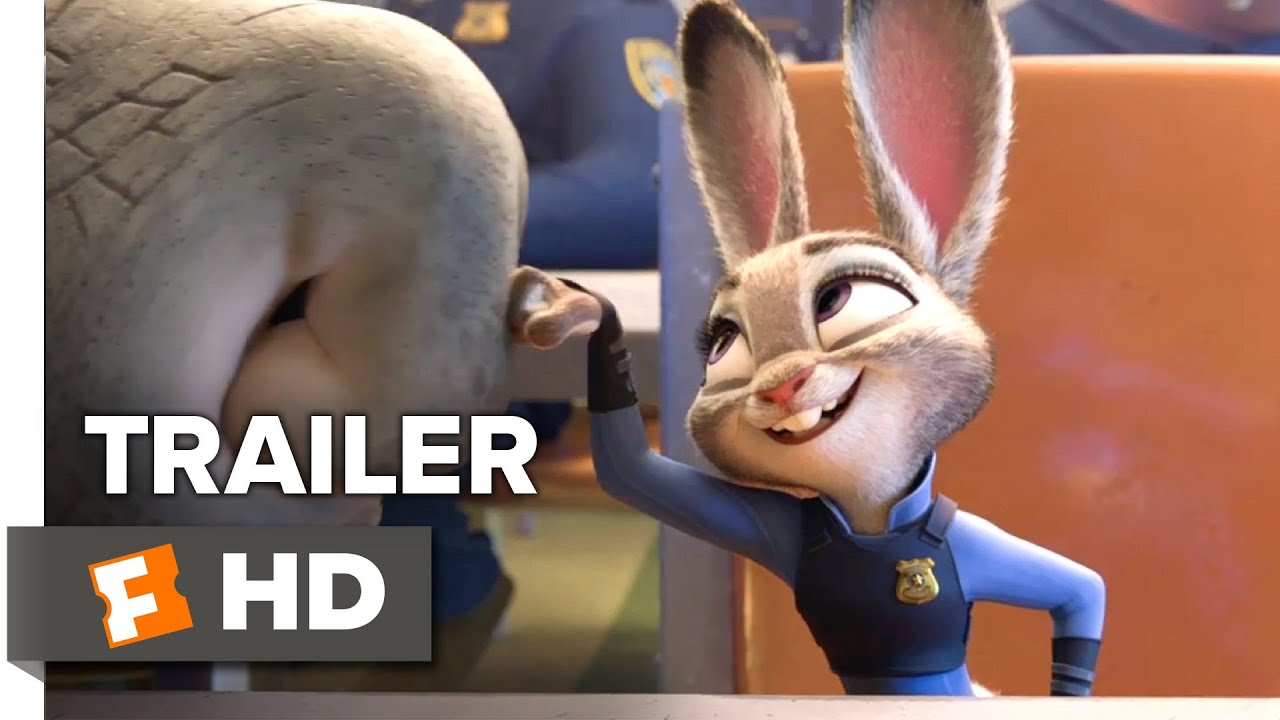
Watch the Trailer
Why Watch This Movie With Your Students
Here's what your students naturally take away from the movie, whether through themes, values, ideas, or perspectives.
🐰 A protagonist students can genuinely root for. Judy Hopps wants to prove that a bunny can be a great police officer in a world that has already decided she cannot. Her determination is compelling not because it is sentimental, but because the obstacles she faces are real and the story does not let her off the hook easily.
🦊 A villain reveal that rewards careful viewers. Zootopia is structured as a mystery, and the story earns its twist. Students who pay attention to character motivation and early clues will find that the ending makes complete sense in retrospect, making it a strong movie for discussing narrative construction and foreshadowing.
🏙️ A world built with genuine craft. Zootopia is divided into climate districts, each designed around the animals that live there. The detail in the world-building rewards attention and gives students plenty to discuss in terms of how setting reinforces theme.
🤝 A friendship that develops with honesty. Judy and Nick start as adversaries and build trust slowly, with genuine setbacks along the way. Their dynamic models what it looks like when two very different people choose to work together despite their differences and the assumptions they carry.
⚖️ A story about prejudice that does not simplify it. The movie takes on stereotyping, institutional bias, and the way even good intentions can cause harm. It does not always land every point cleanly, but those imperfections make it more interesting to discuss, not less.
😄 Genuinely funny across age groups. The comedy works on multiple levels, from physical gags that younger students will enjoy to sharper jokes aimed at adults. The DMV sloth sequence in particular tends to land regardless of the audience.
Age Suitability and Content
This movie is rated PG.
⚠️ Things to be aware of:
- Action and peril: several chase sequences, including a prolonged and intense one involving a jaguar that has 'gone savage'. Jump-scare moments, dark investigative settings, and an explosion/crash scene. A crime boss threatens to drown two main characters, though no one is seriously harmed.
- Mild bullying: a young fox is shoved and scratched by bullies; in a separate scene, he is rejected by those he thought were friends. Both scenes are emotionally affecting.
- Language: mild insults used fairly regularly, including 'dumb', 'jerk', 'stupid', 'moron', and 'shut up'.
- Mild suggestive content: pop star Gazelle wears revealing outfits and dances with tiger performers. A 'naturalist' club features animals without clothes, though this is played for gentle humour.
- No sexual content, no substance use.
📋 A free editable parent permission slip is available for this movie. It explains the educational benefits of watching movies in class and includes a space for parental consent. → Download Free Permission Slip on TpT (Free resource)
Note for educators: Movie details and age ratings in this post are sourced from IMDb, Common Sense Media, and Wikipedia to help ensure accuracy.
How My Movie Guide Helps You Teach It
📚 English Language Arts Teachers. Zootopia is a strong fit for ELA classes working on character development, narrative structure, or the relationship between setting and theme. The guide covers a broad range of writing objectives, from comprehension and sequencing through to character analysis, narrative writing, and several creative tasks, with differentiated question sets for mixed-ability groups.
🗣️ ESL and ELL Teachers. The guide includes a set of 32 multiple-choice questions written with accessibility in mind, making it a practical option for ESL and ELL students. Answer keys are included for both the multiple-choice and full-sentence question sets.
🎬 Substitute Teachers and Cover Lessons. The guide is clearly laid out across four self-contained parts, with answer keys included for the comprehension questions. It works well as a sub plan with no prior setup required.
🏠 Homeschool Parents. Zootopia gives home learners a lot to work with: a mystery plot with a satisfying twist, rich characters, and themes that connect to language arts, social development, and creative writing. The four-part guide provides varied tasks that can be spread across multiple sessions.
💙 SEL Teachers. Zootopia is a natural fit for SEL discussions: the story engages directly with stereotyping, identity, empathy, perseverance, and the gap between how others see us and who we choose to be. The guide does not include dedicated SEL activities, but the comprehension questions give students a structured framework for engaging with the movie's themes and keeping them accountable during the viewing.
🌟 Supporting All Learners Movie guides can be a wonderfully calm fit for students with autism, learning difficulties, and mild to severe disabilities. The structured format gives every student a clear purpose during viewing, easing uncertainty and allowing them to engage at their own pace. If you teach in a special education or learning support setting, you may find this guide a gentle and practical resource. Find out more about why movies work for diverse learners.
What's Inside the Guide
This is a 15-page classroom-ready resource.
Part 1: Comprehension Questions
Two differentiated question sets covering the full movie in chronological order: 32 questions requiring full sentence answers, and 32 multiple-choice questions with three options each. Answer keys are included for both sets.
Part 2: Character Mind Map and Deep Dive
Students select a character and create a visual personality map, identifying core traits, relationships with other animals in Zootopia, and their role in the story. Eight guided questions help students analyse character motivation, strengths, and flaws.
Part 3: Storyboard and Synopsis
A 9-scene storyboard in which students illustrate and summarise key events in chronological order. Students then use their completed storyboard as a scaffold to write a structured plot synopsis, practising sequencing, narrative organisation, and clear written expression.
Part 4: Creative Writing
Three creative tasks. First, students complete character profiles for three animals from the movie, including Judy Hopps, drawing a profile image and writing about their background, personality, and role. Second, students complete an employment application for the Zootopia Police Force, imagining they are an animal applying for one of three positions. Third, students write a first-assignment police report (recount) investigating the missing predator cases.
“We sang "Try Everything" for our spring concert and students watched this movie to help better understand and reinforce the meaning behind the song and how it relates to the characters in the film.”
— Ally C.
“Many thanks for this resource, Our pupils are enjoying learning via movies and this was a great addition.”
— Pauline P.
How These Guides Work: From Movie to Lesson
Watching a movie is not a break from learning. It reaches students through sight, sound, and story at once, engaging the brain in ways text alone does not, and the structured work around it is what turns the viewing into a genuine lesson. You can read the research behind this on the Why Movies Work page.
- A Teacher Notes and General Directions page opens the guide with a brief overview of everything inside: what the movie is about, then each part of the guide in order with a short description of what it entails. You know what to expect from the whole resource before you hand out a single page, so you can pick up the guide cold and teach it the same day.
- Answer keys are included for the comprehension question sets, so grading is quick and you are not rewatching the movie to check answers. Some guides also include example answers for the creative and written activities.
- Print and go: classroom ready, with no additional preparation needed. Print one the morning you need it and the lesson is ready.
- Substitute and first-timer friendly. A guide can be handed to a substitute or picked up by a teacher covering the topic for the first time. Nobody running the session needs to have seen the movie.
- Differentiated comprehension sets. Most guides include two or three question sets at different difficulty levels, and most include a multiple-choice option that works well for ESL and ELL students. One class set covers your strongest readers, your strugglers, and your language learners without separate prep.
- Activities that go beyond recall. Each guide includes structured activities that ask students to engage with the movie, not just watch it, ranging from creative and written tasks to discussion and critical thinking questions depending on the guide. That variety matters in a mixed classroom: a student who freezes on a written question set may show real understanding through a drawing or a creative task, and a confident writer gets room to go beyond recall. For the teacher, it turns a movie session into work you can grade: comprehension questions show whether students followed the plot, and the activities beyond them show whether they understood it.