By Mr Hull's Movie Guides

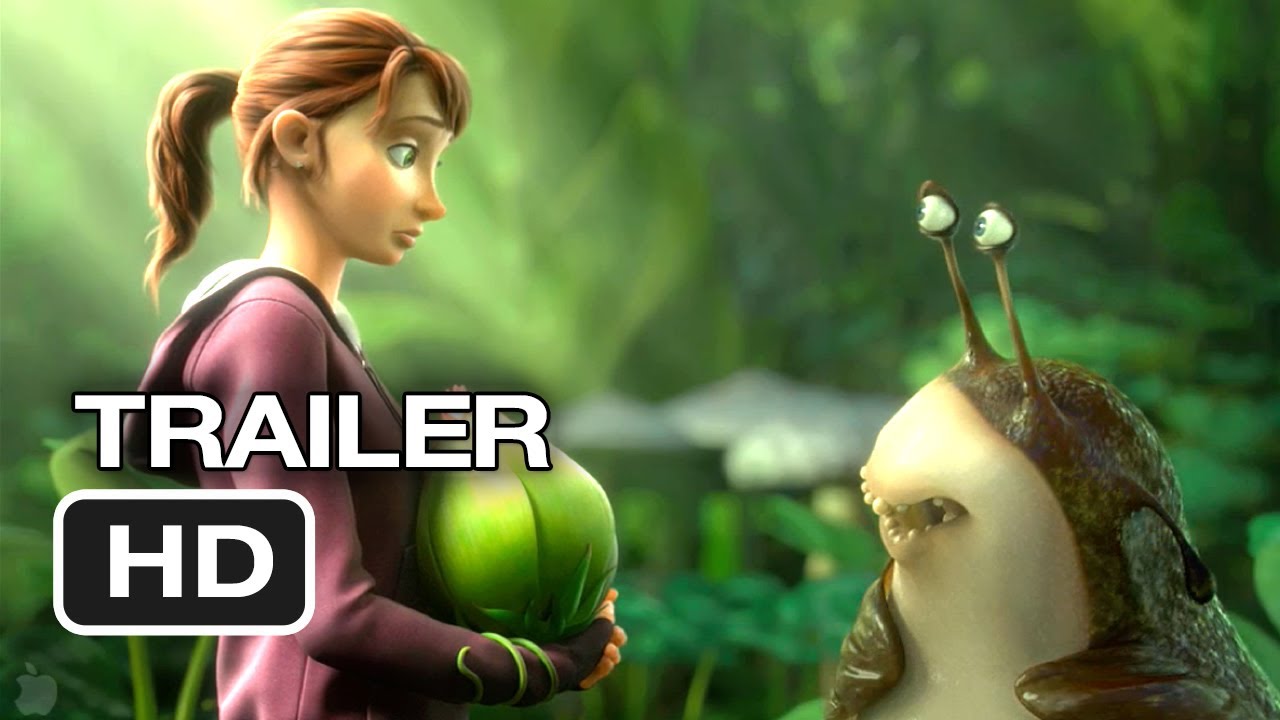
Watch the Trailer
Why Watch This Movie With Your Students
Here's what your students naturally take away from the movie, whether through themes, values, ideas, or perspectives.
🌲 A hidden ecosystem built on real environmental balance. The movie's world depends on the ongoing struggle between growth and decay, giving students a concrete, story driven way to think about how forests function. Even the movie's villains and decomposers serve a specific ecological role.
👨👧 A father and daughter relationship strained by grief and disbelief. M.K.'s arrival at her father's home is shaped by skepticism about his research and unresolved distance between them. Their relationship shifts once she experiences firsthand the world he has been trying to prove is real.
🐦 A miniature world with its own rules, scale, and danger. Once M.K. is shrunk down, ordinary parts of the forest become genuine obstacles and threats, giving students a vivid sense of how differently the same environment can function depending on your size and perspective.
⚔️ A clear conflict between preservation and decay. Queen Tara and the Leafmen work to protect the forest's growth, while Mandrake and his forces want to spread rot and destruction. The stakes of that conflict are tied directly to the health of the forest itself.
🤝 An unlikely team built across very different characters. M.K., Nod, and a pair of comic relief slugs each bring something different to the group's mission, giving students a range of personalities and dynamics to track throughout the story.
Age Suitability and Content
This movie is rated PG.
⚠️ Things to be aware of:
- M.K.'s mother has died before the events of the movie, and this loss is referenced early on.
- A prominent character dies during the story.
- Some fantasy action and peril, including battles between the Leafmen and Mandrake's forces.
- Brief rude language and mild scary imagery involving the villain and his forces.
- Some romantic flirting and kissing between characters, nothing beyond mild affection.
📋 A free editable parent permission slip is available for this movie. It explains the educational benefits of watching movies in class and includes a space for parental consent. → Download Free Permission Slip on TpT (Free resource)
Note for educators: Movie details and age ratings in this post are sourced from IMDb, Common Sense Media, and Wikipedia to help ensure accuracy.
How My Movie Guide Helps You Teach It
📚 English Language Arts Teachers. Epic fits ELA classes studying adventure narrative, character relationships, or fantasy world building, since the guide's comprehension questions track the plot in chronological order alongside a storyboard and synopsis task, plus a character writing activity. Two sets of differentiated questions make it straightforward to place students at the right level of challenge for a mixed ability classroom.
🗣️ ESL and ELL Teachers. The multiple choice comprehension set works well with ESL and ELL students, giving them a structured, lower barrier way to follow the plot alongside the rest of the class. The character writing task, which includes practicing correct pronouns and possessive pronouns, gives language learners additional targeted language support tied to the same story.
🔬 Science Teachers. Epic's forest setting and its focus on decomposition, growth, and ecological balance give Science classes covering ecosystems or biology a genuine connection to build from. The guide's critical thinking questions are built specifically to connect the movie's themes to real-world environmental awareness, giving students a direct link between the story and actual ecological concepts.
🎬 Substitute Teachers and Cover Lessons. The differentiated comprehension questions, storyboard, and writing tasks are self-explanatory enough for students to work through with minimal guidance, making this a solid option to leave with a substitute teacher.
🏠 Homeschool Parents. Epic works well for a home learning day with a nature or environmental focus. The character profile task in Part 4 gives a single student a creative activity they tend to invest real time in, and the critical thinking questions open up conversation about environmental responsibility and what students can do about it. The word search makes a low-pressure finish to the session.
🔭 STEM Teachers. The forest ecosystem at the heart of the movie introduces students to ideas about biodiversity, interdependence, and ecological science in a setting that makes those concepts visual and tangible. STEM classes exploring environmental science will find the movie gives them a shared reference point for those discussions.
🌟 Supporting All Learners Movie guides can be a wonderfully calm fit for students with autism, learning difficulties, and mild to severe disabilities. The structured format gives every student a clear purpose during viewing, easing uncertainty and allowing them to engage at their own pace. If you teach in a special education or learning support setting, you may find this guide a gentle and practical resource. Find out more about why movies work for diverse learners.
What's Inside the Guide
This is a 14-page classroom-ready resource.
Part 1: Comprehension Questions
Two sets of chronological comprehension questions for differentiation: 25 questions requiring full sentence answers, and 25 multiple choice questions with 3 possible answers. Answer keys are included for both.
Part 2: Storyboard and Synopsis
Students create a 9-scene storyboard illustrating pivotal events from the movie, each with a short description of the main idea it represents. Using their completed storyboard as a guide, they then write a synopsis of the movie.
Part 3: Critical Thinking Questions
Four critical thinking questions connecting the movie's themes to real-world environmental awareness, encouraging students to think critically about nature. These may work well completed in pairs.
Part 4: Writing and Creativity
Students choose one of six characters from the movie, draw a picture of that character, and complete questions about them, including practicing the correct pronouns and possessive pronouns. In the second task, students imagine they are an assistant to Professor Bomba who has spotted three creatures on the map and describe what they saw at each location.
Part 5: Word Search
A word search based on the movie for early finishers, with an answer key included.
“It was great to find this resource when I was looking for a last minute cover lesson for a staff member who was away. It was the end of the classification topic and a fun way to bring in decomposers”
— Nicole D.
“I used this in my creative writing class to talk about characters and plot. My students loved the movie and the activities kept them engaged.”
— Elizabeth B.
How These Guides Work: From Movie to Lesson
Watching a movie is not a break from learning. It reaches students through sight, sound, and story at once, engaging the brain in ways text alone does not, and the structured work around it is what turns the viewing into a genuine lesson. You can read the research behind this on the Why Movies Work page.
- A Teacher Notes and General Directions page opens the guide with a brief overview of everything inside: what the movie is about, then each part of the guide in order with a short description of what it entails. You know what to expect from the whole resource before you hand out a single page, so you can pick up the guide cold and teach it the same day.
- Answer keys are included for the comprehension question sets, so grading is quick and you are not rewatching the movie to check answers. Some guides also include example answers for the creative and written activities.
- Print and go: classroom ready, with no additional preparation needed. Print one the morning you need it and the lesson is ready.
- Substitute and first-timer friendly. A guide can be handed to a substitute or picked up by a teacher covering the topic for the first time. Nobody running the session needs to have seen the movie.
- Differentiated comprehension sets. Most guides include two or three question sets at different difficulty levels, and most include a multiple-choice option that works well for ESL and ELL students. One class set covers your strongest readers, your strugglers, and your language learners without separate prep.
- Activities that go beyond recall. Each guide includes structured activities that ask students to engage with the movie, not just watch it, ranging from creative and written tasks to discussion and critical thinking questions depending on the guide. That variety matters in a mixed classroom: a student who freezes on a written question set may show real understanding through a drawing or a creative task, and a confident writer gets room to go beyond recall. For the teacher, it turns a movie session into work you can grade: comprehension questions show whether students followed the plot, and the activities beyond them show whether they understood it.