By Mr Hull's Movie Guides
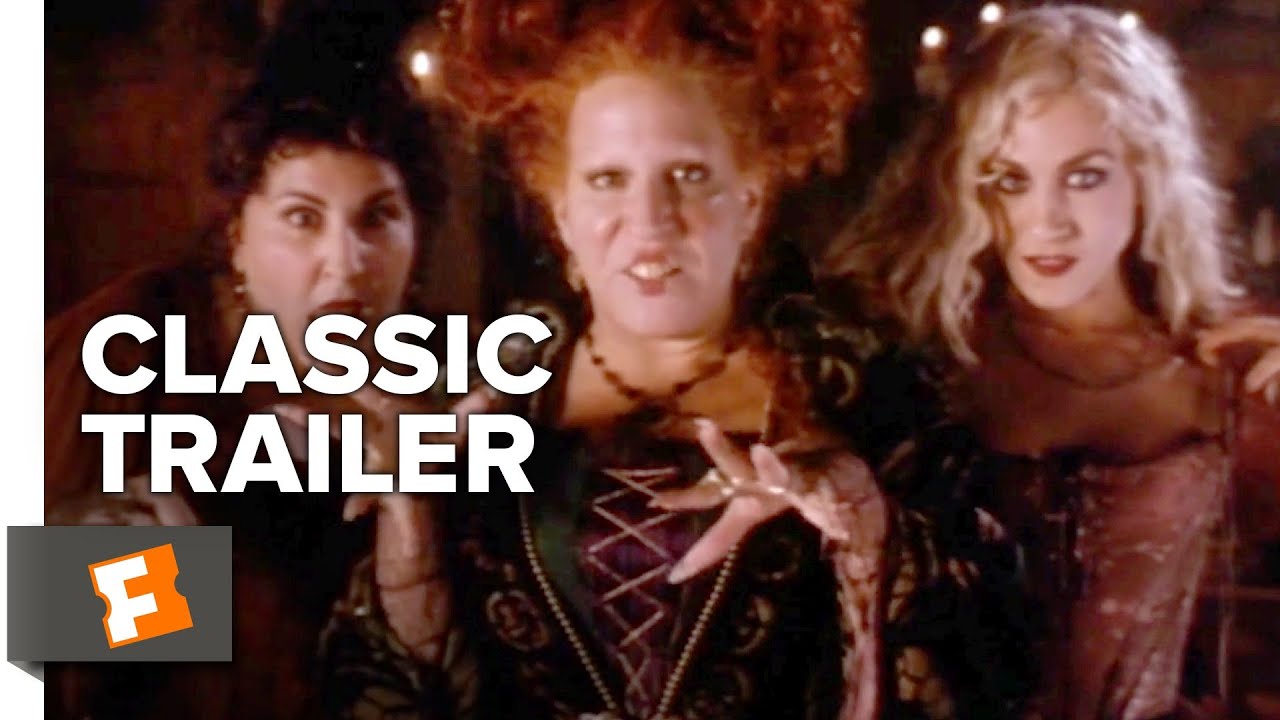
Watch the Trailer
Why Watch This Movie With Your Students
Here's what your students naturally take away from the movie, whether through themes, values, ideas, or perspectives.
🧙 A story students already want to watch. Hocus Pocus has been a Halloween favourite for over thirty years, and that familiarity works in a teacher's favour. Students who arrive knowing the movie still engage with the structured tasks, and those watching for the first time get pulled in quickly by the Sanderson Sisters' comedic energy.
📜 A genuine connection to American history. The movie is set against the backdrop of the Salem Witch Trials of 1692, a pivotal and genuinely disturbing chapter in early American history. That connection gives the Halloween premise more weight than it might first appear, and opens up real conversations about fear, accusation, and consequence.
👨👩👧 Sibling loyalty at the centre of the story. Both Max and the centuries-earlier Thackery Binx sacrifice themselves to protect a younger sister. That thread runs through the whole movie and gives students something emotionally grounded to respond to beneath all the comedy and chaos.
🤝 Teamwork as the only way through. Max, Dani, and Allison succeed not through individual heroics but by working together, each contributing something the others cannot. The movie presents cooperation as genuinely necessary rather than just a nice idea, which is worth noting with students.
😂 Comedy that keeps the energy up. The Sanderson Sisters navigating the modern world, confusing a bus driver for a genuine act of courtesy and a Halloween partygoer for the actual devil, give the movie a constant comedic energy that keeps students watching and alert. It is the kind of movie that gets laughs and gets work done.
📝 Rich enough to support a full range of tasks. The movie has a clear chronological structure, a memorable cast of characters, and enough plot detail to sustain 30 comprehension questions without stretching. The Salem setting adds a layer of historical context that supports reading and writing tasks beyond the viewing itself.
Age Suitability and Content
This movie is rated PG.
⚠️ Things to be aware of:
- Violence is mostly slapstick and played for laughs, though a young girl has her life force taken by the witches and quietly slumps over (implied dead, not gory). A zombie is reanimated and briefly decapitated during a chase scene.
- Gross-out moments include a character eating spiders and a zombie cutting through stitches across his mouth with a blade.
- A key plot point is that the Black Flame Candle must be lit by a virgin. The word 'virgin' is used several times, and there are a handful of sexual innuendoes, including a remark from a bus driver that may fly over younger students' heads but is clearly aimed at adults.
- Teens refer to 'smokes' and 'hash' in passing. One adult character is seen smoking indoors.
- Language is mild: occasional use of 'damn', 'hell', and 'go to hell'.
- No sexual content or nudity beyond some cleavage in the witches' costumes.
📋 A free editable parent permission slip is available for this movie. It explains the educational benefits of watching movies in class and includes a space for parental consent. → Download Free Permission Slip on TpT (Free resource)
Note for educators: Movie details and age ratings in this post are sourced from IMDb, Common Sense Media, and Wikipedia to help ensure accuracy.
How My Movie Guide Helps You Teach It
📚 English Language Arts Teachers. The guide is well-stocked for ELA. The comprehension section runs to 30 full-sentence questions in chronological order, building reading comprehension and written response throughout the movie. After viewing, students create a 9-scene storyboard, writing a short description for each scene to capture the key idea it represents. They then use their storyboard as a scaffold to write a full synopsis of the movie in their own words. The guide also includes a standalone creative writing task in which students invent their own potion, describing its ingredients, its effects, and the directions for making it. Taken together, the guide covers informational writing, narrative sequencing, and creative writing within a single resource.
🗣️ ESL and ELL Teachers. The guide includes a second differentiated set of 30 multiple choice questions with three answer options each, written with ESL and ELL students in mind. These run in parallel with the full-sentence questions and cover the same content, giving ESL teachers a ready-made option that keeps students engaged and accountable without the barrier of extended writing.
🌐 Social Studies Teachers. The Salem Witch Trials took place in 1692 and are a significant topic within US History and Social Studies curricula. The guide includes a dedicated reading passage on the trials and 10 comprehension questions for that passage, completed before the movie begins. This is directly served content, not just background knowledge.
🎬 Substitute Teachers and Cover Lessons. The guide is structured in five clear parts with written instructions throughout, so students can work through it independently. A substitute can run this session without needing to know the movie or the guide in advance.
🏠 Homeschool Parents. The Salem Witch Trials reading and comprehension questions make this a useful pairing for homeschool families studying colonial American history or early US social history. The movie activities work well independently at home.
📜 History Teachers. The guide opens with a structured reading passage about the Salem Witch Trials and 10 comprehension questions before the movie begins. For US History teachers covering colonial America or early American society, this is a genuine point of contact. The guide directly supports the historical content, not just the movie.
🌟 Supporting All Learners Movie guides can be a wonderfully calm fit for students with autism, learning difficulties, and mild to severe disabilities. The structured format gives every student a clear purpose during viewing, easing uncertainty and allowing them to engage at their own pace. If you teach in a special education or learning support setting, you may find this guide a gentle and practical resource. Find out more about why movies work for diverse learners.
What's Inside the Guide
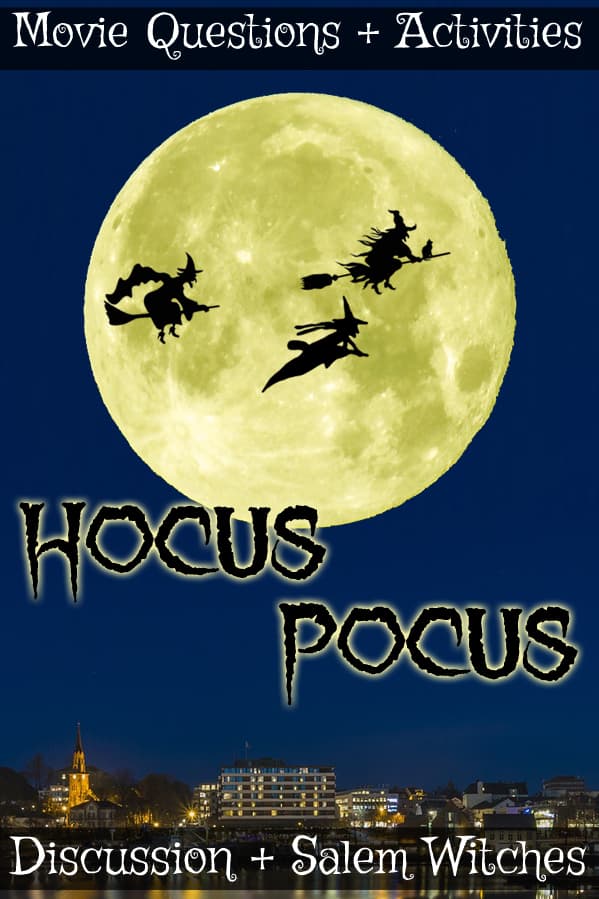
This is a 16-page classroom-ready resource.
Part 1: Witch Discussion Questions
Five questions about witches designed to be completed in around 20 minutes before the movie begins. The intention is to get students thinking and talking before the Sanderson Sisters appear, with the Salem Witch Trials as a natural point of discussion. Answer key included.
Part 2: Salem Witch Trials Reading and Comprehension
A reading passage about the Salem Witch Trials followed by 10 comprehension questions. This is completed before watching the movie and gives students historical context for the setting and the fate of the Sanderson Sisters. Answer key included.
Part 3: Movie Comprehension Questions (Differentiated)
30 comprehension questions in chronological order requiring full sentence answers, plus a second differentiated set of 30 multiple choice questions covering the same content with three answer options each. The multiple choice set works well for ESL and ELL students. Answer keys included for both sets.
Part 4: Storyboard and Synopsis
Students create a 9-scene storyboard illustrating key events from the movie, with a short description for each scene. They then use their storyboard as a guide to write a synopsis of the movie. The storyboard provides a sequencing scaffold for the written task.
Part 5: Potion Making
A creative writing task in which students invent their own potion using strange or unusual ingredients. They must describe what the potion does and write out the directions for making it. No answer key for this activity.
“This resource was perfect for my grade 7 students, and they enjoyed the creative writing assignment!”
— Victoria M.
“My students loved being able to watch the movie! We added this to the end of our Unit on the Salem Witch Trials for fun!”
— Katlyn C.
How These Guides Work: From Movie to Lesson
Watching a movie is not a break from learning. It reaches students through sight, sound, and story at once, engaging the brain in ways text alone does not, and the structured work around it is what turns the viewing into a genuine lesson. You can read the research behind this on the Why Movies Work page.
- A Teacher Notes and General Directions page opens the guide with a brief overview of everything inside: what the movie is about, then each part of the guide in order with a short description of what it entails. You know what to expect from the whole resource before you hand out a single page, so you can pick up the guide cold and teach it the same day.
- Answer keys are included for the comprehension question sets, so grading is quick and you are not rewatching the movie to check answers. Some guides also include example answers for the creative and written activities.
- Print and go: classroom ready, with no additional preparation needed. Print one the morning you need it and the lesson is ready.
- Substitute and first-timer friendly. A guide can be handed to a substitute or picked up by a teacher covering the topic for the first time. Nobody running the session needs to have seen the movie.
- Differentiated comprehension sets. Most guides include two or three question sets at different difficulty levels, and most include a multiple-choice option that works well for ESL and ELL students. One class set covers your strongest readers, your strugglers, and your language learners without separate prep.
- Activities that go beyond recall. Each guide includes structured activities that ask students to engage with the movie, not just watch it, ranging from creative and written tasks to discussion and critical thinking questions depending on the guide. That variety matters in a mixed classroom: a student who freezes on a written question set may show real understanding through a drawing or a creative task, and a confident writer gets room to go beyond recall. For the teacher, it turns a movie session into work you can grade: comprehension questions show whether students followed the plot, and the activities beyond them show whether they understood it.