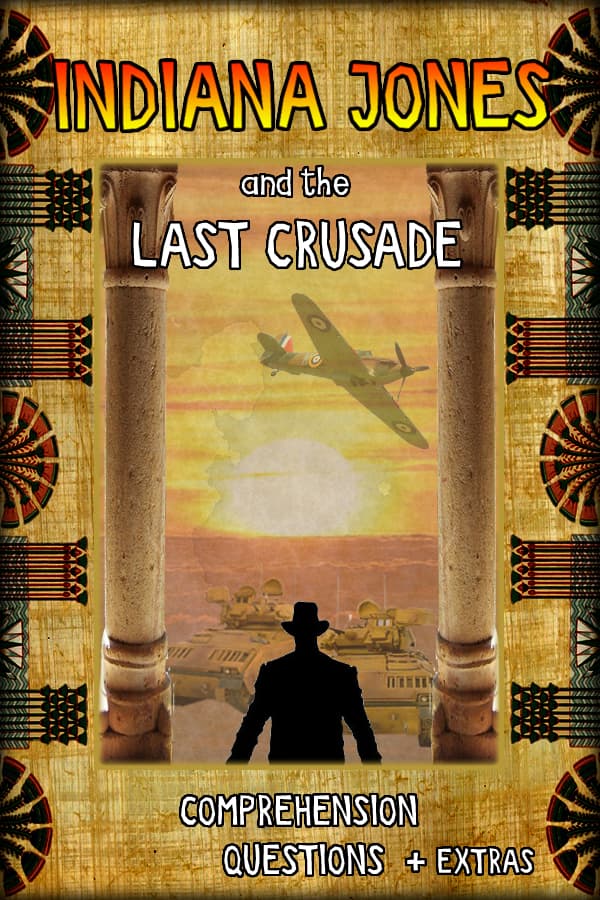
By Mr Hull's Movie Guides

Watch the Trailer
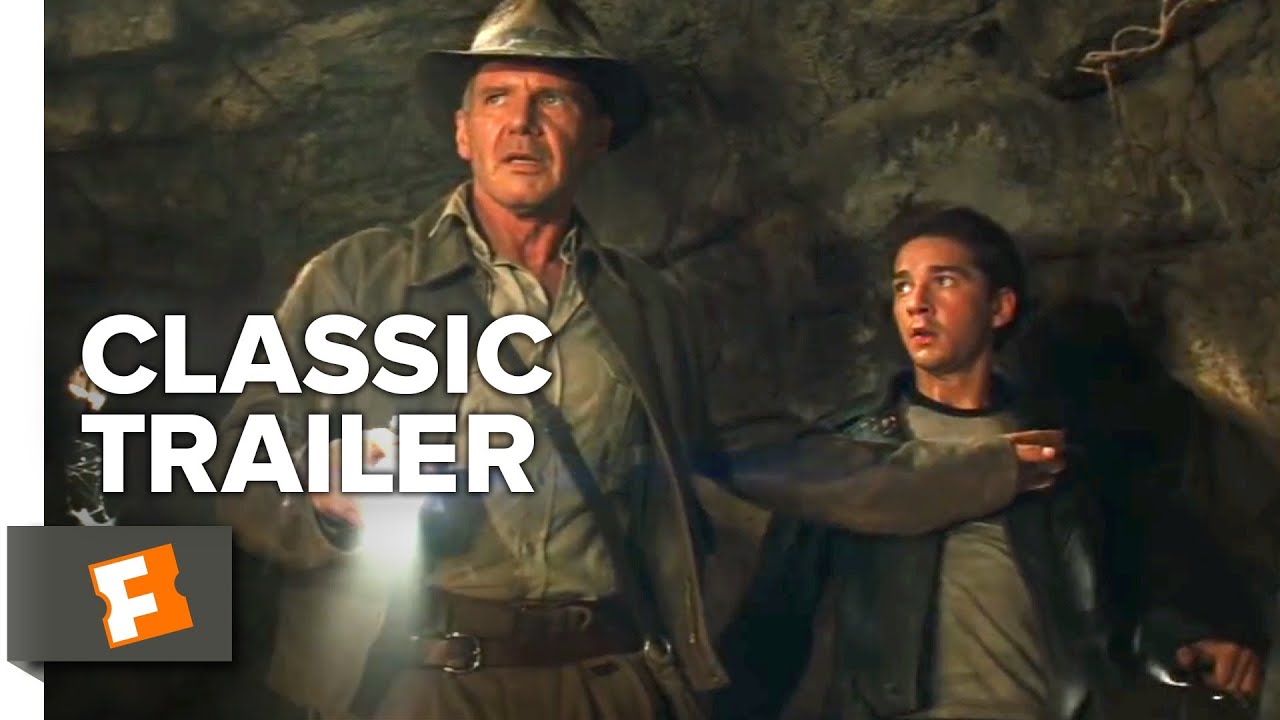
Why Watch This Movie With Your Students
Here's what your students naturally take away from the movie, whether through themes, values, ideas, or perspectives.
🕵️ A Cold War Setting Grounds the Adventure in Real History. The movie is set in 1957, with Soviet agents and Cold War paranoia driving much of the plot from the very first scene. Students get a fictional adventure built on top of a real and specific moment in history, one they can compare against what happened during the era.
🏺 Archaeology Gets Framed as a Moral Choice. Indy is shown protecting historical artifacts from people who want to use them for personal or political gain, which frames archaeology as something with real stakes. It gives students a chance to think about who should have access to historical discoveries and why that question matters.
🧩 A Mystery Unfolds Through Decoded Clues. Much of the plot moves forward because characters have to decode messages, translate old writing, and piece together fragments of information before they can act. Watching a mystery build this way gives students a model for how investigation and inference drive a story forward.
👨👦 A Hidden Family Connection Changes the Stakes. Partway through the movie, Indy learns something about his own family that reframes his relationship with one of the other main characters. The reveal adds a personal thread underneath all the action, giving students something quieter to notice alongside the adventure.
🐜 Escalating Set Pieces Build Toward the Unknown. Each major sequence, from a car chase through a university campus to an encounter with a swarm of ants in the jungle, raises the stakes higher than the one before it. Students can trace how the movie paces its action so that the final confrontation feels bigger than everything that came before it.
👴 A Returning Hero Faces a Changing World. Indy is older in this movie than in the earlier films, and the story leans into what has changed for him, including his standing at the university and his place in a new political era. It gives students a chance to think about how a familiar character responds when the world around him has moved on.
Age Suitability and Content
This movie is rated PG-13.
⚠️ Things to be aware of:
- The movie includes frequent action violence including gunfights, punching, and sword fights, with some blood shown after fights.
- There is mild language throughout, including a few uses of stronger words such as "son of a bitch" and "shit."
- Several scenes may be frightening for younger viewers, including a sequence with a large swarm of ants and an early scene involving a nuclear test.
- There is brief sexual banter between characters, though nothing explicit.
📋 A free editable parent permission slip is available for this movie. It explains the educational benefits of watching movies in class and includes a space for parental consent. → Download Free Permission Slip on TpT (Free resource)
Note for educators: Movie details and age ratings in this post are sourced from IMDb, Common Sense Media, and Wikipedia to help ensure accuracy.
How My Movie Guide Helps You Teach It
📚 English Language Arts Teachers. The movie gives an ELA class a mystery that unfolds through decoded messages and layered clues, useful material for looking at how a writer builds suspense and reveals information over time. The guide's comprehension questions are set at different difficulty levels, and its writing tasks push students beyond simple recall into character analysis and creating their own material based on the story.
🗣️ ESL and ELL Teachers. The movie relies on plenty of visual action, from chases to physical confrontations, so much of the plot comes through images and pacing rather than dialogue alone. The multiple choice question set works well with ESL and ELL students, giving them a structured way to demonstrate understanding of the story.
🎬 Substitute Teachers and Cover Lessons. Hand this guide to a substitute and the lesson runs itself. The comprehension questions, storyboard and synopsis tasks, character writing, and newspaper report activity are all self-contained and organized in order, with answer keys included for the comprehension questions and the puzzle activities. A substitute can manage the full session without ever having seen the movie.
🏠 Homeschool Parents. The movie works well for a homeschool setting because most of its activities, the comprehension questions, character writing, and newspaper report, are built for a single student to complete independently. Its Cold War setting and mystery driven plot give a parent plenty to discuss afterward, and the word search and crossword offer a lighter option for wrapping up the session.
🌟 Supporting All Learners Movie guides can be a wonderfully calm fit for students with autism, learning difficulties, and mild to severe disabilities. The structured format gives every student a clear purpose during viewing, easing uncertainty and allowing them to engage at their own pace. If you teach in a special education or learning support setting, you may find this guide a gentle and practical resource. Find out more about why movies work for diverse learners.
What's Inside the Guide
This is a 16-page classroom-ready resource.
Part 1: Comprehension Questions
Three sets of questions in chronological order for differentiation, a 45 question set requiring full sentence answers, a 30 question set requiring full sentence answers with 15 removed from the larger set, and a 30 question multiple choice set with three answer options. Answer keys are included for all three sets, and the multiple choice set works well with ESL and ELL students.
Part 2: Storyboard and Synopsis
Students draw a nine scene storyboard covering what they consider the most important parts of the movie, with a brief written description for each scene, then use that storyboard to write a synopsis of the movie.
Part 3: Character Writing and Newspaper Report
Students write about one of the movie's characters following guided question prompts and draw a picture of their chosen character, then imagine themselves as college newspaper reporters writing a short article about Dr. Jones's recent adventure, including quotes from an imagined interview and a drawing.
Part 4: Just for Fun (or a Time Filler)
A word search and crossword puzzle combination, with ten crossword clues whose answers are also the words to find in the word search, plus five additional words to find. An answer key is included.
“I bought this resource to get some ideas on how to prepare a film unit for the specific film, lots of work in it; used parts to support learning in my class - relatively good :) very detailed film watching required - we focused more on the camera work and soundtrack - thank you :)”
— Anna C. (TPT Seller)
How These Guides Work: From Movie to Lesson
Watching a movie is not a break from learning. It reaches students through sight, sound, and story at once, engaging the brain in ways text alone does not, and the structured work around it is what turns the viewing into a genuine lesson. You can read the research behind this on the Why Movies Work page.
- A Teacher Notes and General Directions page opens the guide with a brief overview of everything inside: what the movie is about, then each part of the guide in order with a short description of what it entails. You know what to expect from the whole resource before you hand out a single page, so you can pick up the guide cold and teach it the same day.
- Answer keys are included for the comprehension question sets, so grading is quick and you are not rewatching the movie to check answers. Some guides also include example answers for the creative and written activities.
- Print and go: classroom ready, with no additional preparation needed. Print one the morning you need it and the lesson is ready.
- Substitute and first-timer friendly. A guide can be handed to a substitute or picked up by a teacher covering the topic for the first time. Nobody running the session needs to have seen the movie.
- Differentiated comprehension sets. Most guides include two or three question sets at different difficulty levels, and most include a multiple-choice option that works well for ESL and ELL students. One class set covers your strongest readers, your strugglers, and your language learners without separate prep.
- Activities that go beyond recall. Each guide includes structured activities that ask students to engage with the movie, not just watch it, ranging from creative and written tasks to discussion and critical thinking questions depending on the guide. That variety matters in a mixed classroom: a student who freezes on a written question set may show real understanding through a drawing or a creative task, and a confident writer gets room to go beyond recall. For the teacher, it turns a movie session into work you can grade: comprehension questions show whether students followed the plot, and the activities beyond them show whether they understood it.