By Mr Hull's Movie Guides

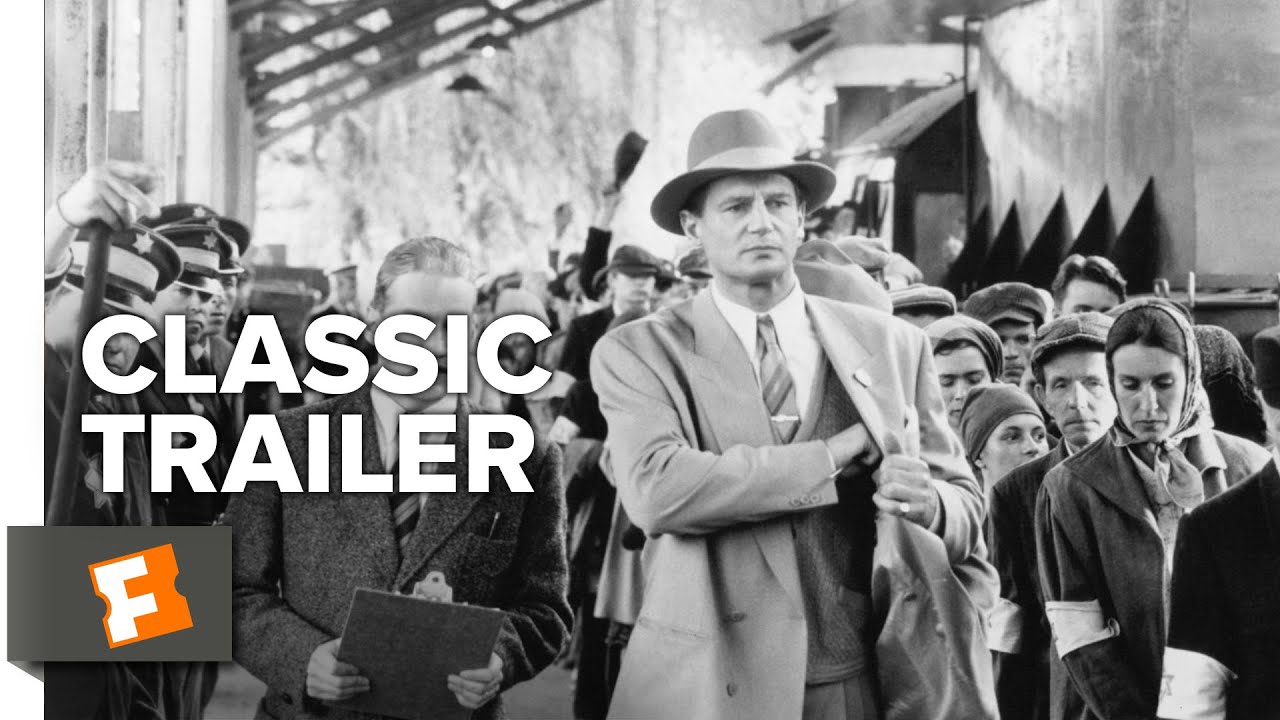
Watch the Trailer
Why Watch This Movie With Your Students
Here's what your students naturally take away from the movie, whether through themes, values, ideas, or perspectives.
🕯️ A true story at the center of Holocaust history. Schindler's List is based on the documented account of Oskar Schindler, a real person who saved over 1,100 Jewish workers from Auschwitz. The movie draws directly from survivor testimonies and historical records, making it a credible and emotionally grounded way into one of the most studied events of the 20th century.
🔄 A character transformation with genuine moral weight. Schindler begins the movie as an opportunist who wants to get rich from the war and ends it spending his entire fortune to protect human lives. That shift is not presented as sudden or sentimental. It happens incrementally, which makes it useful for classroom discussion about what changes a person's values and choices.
⚖️ A study in moral choice under impossible conditions. The movie places multiple characters in situations where there is no safe or easy option. Schindler, his accountant Stern, the Nazi commandant Amon Goth, and the Jewish workers themselves all face choices that carry life-and-death consequences. Those contrasts give students something concrete to analyze when thinking about ethics, complicity, and courage.
📖 Based on an award-winning novel. Thomas Keneally's Schindler's Ark won the Booker Prize in 1982 and is widely taught in upper high school and college English courses. Showing the movie alongside or after the book gives teachers a ready-made text-to-screen comparison, and the story's origins as documented research add another layer of historical and literary context.
🌍 A perspective on World War II rarely shown through a German protagonist. Most WWII movies center Allied soldiers or Jewish survivors. Schindler's List follows a German member of the Nazi Party who becomes a rescuer, which forces students to think more carefully about how individuals within a system can still act against it. That angle makes the movie a different kind of conversation-starter than most Holocaust education resources.
🎬 Seven Academy Awards, including Best Picture and Best Director. Schindler's List won seven Academy Awards at the 1994 ceremony, including Best Picture and Best Director for Steven Spielberg. Its place in film history is well established, but more relevant for classroom use is the craft behind it: the decision to shoot in black and white, the use of a single color to mark a child in the crowd, and the way the documentary-style cinematography makes the events feel immediate rather than distant.
Age Suitability and Content
This movie is rated 18.
⚠️ Things to be aware of:
- Graphic violence throughout,
- Full frontal nudity in concentration camp settings.
- Several scenes of sexual nudity involving Schindler and female characters.
- One scene in which a woman is sexually assaulted.
- Anti-Semitic language and slurs used by Nazi characters throughout.
- Strong language including uses of 'f--k', 's--t', and 'bitch'.
- Smoking throughout.
- No drug use beyond alcohol and tobacco.
📋 A free editable parent permission slip is available for this movie. It explains the educational benefits of watching movies in class and includes a space for parental consent. → Download Free Permission Slip on TpT (Free resource)
Note for educators: Movie details and age ratings in this post are sourced from IMDb, Common Sense Media, and Wikipedia to help ensure accuracy.
How My Movie Guide Helps You Teach It
📚 English Language Arts Teachers. Schindler's List is a strong fit for ELA classes studying WWII literature, narrative perspective, or character transformation as a structural device. The guide covers a wide range of writing objectives, from comprehension and higher-order discussion questions through to perspective-based narrative essays, with two differentiated question sets for mixed-ability classes.
🗣️ ESL and ELL Teachers. The multiple choice comprehension set works well with ESL and ELL students, giving language learners a structured way to engage with the movie without the open-ended writing demands of the full question set. The pre-viewing activity also builds key vocabulary and background knowledge around the Holocaust, the Nazi Party, and the context of the Second World War before the movie begins.
🌐 Social Studies Teachers. World History and Social Studies teachers teaching the Holocaust, the Second World War, or 20th-century European history would recognize Schindler's List as directly relevant to their curriculum. The guide does not include social studies-specific activities beyond the comprehension questions, but those questions give students a structured task and keep them accountable throughout a three-hour viewing.
🎬 Substitute Teachers and Cover Lessons. The guide is structured to run independently, with clear written tasks that do not require teacher facilitation to get started. The pre-viewing section, two sets of comprehension questions, and written activities give students enough work to stay on task across a long session.
🏠 Homeschool Parents. For homeschool families studying WWII, the Holocaust, or moral philosophy, Schindler's List provides a rigorous, historically grounded anchor. The guide's pre-viewing background, differentiated comprehension questions, and essay prompts support structured study without requiring additional materials.
📜 History Teachers. History teachers covering WWII, the Holocaust, or the German occupation of Poland will find the movie directly relevant to their curriculum. The pre-viewing section builds context around concentration camps, the Nazi Party, and the persecution of Jewish people before the movie starts, which makes it useful for classes that are earlier in their Holocaust unit. The comprehension questions keep students focused and accountable during a long viewing, though the guide does not include separate history-specific writing tasks beyond the discussion and essay sections.
🌟 Supporting All Learners Movie guides can be a wonderfully calm fit for students with autism, learning difficulties, and mild to severe disabilities. The structured format gives every student a clear purpose during viewing, easing uncertainty and allowing them to engage at their own pace. If you teach in a special education or learning support setting, you may find this guide a gentle and practical resource. Find out more about why movies work for diverse learners.
What's Inside the Guide
This is a 12-page classroom-ready resource.
Part 1: Pre-Viewing
Four background questions covering concentration camps, the Nazi Party, the persecution of Jewish people, and the requirement to wear the yellow badge. Students have 20 minutes to complete this section before viewing, followed by class discussion. Example answers are included.
Part 2: Comprehension Questions
Two differentiated sets of comprehension questions, both requiring full sentence answers. The longer set contains 55 questions; the shorter set removes 20 of those questions for students who need a more accessible version. Answer keys are included for both sets.
Part 3: Discussion Questions
Five higher-level long-answer questions designed for individual written responses followed by class discussion. Example answers are included.
Part 4: Mini Essays
Students write from the perspective of three individuals: a Jewish person hiding in the ghetto, Mrs. Schindler, and a German soldier. Each essay focuses on a different experience of the ghetto massacre. Students are asked to describe the thoughts and emotions each person may have had, based on events shown in the movie.
“I've wanted to share this film with students but was never brave enough (or felt equipped). Thank you for this material.”
— Travis C.
“This was incredibly helpful for building lessons for my students. It gave me the ability to structure lessons and give the students something to focus on while watching the movie.”
— Danielle P.
How These Guides Work: From Movie to Lesson
Watching a movie is not a break from learning. It reaches students through sight, sound, and story at once, engaging the brain in ways text alone does not, and the structured work around it is what turns the viewing into a genuine lesson. You can read the research behind this on the Why Movies Work page.
- A Teacher Notes and General Directions page opens the guide with a brief overview of everything inside: what the movie is about, then each part of the guide in order with a short description of what it entails. You know what to expect from the whole resource before you hand out a single page, so you can pick up the guide cold and teach it the same day.
- Answer keys are included for the comprehension question sets, so grading is quick and you are not rewatching the movie to check answers. Some guides also include example answers for the creative and written activities.
- Print and go: classroom ready, with no additional preparation needed. Print one the morning you need it and the lesson is ready.
- Substitute and first-timer friendly. A guide can be handed to a substitute or picked up by a teacher covering the topic for the first time. Nobody running the session needs to have seen the movie.
- Differentiated comprehension sets. Most guides include two or three question sets at different difficulty levels, and most include a multiple-choice option that works well for ESL and ELL students. One class set covers your strongest readers, your strugglers, and your language learners without separate prep.
- Activities that go beyond recall. Each guide includes structured activities that ask students to engage with the movie, not just watch it, ranging from creative and written tasks to discussion and critical thinking questions depending on the guide. That variety matters in a mixed classroom: a student who freezes on a written question set may show real understanding through a drawing or a creative task, and a confident writer gets room to go beyond recall. For the teacher, it turns a movie session into work you can grade: comprehension questions show whether students followed the plot, and the activities beyond them show whether they understood it.