By Mr Hull's Movie Guides
Watch the Trailer

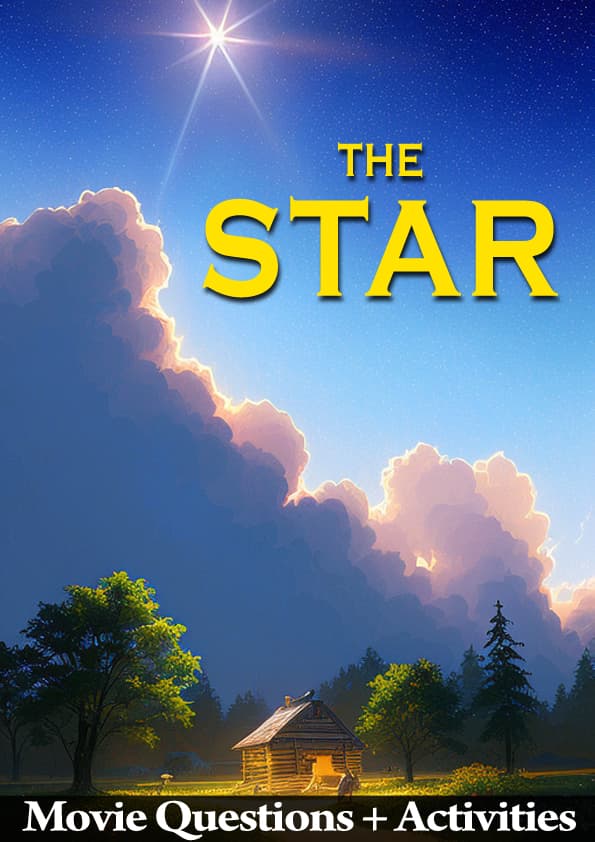
Why Watch This Movie With Your Students
Here's what your students naturally take away from the movie, whether through themes, values, ideas, or perspectives.
🐴 A familiar story from an unfamiliar angle. Rather than centering Mary and Joseph, the movie follows the animals traveling alongside them. Students get a version of the Nativity built around characters who are usually background details.
🌟 Bo's arc is about more than the plot around him. Bo starts the movie wanting to escape his small life and prove himself. His path toward realizing that purpose can come from unexpected places gives the movie its own throughline, separate from the historical events it retells.
🎬 A genuinely starry voice cast. The movie features Steven Yeun, Gina Rodriguez, Zachary Levi, Oprah Winfrey, Tyler Perry, Tracy Morgan, and Christopher Plummer, among others. Students may recognize several of these names or voices.
👑 A clear villain with a real threat, kept age-appropriate. King Herod and his soldiers give the story tension and stakes without pushing the movie into territory too intense for its target age group.
🕊️ Friendship carries the story as much as the journey does. Bo's relationships with Dave and Ruth develop over the course of the movie, giving students a second layer to follow alongside the larger events unfolding around them.
🎄 A natural fit for the last week before Christmas break. At under 90 minutes and with broad appeal for upper elementary and middle school students, it works well as a lower-stakes watch during a season when attention is already elsewhere.
Age Suitability and Content
This movie is rated PG.
⚠️ Things to be aware of:
- Contains no language or substance use.
- Includes mild scenes of peril, including a large animal charging at characters and two dogs threatening Bo.
- King Herod's soldier draws a sword near Mary at one point before being stopped.
- The soldier falls from a cliff near the end of the movie, though this is not shown graphically.
📋 A free editable parent permission slip is available for this movie. It explains the educational benefits of watching movies in class and includes a space for parental consent. → Download Free Permission Slip on TpT (Free resource)
Note for educators: Movie details and age ratings in this post are sourced from IMDb, Common Sense Media, and Wikipedia to help ensure accuracy.
How My Movie Guide Helps You Teach It
📚 English Language Arts Teachers. The guide's three tiers of comprehension questions give ELA teachers a way to differentiate for mixed-ability classes, and the storyboard and synopsis activity asks students to sequence and retell the story in their own words. The character writing task adds a creative component alongside the comprehension work.
🗣️ ESL and ELL Teachers. The multiple choice question set works well with ESL and ELL students, offering a lower-barrier way to check comprehension without requiring full sentence responses. The movie's simple dialogue and clear visual storytelling support language learners following along.
🌐 Social Studies Teachers. The movie's retelling of a story tied to a major world religion and holiday gives Social Studies teachers a way to touch on cultural and religious traditions during a unit on world cultures or holidays. The guide's comprehension questions keep students accountable while watching, though there are no dedicated Social Studies activities.
🎬 Substitute Teachers and Cover Lessons. Hand it to a sub and walk away. The comprehension questions, storyboard, character writing, and word search are all self-contained and organized, with answer keys included for the comprehension question sets. A substitute can run the whole session without having seen the movie.
🏠 Homeschool Parents. The Star's short runtime and gentle pacing make it a manageable single-sitting watch for home learners. The guide covers comprehension at three levels of difficulty, a storyboard and synopsis task, character writing, and a word search, giving a parent plenty to work with without needing to adapt group activities.
💙 SEL Teachers. Bo's journey touches on self-worth, perseverance, and finding purpose beyond a role others have assigned him, and his friendships with Ruth and Dave model loyalty and teamwork. The guide does not include dedicated SEL activities, but the comprehension questions and character writing task give students a structured way to engage with the movie.
🌟 Supporting All Learners Movie guides can be a wonderfully calm fit for students with autism, learning difficulties, and mild to severe disabilities. The structured format gives every student a clear purpose during viewing, easing uncertainty and allowing them to engage at their own pace. If you teach in a special education or learning support setting, you may find this guide a gentle and practical resource. Find out more about why movies work for diverse learners.
What's Inside the Guide
This is a 12-page classroom-ready resource.
Part 1: Comprehension Questions
Three differentiated sets of chronological comprehension questions: 32 full sentence questions, and 31 multiple choice questions with three answer options each (the final question requires a full sentence response). The multiple choice set works well with ESL and ELL students. Answer keys are included.
Part 2: Storyboard and Synopsis
Students draw a nine scene storyboard of what they consider the most important parts of the movie, with a brief description for each scene, then use that storyboard to write a synopsis of the movie.
Part 3: Character Writing and Word Search
Students choose a character to write about following guided prompts and include a drawing of that character. A word search follows, with 15 words or connected words, including 10 that must first be unscrambled and 5 answered from clues. Answers are included.
“It was incredibly helpful, and my students really benefited from it! I loved how easy it was to use, which made the whole process smoother for all of us. Thanks so much for sharing this!”
— Destiny K.
“This guide was a great companion to the movie! We had a lot of great discussions in both small and whole groups.”
— Claire M.
How These Guides Work: From Movie to Lesson
Watching a movie is not a break from learning. It reaches students through sight, sound, and story at once, engaging the brain in ways text alone does not, and the structured work around it is what turns the viewing into a genuine lesson. You can read the research behind this on the Why Movies Work page.
- A Teacher Notes and General Directions page opens the guide with a brief overview of everything inside: what the movie is about, then each part of the guide in order with a short description of what it entails. You know what to expect from the whole resource before you hand out a single page, so you can pick up the guide cold and teach it the same day.
- Answer keys are included for the comprehension question sets, so grading is quick and you are not rewatching the movie to check answers. Some guides also include example answers for the creative and written activities.
- Print and go: classroom ready, with no additional preparation needed. Print one the morning you need it and the lesson is ready.
- Substitute and first-timer friendly. A guide can be handed to a substitute or picked up by a teacher covering the topic for the first time. Nobody running the session needs to have seen the movie.
- Differentiated comprehension sets. Most guides include two or three question sets at different difficulty levels, and most include a multiple-choice option that works well for ESL and ELL students. One class set covers your strongest readers, your strugglers, and your language learners without separate prep.
- Activities that go beyond recall. Each guide includes structured activities that ask students to engage with the movie, not just watch it, ranging from creative and written tasks to discussion and critical thinking questions depending on the guide. That variety matters in a mixed classroom: a student who freezes on a written question set may show real understanding through a drawing or a creative task, and a confident writer gets room to go beyond recall. For the teacher, it turns a movie session into work you can grade: comprehension questions show whether students followed the plot, and the activities beyond them show whether they understood it.