By Mr Hull's Movie Guides

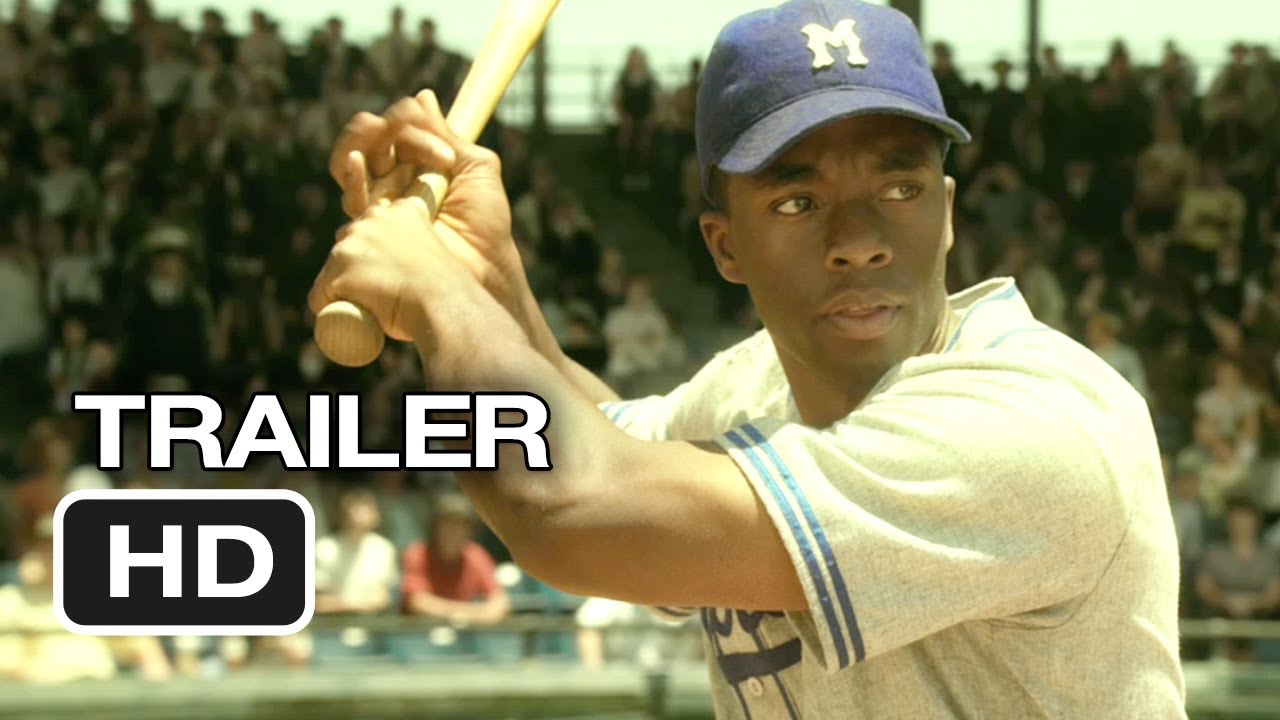
Watch the Trailer
Why Watch This Movie With Your Students
Here's what your students naturally take away from the movie, whether through themes, values, ideas, or perspectives.
🤐 Courage shown as restraint, not confrontation. Robinson agrees to face racist abuse without retaliating, and the story holds him to that promise even when he is taunted, threatened, and physically targeted. Students see self-control portrayed as its own form of strength, distinct from fighting back.
📅 A specific historical moment, not a general history lesson. The movie is grounded in Robinson's actual 1946 and 1947 seasons, from his signing by Branch Rickey through the Dodgers clinching the pennant. Students get a concrete, dated entry point into segregation rather than a broad summary of the era.
🤝 Allies shown changing their minds on screen. Teammates including Pee Wee Reese initially keep their distance or resist playing alongside Robinson, then choose to publicly support him as the season goes on. Students see support for someone facing discrimination portrayed as a decision people make, not a fixed trait some people simply have.
⚾ Racism shown without softening the language. Opposing players and a rival manager direct repeated slurs and threats at Robinson throughout the movie. Students see the specific, sustained nature of the abuse Robinson faced, rather than a vague reference to difficult times.
🤔 A partnership built on more than good intentions. Branch Rickey's decision to sign Robinson is shown as a mix of business calculation and personal conviction, and the two men's relationship develops through direct, sometimes tense conversations rather than instant mutual understanding. Students see how a partnership across a real power imbalance can still produce genuine change.
🏆 An ending that ties personal success to a lasting legacy. Robinson's home run helps send the Dodgers to the World Series, and the story closes by connecting that season to his Hall of Fame induction and the annual day every player now wears his number. Students see a direct line drawn from one person's individual effort to a permanent change in an entire sport.
Age Suitability and Content
This movie is rated PG-13.
⚠️ Things to be aware of:
- Racial slurs, including repeated uses of the n-word, are directed at Robinson throughout the movie.
- A pitcher hits a batter in the head with a baseball, and a player is spiked in the leg and later stitched up.
- Adults drink and smoke in a few scenes.
- Two scenes show couples together in bed, one of which is later revealed to involve an affair.
- There is no graphic violence or blood.
📋 A free editable parent permission slip is available for this movie. It explains the educational benefits of watching movies in class and includes a space for parental consent. → Download Free Permission Slip on TpT (Free resource)
Note for educators: Movie details and age ratings in this post are sourced from IMDb, Common Sense Media, and Wikipedia to help ensure accuracy.
How My Movie Guide Helps You Teach It
📚 English Language Arts Teachers. The movie gives an ELA class a real historical narrative to study, built around Robinson's documented choice to face racism without retaliating. Students build inference and evidence-based analysis through the critical thinking questions, character study through the deep dive and portrait analysis, and sequencing through the storyboard. The differentiated comprehension questions keep the class accountable throughout.
🗣️ ESL and ELL Teachers. The movie's clear, plot-driven structure and its grounding in real events give ESL and ELL students a concrete story to follow in a second language. The multiple choice comprehension set offers a lower pressure way to demonstrate understanding.
🌐 Social Studies Teachers. The movie is grounded in the specific social conditions of postwar segregation, from restricted housing and hotels to the informal rules governing which players could take the field. A social studies class can use it to examine civil rights history through one documented case rather than a general overview. The guide has no dedicated social studies activity, but the comprehension and critical thinking questions keep students engaged with this backdrop.
🎬 Substitute Teachers and Cover Lessons. Hand this one to a substitute and walk away. Everything is organized with answer keys included, and a substitute can run the session without having seen the movie.
🏠 Homeschool Parents. The movie opens up real conversation between a parent and an older student about courage, restraint, and what change costs the person driving it. The guide's comprehension questions, character analysis, storyboard, and synopsis all work for a single student.
💙 SEL Teachers. Robinson's restraint under constant provocation and Pee Wee Reese's public decision to stand beside him give a class two distinct, real examples of self-control and allyship under pressure. The guide has no dedicated SEL activity, but the critical thinking and comprehension questions keep students engaged with these dynamics.
📜 History Teachers. The movie depicts a specific, dated historical event, Robinson's signing in 1945 and his rookie season in 1947, with real figures including Branch Rickey and Pee Wee Reese. A history class can use it as a documented case study in the civil rights movement rather than an abstract date on a timeline. The guide has no dedicated history activity, but the comprehension and critical thinking questions keep students engaged with this detail.
🌟 Supporting All Learners Movie guides can be a wonderfully calm fit for students with autism, learning difficulties, and mild to severe disabilities. The structured format gives every student a clear purpose during viewing, easing uncertainty and allowing them to engage at their own pace. If you teach in a special education or learning support setting, you may find this guide a gentle and practical resource. Find out more about why movies work for diverse learners.
What's Inside the Guide
This is a 18-page classroom-ready resource.
Part 1: Comprehension Questions
Three sets of chronological comprehension questions for differentiation, a 47 question set requiring full sentence answers, a 35 question set requiring full sentence answers (12 removed from the 47 question set), and a 35 question multiple choice set with 3 possible answers per question. The multiple choice set also works well for ESL and ELL students. Answer keys are included for all three sets.
Part 2: Critical Thinking Questions, Character Analysis and Deep Dive
Five critical thinking questions encouraging students to analyze the movie's themes of moral courage, prejudice, allyship, and personal sacrifice, using evidence from the movie alongside personal responses, to be discussed as a class afterward. Students sketch a portrait of Jackie and complete a character profile covering his dream, fear, and skill, then analyze three personality traits with evidence from the movie and describe his key relationships with Mr. Rickey, Rae, and Wendell. Ten further questions help students understand Jackie's motivation, strengths, flaws, key decisions, and personal growth throughout the movie.
Part 3: Storyboard and Synopsis
Students create a 9 scene storyboard illustrating pivotal events from the movie, with a short description for each scene explaining the main idea it represents, using the comprehension questions to guide sequencing. Using their completed storyboard as a guide, students then write a synopsis of the movie.
How These Guides Work: From Movie to Lesson
Watching a movie is not a break from learning. It reaches students through sight, sound, and story at once, engaging the brain in ways text alone does not, and the structured work around it is what turns the viewing into a genuine lesson. You can read the research behind this on the Why Movies Work page.
- A Teacher Notes and General Directions page opens the guide with a brief overview of everything inside: what the movie is about, then each part of the guide in order with a short description of what it entails. You know what to expect from the whole resource before you hand out a single page, so you can pick up the guide cold and teach it the same day.
- Answer keys are included for the comprehension question sets, so grading is quick and you are not rewatching the movie to check answers. Some guides also include example answers for the creative and written activities.
- Print and go: classroom ready, with no additional preparation needed. Print one the morning you need it and the lesson is ready.
- Substitute and first-timer friendly. A guide can be handed to a substitute or picked up by a teacher covering the topic for the first time. Nobody running the session needs to have seen the movie.
- Differentiated comprehension sets. Most guides include two or three question sets at different difficulty levels, and most include a multiple-choice option that works well for ESL and ELL students. One class set covers your strongest readers, your strugglers, and your language learners without separate prep.
- Activities that go beyond recall. Each guide includes structured activities that ask students to engage with the movie, not just watch it, ranging from creative and written tasks to discussion and critical thinking questions depending on the guide. That variety matters in a mixed classroom: a student who freezes on a written question set may show real understanding through a drawing or a creative task, and a confident writer gets room to go beyond recall. For the teacher, it turns a movie session into work you can grade: comprehension questions show whether students followed the plot, and the activities beyond them show whether they understood it.