By Mr Hull's Movie Guides
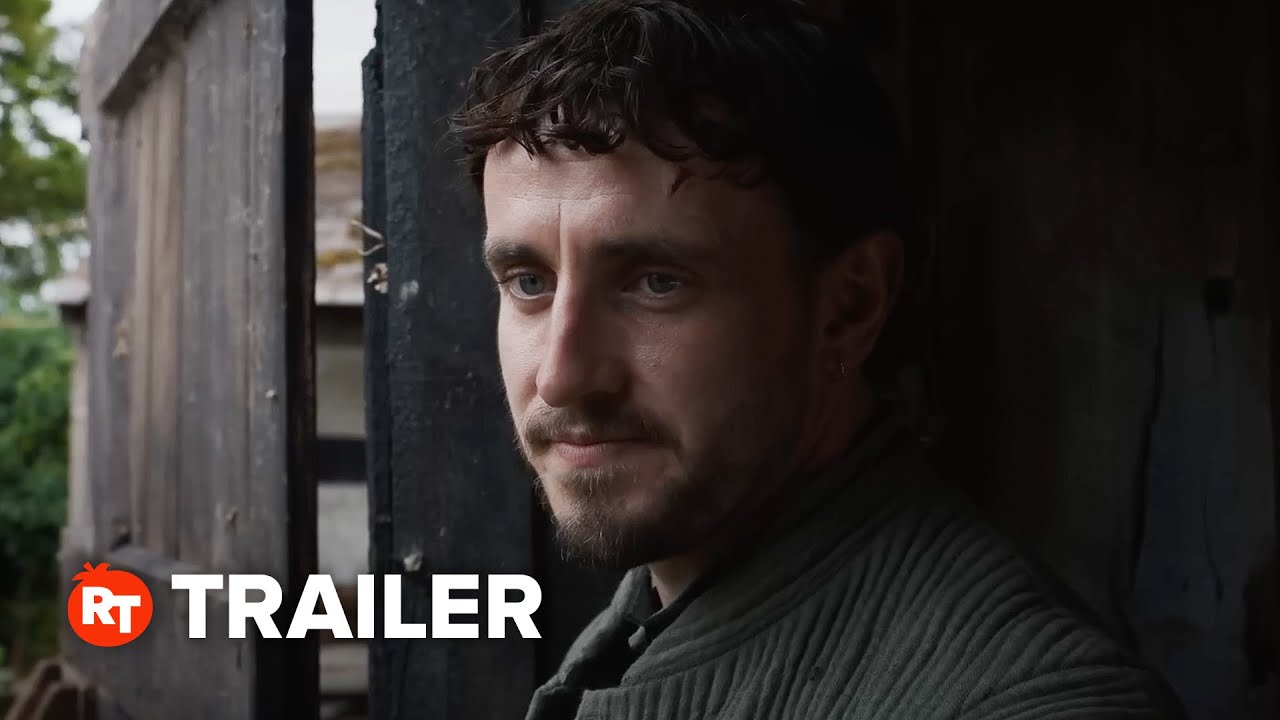
Watch the Trailer
Why Watch This Movie With Your Students
Here's what your students naturally take away from the movie, whether through themes, values, ideas, or perspectives.
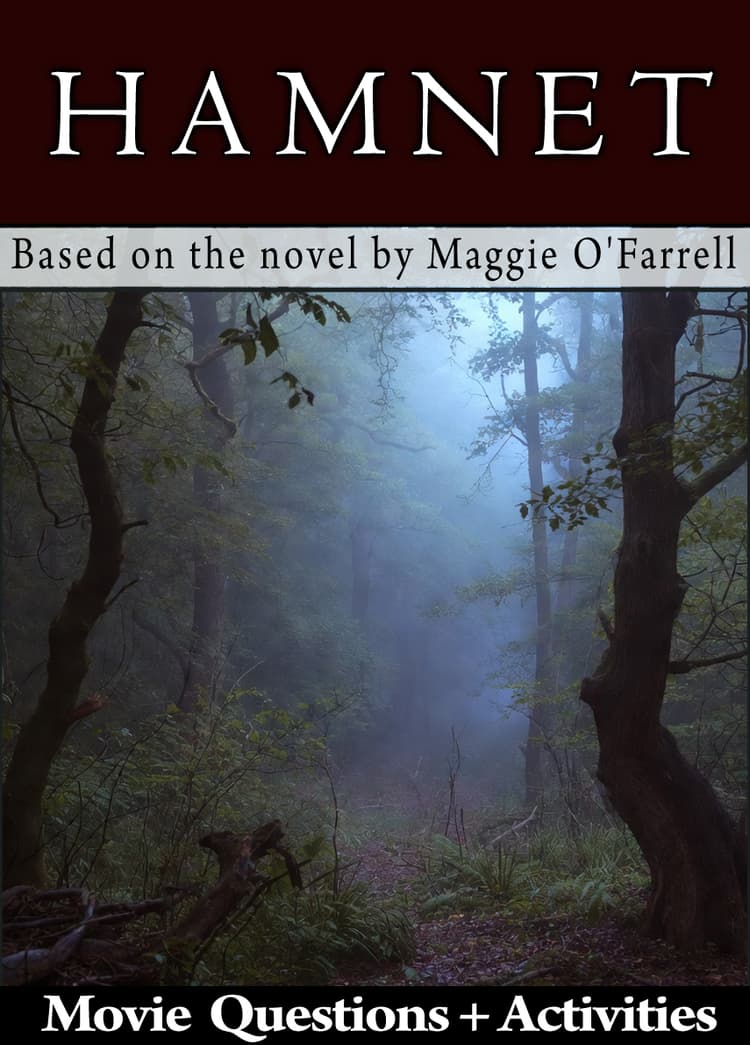
📖 A visual companion to Maggie O'Farrell's novel. The movie is based on O'Farrell's bestselling novel, itself a work of historical imagination built around a single fact recorded about Shakespeare's life. Students who have read the book get a visual companion for comparing how the movie translates its interior, sensory prose into image and performance.
✍️ Grief translated directly into art. The movie traces a direct line from a family's private loss to the writing of one of the most performed plays in the English language. Students see a concrete example of how a real event can become the raw material for creative work, rather than treating that connection as an abstract idea.
💔 Two people grieving the same loss in different ways. Agnes and Will respond to Hamnet's death in opposite directions, one staying rooted in family and home, the other retreating into work far away. Students see grief portrayed as something that can pull two people apart even when their love for each other and their child is not in question.
🌿 A woman defined by more than her husband's fame. Agnes is established as a healer with her own knowledge, instincts, and connection to the natural world well before William Shakespeare's name or career enters the story. Students see a historical figure usually remembered only in relation to a famous husband given a fully developed life of her own.
🎭 A play performed within the movie itself. The story builds toward a staged performance of Hamlet that becomes the emotional center of the movie's final act. Students get a rare chance to see a Shakespeare play performed as part of a larger story about why it was written in the first place.
🎬 A deliberate choice to withhold William's identity. The movie does not confirm that William is William Shakespeare until near its final scenes, keeping the focus on the family rather than the famous name. Whether to tell students in advance is worth deciding ahead of time, since knowing early can shape how they read the earlier scenes.
Age Suitability and Content
This movie is rated PG-13.
⚠️ Things to be aware of:
- Includes a child's death from illness, shown with him in visible distress.
- Includes a stillbirth scare during a birth scene and a flashback depicting a mother dying in childbirth.
- Contains one sex scene with passionate kissing and physical intimacy, with no explicit nudity.
- Includes a scene of a father physically striking his son during an argument.
- Includes a scene of a character drinking to the point of visible intoxication and emotional distress.
- Includes a small number of period-accurate slurs directed at Agnes, including 'gypsy' and 'wench.'
📋 A free editable parent permission slip is available for this movie. It explains the educational benefits of watching movies in class and includes a space for parental consent. → Download Free Permission Slip on TpT (Free resource)
Note for educators: Movie details and age ratings in this post are sourced from IMDb, Common Sense Media, and Wikipedia to help ensure accuracy.
How My Movie Guide Helps You Teach It
📚 English Language Arts Teachers. Hamnet gives an ELA class the imagined personal story behind one of Shakespeare's most performed plays, connecting a writer's real life to the work he produced from it. The guide is built for ELA with differentiated comprehension questions at multiple difficulty levels, critical thinking and debate tasks, and writing that pushes beyond simple recall.
🗣️ ESL and ELL Teachers. The movie's dialogue is dense and era-inflected, but its performances carry real emotional weight visually, through faces, silences, and staging, giving ESL and ELL students a way into the story even when individual lines are hard to follow. The multiple choice question set works well with ESL and ELL students, giving them a structured way to track the story alongside their classmates.
🎬 Substitute Teachers and Cover Lessons. Everything a substitute needs is self-contained and organized, with two sets of differentiated comprehension questions, critical thinking and debate tasks, a storyboard and synopsis, and a character mind map. Answer keys and example answers are included throughout, so a substitute can run the full session without having seen the movie.
🏠 Homeschool Parents. With two levels of comprehension questions, a storyboard and synopsis task, and a character mind map, the guide gives a homeschool parent a ready-made structure for a single student to work through independently. The structured debate activity is written for pair or group work, so a parent working with one student would need to adapt it into a written argument or a discussion between parent and student instead.
🎭 Theater Teachers. Hamnet gives a Theater class a rare look at Elizabethan theatrical production, following the writing of a specific play through to an extended staged performance sequence at the Globe. The guide does not include dedicated theater activities, but the comprehension questions give students a structured task and keep them accountable during the viewing.
💙 SEL Teachers. Hamnet centers on how Agnes and Will process the same devastating loss in opposite directions, one staying rooted in family, the other retreating into work, straining their marriage even as their love for each other holds. The guide does not include dedicated SEL activities, but the comprehension questions give students a structured task and keep them accountable during the viewing.
📜 History Teachers. Hamnet gives a History class a grounded look at Elizabethan English family life, social class, and the real threat of plague, all set against the backdrop of a historical figure students likely already know by name. The guide does not include dedicated history activities, but the comprehension questions give students a structured task and keep them accountable during the viewing.
🌟 Supporting All Learners Movie guides can be a wonderfully calm fit for students with autism, learning difficulties, and mild to severe disabilities. The structured format gives every student a clear purpose during viewing, easing uncertainty and allowing them to engage at their own pace. If you teach in a special education or learning support setting, you may find this guide a gentle and practical resource. Find out more about why movies work for diverse learners.
What's Inside the Guide
This is a 15-page classroom-ready resource.
Part 1: Comprehension Questions
Two sets of differentiated comprehension questions in chronological order, including 35 questions requiring full sentence answers and 35 multiple choice questions with 3 possible answers each. The multiple choice questions may also work well with ESL and ELL students. Answer keys are included.
Part 2: Discussion and Debate
Students work in pairs to answer four critical thinking questions related to the movie, then come together as a class to discuss each question openly. Students also take part in a structured debate, selecting or being assigned a statement to argue for or against, supporting their position with specific evidence from the movie and responding respectfully to opposing viewpoints. Example answers and teacher direction are included.
Part 3: Storyboard and Synopsis
Students create a 9 scene storyboard illustrating pivotal events from the movie, with a short description explaining the main idea each scene represents, using the movie questions to help with sequencing. Using their storyboards as a guide, students then write a synopsis of the movie.
Part 4: Character Mind Map
Students pick a character, write their name and draw their face in the center bubble of a mind map, then fill in the surrounding bubbles with words or drawings based on the guide's prompts, including a personal take and a modern comparison.
“A real lifesaver—completely no prep and incredibly thorough. The activities are varied and engaging (pair work, debate, storyboard, character study), and my students loved every part of it. It worked perfectly for individual, pair, and group work. A true gem!”
— Anne S.
How These Guides Work: From Movie to Lesson
Watching a movie is not a break from learning. It reaches students through sight, sound, and story at once, engaging the brain in ways text alone does not, and the structured work around it is what turns the viewing into a genuine lesson. You can read the research behind this on the Why Movies Work page.
- A Teacher Notes and General Directions page opens the guide with a brief overview of everything inside: what the movie is about, then each part of the guide in order with a short description of what it entails. You know what to expect from the whole resource before you hand out a single page, so you can pick up the guide cold and teach it the same day.
- Answer keys are included for the comprehension question sets, so grading is quick and you are not rewatching the movie to check answers. Some guides also include example answers for the creative and written activities.
- Print and go: classroom ready, with no additional preparation needed. Print one the morning you need it and the lesson is ready.
- Substitute and first-timer friendly. A guide can be handed to a substitute or picked up by a teacher covering the topic for the first time. Nobody running the session needs to have seen the movie.
- Differentiated comprehension sets. Most guides include two or three question sets at different difficulty levels, and most include a multiple-choice option that works well for ESL and ELL students. One class set covers your strongest readers, your strugglers, and your language learners without separate prep.
- Activities that go beyond recall. Each guide includes structured activities that ask students to engage with the movie, not just watch it, ranging from creative and written tasks to discussion and critical thinking questions depending on the guide. That variety matters in a mixed classroom: a student who freezes on a written question set may show real understanding through a drawing or a creative task, and a confident writer gets room to go beyond recall. For the teacher, it turns a movie session into work you can grade: comprehension questions show whether students followed the plot, and the activities beyond them show whether they understood it.