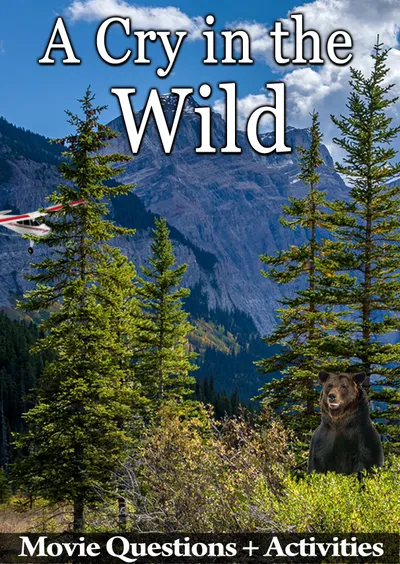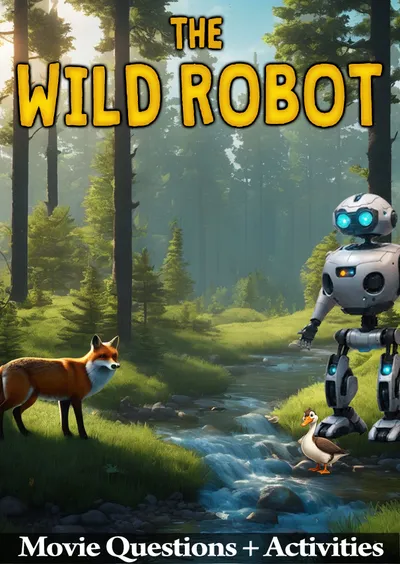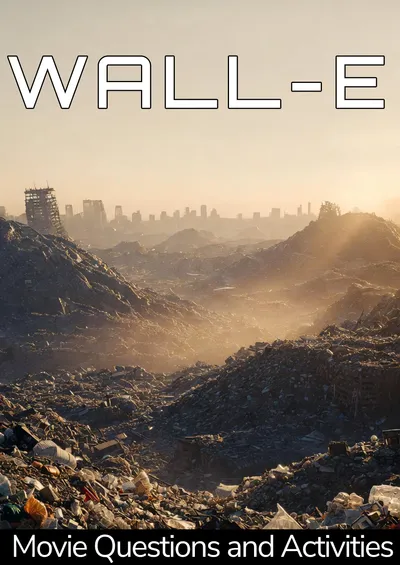
By Mr Hull's Movie Guides
Watch the Trailer

What's Inside the Guide
This is a 14-page classroom-ready resource.
Three sets of differentiated comprehension questions in chronological order. Answer keys are included for all three sets.
- 35 question set requiring full sentence answers.
- 25 question set requiring full sentence answers (a shortened version of the 35 question set).
- 25 multiple choice question set with three possible answers each.
This part covers two activities.
- Imagining they are in Sam's situation and need to set up a home in the wilderness, drawing an area map of their chosen location and writing the reasons behind their choice with survival needs like wood, water, and food in mind.
- Thinking through solutions to four possible problems they might face while living in the wilderness.
The movie questions are available as a reference for sequencing.
- A nine scene storyboard of what they consider the most important parts of the movie, including a brief description for each scene.
- A synopsis of the movie, written using their completed storyboard.
“I love reading novels with my students that have movies attached to them. However, I want to make sure they pay attention. These were great. If I remember correctly, they were differentiated.”
— Lisa H.
“Thank you!”
— Scarlet W.
Why Watch This Movie With Your Students
Here's what your students naturally take away from the movie, whether through themes, values, ideas, or perspectives.
🏕️ Centers a real test of self-reliance. Sam has to meet every basic need himself, from shelter and food to warmth, using only what the wilderness provides. The movie treats his choices as genuine problem solving rather than an easy adventure.
🦅 Follows a real skill being learned start to finish. Sam researches falconry at the local library, then trains a wild falcon named Frightful to hunt for him. Watching that process gives students a concrete look at how patience and research turn into a practical skill.
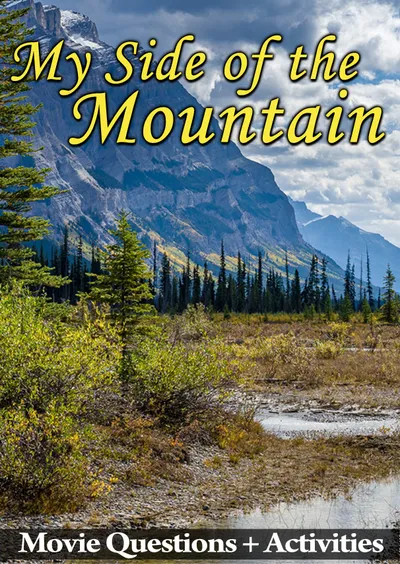
📖 Gives students a visual companion to Jean Craighead George's novel. The movie is based directly on George's 1959 book of the same name, making it a natural pairing for a novel study or a way to compare how the story changes across mediums. Sam's choice to test Thoreau's ideas about self-sufficiency for himself, rather than just read about them, comes through directly on screen.
🌲 Shows nature as something to work with, not just admire. The movie spends real time on Sam identifying food sources, building shelter, and reading the land around him. It treats the natural world as something with rules and knowledge to learn rather than scenery.
❄️ Builds toward genuine danger and loss. Sam survives a life threatening blizzard and loses Frightful to a hunter partway through the story. Those moments give the movie real stakes instead of a risk free version of wilderness life.
🤝 Explores connection through unlikely company. Sam's solitary plan is interrupted by real friendships with a wandering folk singer and a local librarian who each shape his time in the wilderness. Their presence gives students a way to talk about whether total independence is what Sam wants by the end.
Age Suitability and Content
This movie is rated G.
⚠️ Things to be aware of:
- Hunters kill a deer on screen, and Sam uses its hide and meat, though nothing graphic is shown.
- A hunter kills Sam's pet falcon partway through the story.
- Sam faces several tense survival scenes, including a near suffocation in his tree home during a blizzard and a climb up a dangerous mountain.
- There is no sexual content, language, or substance use in the movie.
Note for educators: Movie details and age ratings in this post are sourced from IMDb, Common Sense Media, and Wikipedia to help ensure accuracy.
How My Movie Guide Helps You Teach It
Click your subject below to see how this guide supports it:
📚 English Language Arts Teachers
🗣️ ESL and ELL Teachers
🎬 Substitute Teachers and Cover Lessons
🏠 Homeschool Parents
💙 SEL Teachers
🌟 Supporting All Learners A movie gives students a story to follow, and the guide gives them questions to work through as they watch. For students with autism, learning difficulties, and mild to severe disabilities, that combination provides a clear focus for the lesson and a concrete way to show understanding. The format can be useful in special education and learning support classrooms, where teachers need activities that give students a defined task during viewing. Find out more about why movies work for diverse learners.
How These Guides Work: From Movie to Lesson
Watching a movie is not a break from learning. It reaches students through sight, sound, and story at once, engaging the brain in ways text alone does not, and the structured work around it is what turns the viewing into a genuine lesson. You can read the research behind this on the Why Movies Work page.
- A Teacher Notes and General Directions page opens the guide with a brief overview of everything inside: what the movie is about, then each part of the guide in order with a short description of what it entails. You know what to expect from the whole resource before you hand out a single page, so you can pick up the guide cold and teach it the same day.
- Answer keys are included for the comprehension question sets, so grading is quick and you are not rewatching the movie to check answers. Some guides also include example answers for the creative and written activities.
- Print and go: classroom ready, with no additional preparation needed. Print one the morning you need it and the lesson is ready.
- Substitute and first-timer friendly. A guide can be handed to a substitute or picked up by a teacher covering the topic for the first time. Nobody running the session needs to have seen the movie.
- Differentiated comprehension sets. Most guides include two or three question sets at different difficulty levels, and most include a multiple-choice option that works well for ESL and ELL students. One class set covers your strongest readers, your strugglers, and your language learners without separate prep.
- Activities that go beyond recall. Each guide includes structured activities that ask students to engage with the movie, not just watch it, ranging from creative and written tasks to discussion and critical thinking questions depending on the guide. That variety matters in a mixed classroom: a student who freezes on a written question set may show real understanding through a drawing or a creative task, and a confident writer gets room to go beyond recall. For the teacher, it turns a movie session into work you can grade: comprehension questions show whether students followed the plot, and the activities beyond them show whether they understood it.