By Mr Hull's Movie Guides

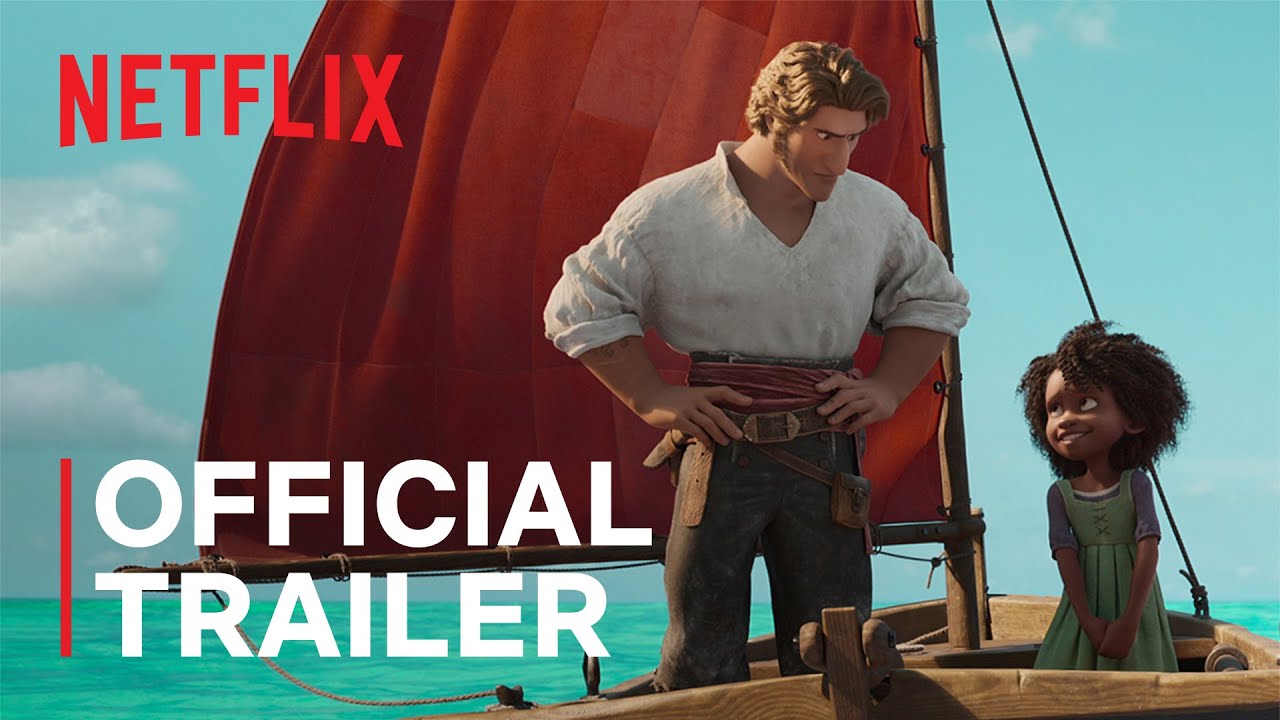
Watch the Trailer
Why Watch This Movie With Your Students
Here's what your students naturally take away from the movie, whether through themes, values, ideas, or perspectives.
⚓ A Stowaway Chases a Legend and Finds the Truth Instead. Maisie sneaks aboard a monster hunting ship hoping to prove herself against the beasts from her storybooks, only to discover the creatures are nothing like she was told. Her journey from believer to questioner gives students a clear example of a character changing her mind when the evidence in front of her contradicts what she was raised to believe.
🏛️ A Kingdom's Official Story Turns Out to Be False. The hunters' entire mission rests on generations of stories the Crown has told about dangerous sea monsters, and the movie slowly reveals how much of that story was built to serve the people in power. It gives students a real example of propaganda in action and a reason to ask who benefits when a government controls the narrative.
🤝 Trust Builds Slowly Between Two Reluctant Allies. Jacob starts the movie certain of everything he was trained to believe, and Maisie has to earn his trust one small moment at a time before he is willing to reconsider it. Watching two characters with opposing views work toward understanding each other gives students something to talk about beyond the movie's action.
🦑 Sea Beasts Are Reframed Through a Character's Eyes. Once Maisie spends real time with a sea beast rather than fighting one, the movie asks students to reconsider a creature they were introduced to as a monster. The shift mirrors how easy it is to misjudge something based on reputation alone rather than direct experience.
🎖️ Courage Means Standing Up to People in Charge. By the end of the movie, both Maisie and Jacob have to challenge a king, a queen, and a captain they respect in order to do what they believe is right. Their choice to speak up despite the risk gives students a clear model of courage and integrity in action.
🌊 An Adventure Built Around Real Stakes. The hunters face genuine danger throughout the movie, from violent confrontations with the beasts to a contest that could end their entire way of life. The high stakes keep the plot moving while still leaving room for the story's questions about truth and trust to land.
Age Suitability and Content
This movie is rated PG.
⚠️ Things to be aware of:
- The movie includes several intense battles between hunters and sea monsters, with weapons such as spears, cannons, and poison, and one sailor is shown with visible injuries afterward.
- There is mild language throughout, including uses of "bloody hell" and "ass."
- Adult characters are shown drinking alcohol on more than one occasion, including in a tavern scene.
- Several scenes involving rough seas, near drownings, and a large sea creature could be frightening for younger viewers.
📋 A free editable parent permission slip is available for this movie. It explains the educational benefits of watching movies in class and includes a space for parental consent. → Download Free Permission Slip on TpT (Free resource)
Note for educators: Movie details and age ratings in this post are sourced from IMDb, Common Sense Media, and Wikipedia to help ensure accuracy.
How My Movie Guide Helps You Teach It
📚 English Language Arts Teachers. The movie gives an ELA class a story built around a character changing her mind based on new evidence, which offers real material for looking at cause and effect and character development in fiction. The guide's comprehension questions are set at different difficulty levels, and its writing tasks push students beyond simple recall into synthesizing the story and creating original material of their own.
🗣️ ESL and ELL Teachers. The movie leans on big visual set pieces including ship battles and sea beasts, so much of the story comes through action and imagery rather than dialogue alone. The multiple choice question set works well with ESL and ELL students, giving them a structured way to show understanding of the story.
🌐 Social Studies Teachers. The movie centers on a kingdom that has spent generations telling its people a false story about sea monsters to protect its own power, which gives a social studies class real material for discussing propaganda, misinformation, and who controls an official narrative. The guide does not include dedicated social studies activities, but the comprehension questions give students a structured task to stay accountable to the story while they watch.
🎬 Substitute Teachers and Cover Lessons. Hand this guide to a substitute and the lesson runs itself. The comprehension questions, storyboard and synopsis tasks, sea beast design activity, and word search are all self-contained and organized in order, with answer keys included for the comprehension questions and the word search. A substitute can manage the full session without ever having seen the movie.
🏠 Homeschool Parents. The movie works well for a homeschool setting because its activities, the comprehension questions, storyboard, synopsis, sea beast design, and word search, are all built for a single student to complete independently. Its adventure story and questions about truth and trust give a parent plenty to discuss afterward, and the word search offers a lighter option for wrapping up the session.
💙 SEL Teachers. Both main characters in the movie have to reconsider beliefs they have held their whole lives and find the courage to act on what they discover, which makes the movie a natural fit for an SEL classroom talking about integrity and standing up for what is right. The guide does not include dedicated SEL activities, but the comprehension questions keep students engaged with the story and its choices as they watch.
🌟 Supporting All Learners Movie guides can be a wonderfully calm fit for students with autism, learning difficulties, and mild to severe disabilities. The structured format gives every student a clear purpose during viewing, easing uncertainty and allowing them to engage at their own pace. If you teach in a special education or learning support setting, you may find this guide a gentle and practical resource. Find out more about why movies work for diverse learners.
The social studies and SEL connections here come through the movie's plot and discussion potential. The guide's own activities are built around comprehension, writing, and creativity rather than dedicated social studies or SEL tasks.
What's Inside the Guide
This is a 15-page classroom-ready resource.
Part 1: Comprehension Questions
Three sets of questions in chronological order for differentiation, a 40 question set requiring full sentence answers, a 30 question set requiring full sentence answers with 10 removed from the larger set, and a 30 question multiple choice set with three answer options. Answer keys are included for all three sets, and the multiple choice set works well with ESL and ELL students.
Part 2: Storyboard, Synopsis and Creativity
Students draw a nine scene storyboard covering what they consider the most important parts of the movie, with a brief written description for each scene, then use that storyboard to write a synopsis of the movie, and finish by designing and drawing their own sea beast with a written description.
Part 3: Just for Fun
A word search puzzle for early finishers with 15 words to find, five of which require students to answer a clue first before they can locate the word. An answer key is included.
How These Guides Work: From Movie to Lesson
Watching a movie is not a break from learning. It reaches students through sight, sound, and story at once, engaging the brain in ways text alone does not, and the structured work around it is what turns the viewing into a genuine lesson. You can read the research behind this on the Why Movies Work page.
- A Teacher Notes and General Directions page opens the guide with a brief overview of everything inside: what the movie is about, then each part of the guide in order with a short description of what it entails. You know what to expect from the whole resource before you hand out a single page, so you can pick up the guide cold and teach it the same day.
- Answer keys are included for the comprehension question sets, so grading is quick and you are not rewatching the movie to check answers. Some guides also include example answers for the creative and written activities.
- Print and go: classroom ready, with no additional preparation needed. Print one the morning you need it and the lesson is ready.
- Substitute and first-timer friendly. A guide can be handed to a substitute or picked up by a teacher covering the topic for the first time. Nobody running the session needs to have seen the movie.
- Differentiated comprehension sets. Most guides include two or three question sets at different difficulty levels, and most include a multiple-choice option that works well for ESL and ELL students. One class set covers your strongest readers, your strugglers, and your language learners without separate prep.
- Activities that go beyond recall. Each guide includes structured activities that ask students to engage with the movie, not just watch it, ranging from creative and written tasks to discussion and critical thinking questions depending on the guide. That variety matters in a mixed classroom: a student who freezes on a written question set may show real understanding through a drawing or a creative task, and a confident writer gets room to go beyond recall. For the teacher, it turns a movie session into work you can grade: comprehension questions show whether students followed the plot, and the activities beyond them show whether they understood it.