By Mr Hull's Movie Guides

Watch the Trailer
Why Watch This Movie With Your Students
Here's what your students naturally take away from the movie, whether through themes, values, ideas, or perspectives.
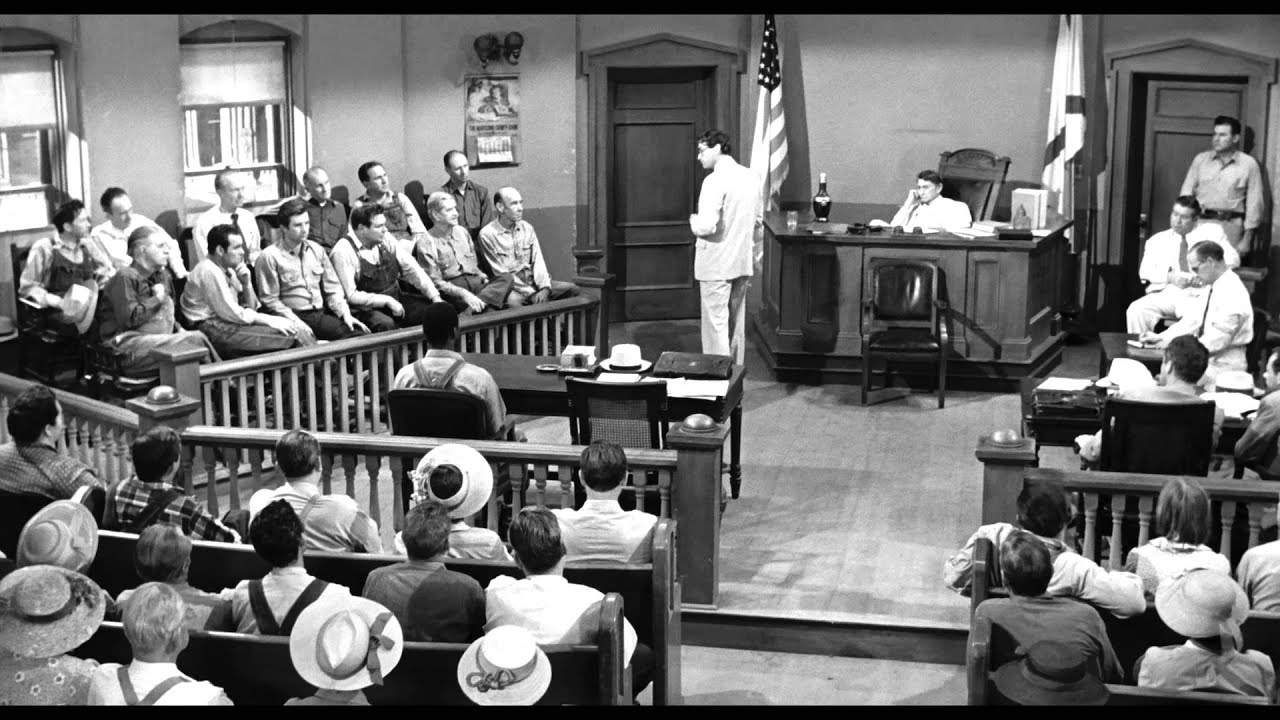
⚖️ The courtroom at the center of the story is a study in how justice can fail. Atticus argues Tom Robinson's case clearly and well. The evidence supports his client. The jury convicts anyway. The movie does not soften this or resolve it with a redemptive twist. Watching a fair argument lose to prejudice gives students something concrete to discuss about how legal systems and social systems interact.
👧 Scout's perspective keeps the moral stakes visible throughout. Because the story is filtered through a child's understanding, the things that adults have learned to rationalize or ignore remain visible as what they are. Scout's questions, her confusion, and her gradual comprehension of what her father is up against give the movie an emotional honesty that straightforward adult narration would lose.
👨⚖️ Atticus Finch is a character worth studying as a model of principled behavior under pressure. Atticus knows defending Tom Robinson will cost him socially. He does it anyway, and he does it properly, without shortcuts. His approach to his children, treating them as capable of understanding hard truths, is as much a part of who he is as his courtroom conduct. Both aspects of his character give students substantive material to analyze.
📚 The movie is a direct adaptation of a Pulitzer Prize-winning novel. Harper Lee's novel is among the most frequently taught books in American secondary education. The movie, released just two years after the novel, closely follows the source material and is often shown alongside or after the book. Students who have read the novel can compare how the two versions handle the same material. Students who have not can use the movie as an introduction to the story before reading.
🏘️ The Boo Radley subplot is about fear, rumor, and what it means to misjudge someone. Running parallel to the trial is Scout and Jem's belief that their neighbor Boo Radley is dangerous, built entirely from neighborhood gossip and childhood imagination. The resolution of that subplot connects directly to the movie's larger argument about prejudice: that the things people fear most are often things they have never bothered to understand.
Age Suitability and Content
This movie is rated PG-13.
⚠️ Things to be aware of:
- Racial slurs are used throughout, consistent with the historical setting depicted.
- The central plot involves a false accusation of rape and a racially biased trial resulting in the wrongful conviction of an innocent man.
- Mild violence: a child's arm is broken in an attack; Jem is attacked off-screen; a man is killed.
- Alcohol use. Cigarette smoking.
📋 A free editable parent permission slip is available for this movie. It explains the educational benefits of watching movies in class and includes a space for parental consent. → Download Free Permission Slip on TpT (Free resource)
Note for educators: Movie details and age ratings in this post are sourced from IMDb, Common Sense Media, and Wikipedia to help ensure accuracy.
How My Movie Guide Helps You Teach It
📚 English Language Arts Teachers. To Kill a Mockingbird is a standard ELA text at the high school level, and the movie is a natural companion for classes working through the novel. The guide supports comprehension, sequencing, and extended written response, with two differentiated question sets for mixed-ability classes and a storyboard and synopsis sequence for narrative writing practice.
🌐 Social Studies Teachers. The movie depicts the racial segregation of the American South in the 1930s, the legal structures that enabled racial injustice, and the social pressures that kept communities complicit. Social Studies teachers covering US history, the civil rights era, or civic institutions will find the movie directly relevant. The guide does not include dedicated Social Studies activities, but the comprehension questions and discussion questions give students a structured framework for engaging with the historical content.
🏠 Homeschool Parents. To Kill a Mockingbird is a strong choice for home learners in the high school range studying American literature, US history, or civics. The guide provides two differentiated question sets with answer keys, discussion questions, and a storyboard and synopsis sequence that supports extended engagement with the story.
📜 History Teachers. Set during the Great Depression in the segregated American South, the movie gives History teachers a detailed and humanizing portrait of the legal and social conditions that shaped race relations in the United States before the civil rights movement. The guide does not include dedicated history activities, but the comprehension and discussion questions keep students accountable during the viewing and provide a foundation for further study.
🌟 Supporting All Learners Movie guides can be a wonderfully calm fit for students with autism, learning difficulties, and mild to severe disabilities. The structured format gives every student a clear purpose during viewing, easing uncertainty and allowing them to engage at their own pace. If you teach in a special education or learning support setting, you may find this guide a gentle and practical resource. Find out more about why movies work for diverse learners.
What's Inside the Guide
This is a 10-page classroom-ready resource.
Part 1: Comprehension Questions
Two differentiated question sets covering the movie in chronological order. The full set contains 55 questions requiring complete sentence answers; the shorter set contains 40 questions (15 removed from the longer set). Answer keys are included for both sets.
Part 2: Discussion Questions
4 open-ended questions designed for use after viewing. They can be completed individually in writing or used as the basis for pair or whole-class discussion.
Part 3: Storyboard and Synopsis
Students draw a 9-scene storyboard of what they consider the most important events in the movie, with a brief written description for each scene. They then use their completed storyboard to write a full synopsis, practicing narrative sequencing and written expression.
“I used this with my grade 9 students to support their reading. The questions allowed them to reflect on what they had read and provided a chapter by chapter study guide for their open notes quiz, and writing assignments after reading.”
— Sharon S.
“Thank you so much for these well-written questions and the provided answer key. I wanted my students to watch the film TKAM before reading "Just Mercy" by Bryan Stevenson. A majority of my students never read the novel and we didn't have time to read it. While a minority of my students read it the previous school year. This was a great review and context for everyone.”
— Paulette G.
How These Guides Work: From Movie to Lesson
Watching a movie is not a break from learning. It reaches students through sight, sound, and story at once, engaging the brain in ways text alone does not, and the structured work around it is what turns the viewing into a genuine lesson. You can read the research behind this on the Why Movies Work page.
- A Teacher Notes and General Directions page opens the guide with a brief overview of everything inside: what the movie is about, then each part of the guide in order with a short description of what it entails. You know what to expect from the whole resource before you hand out a single page, so you can pick up the guide cold and teach it the same day.
- Answer keys are included for the comprehension question sets, so grading is quick and you are not rewatching the movie to check answers. Some guides also include example answers for the creative and written activities.
- Print and go: classroom ready, with no additional preparation needed. Print one the morning you need it and the lesson is ready.
- Substitute and first-timer friendly. A guide can be handed to a substitute or picked up by a teacher covering the topic for the first time. Nobody running the session needs to have seen the movie.
- Differentiated comprehension sets. Most guides include two or three question sets at different difficulty levels, and most include a multiple-choice option that works well for ESL and ELL students. One class set covers your strongest readers, your strugglers, and your language learners without separate prep.
- Activities that go beyond recall. Each guide includes structured activities that ask students to engage with the movie, not just watch it, ranging from creative and written tasks to discussion and critical thinking questions depending on the guide. That variety matters in a mixed classroom: a student who freezes on a written question set may show real understanding through a drawing or a creative task, and a confident writer gets room to go beyond recall. For the teacher, it turns a movie session into work you can grade: comprehension questions show whether students followed the plot, and the activities beyond them show whether they understood it.