By Mr Hull's Movie Guides
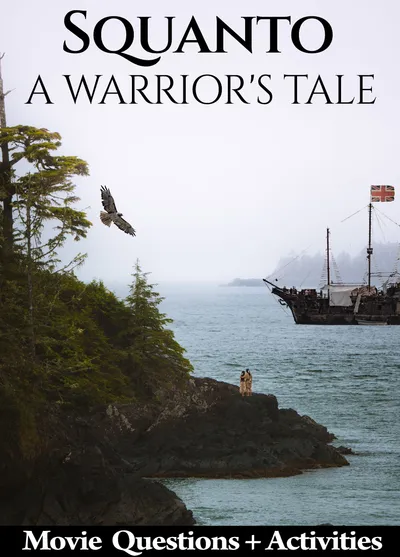
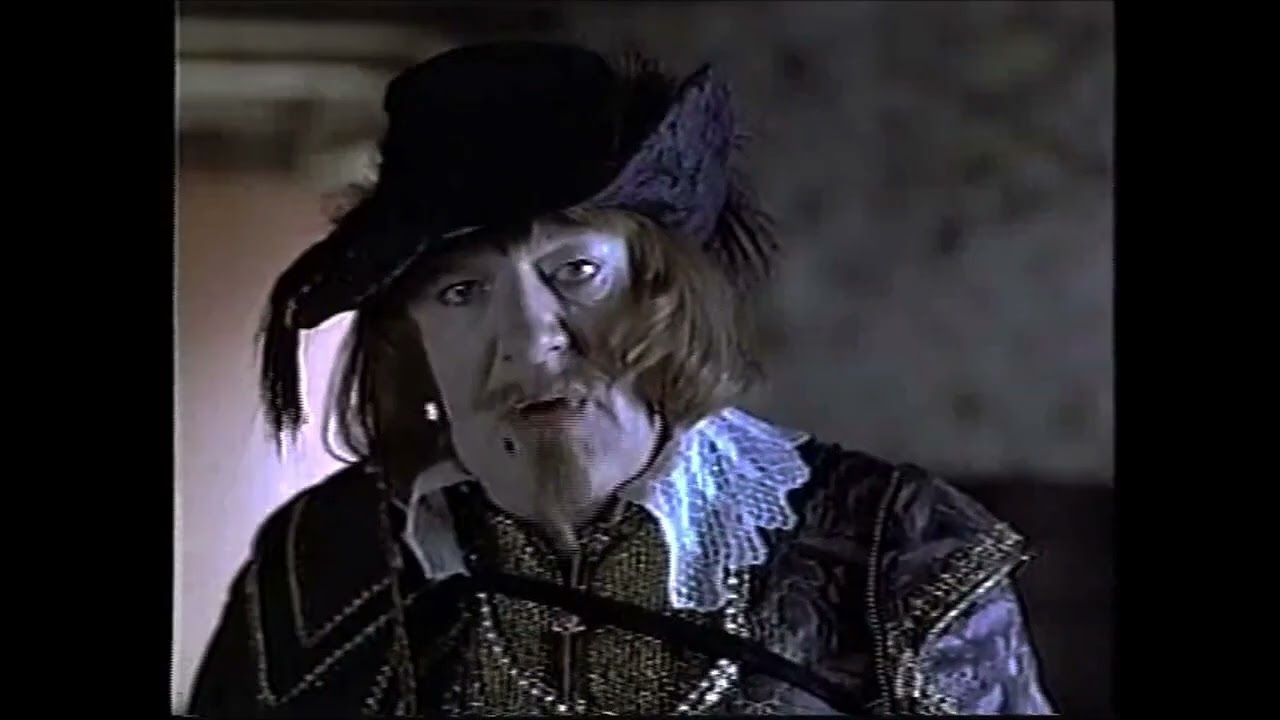
Watch the Trailer
What's Inside the Guide
This is a 17-page classroom-ready resource.
All of the comprehension questions are made while I watch the movie, with the additional activities created to connect directly with its themes and story.
Three sets of comprehension questions in chronological order, made for differentiation. Answer keys are included.
- 42 questions requiring full sentence answers.
- 30 questions requiring full sentence answers (12 removed from the 42 question set).
- 30 multiple choice questions with 3 possible answers per question, which may also work well with ESL and ELL students.
Common Core Anchor Standards: R.1 · SL.2
Read closely to determine what the text says explicitly and to make logical inferences from it; cite specific textual evidence when writing or speaking to support conclusions drawn from the text.
Students answer chronological questions about explicit details, such as what token Nakooma gives Squanto, what Squanto does to escape the ship and what he makes for the monks, in a 42-question, 30-question or 30 multiple-choice set.
Integrate and evaluate information presented in diverse media and formats, including visually, quantitatively, and orally.
The questions can only be answered from what students saw and heard in the movie, such as the hawk crossing Squanto's path as a warning and Brother Daniel explaining why he does not hate the men who destroyed the home.
Two connected tasks, with the movie questions guiding the sequencing.
- A 9-scene storyboard illustrating pivotal events from the movie, with a short description in each scene explaining the main idea it represents.
- A synopsis of the movie, written using the storyboard as a guide.
Common Core Anchor Standards: R.2 · R.7 · W.4
Determine central ideas or themes of a text and analyze their development; summarize the key supporting details and ideas.
Students illustrate nine pivotal events with a short description of each main idea, then use the storyboard to write a synopsis of the whole movie, which is identifying the key events and summarizing them in order.
Integrate and evaluate content presented in diverse media and formats, including visually and quantitatively, as well as in words.
Students turn the movie's key events into a nine-scene storyboard of drawings with a short description of each, connecting what they saw on screen with words.
Produce clear and coherent writing in which the development, organization, and style are appropriate to task, purpose, and audience.
Students write a synopsis of the whole movie from their storyboard, producing clear, organized writing with the events in order and a purpose the reader can follow.
Two character tasks, both focused on Squanto.
- A portrait of Squanto and a character profile covering his dream, fear, and skill, followed by an analysis of three personality traits with evidence from the movie and a description of his key relationships with Nakooma, Epenow, and Brother Daniel.
- A simple mind map with Squanto's name and face in the center bubble, surrounding bubbles filled with words or drawings based on the prompts, and a personal take and a modern comparison in the squares.
Common Core Anchor Standards: R.3 · W.2
Analyze how and why individuals, events, and ideas develop and interact over the course of a text.
Students list three of Squanto's traits with a specific moment from the movie that shows each one, and describe his relationships with Nakooma, Epenow and Brother Daniel, which is analyzing how an individual acts and interacts with others.
Write informative/explanatory texts to examine and convey complex ideas and information clearly and accurately through the effective selection, organization, and analysis of content.
Students write a character profile of Squanto covering his dream, fear and skill, his key relationships and evidence for each trait, which is informative writing that explains a person using examples from the movie.
- Five reflection and discussion questions covering Squanto's experiences, forgiveness, cultural identity, respect between cultures, the importance of protecting traditions, and the lasting lessons of his story. The questions are discussed as a class afterward.
Common Core Anchor Standards: SL.1 · W.1
Prepare for and participate effectively in a range of conversations and collaborations with diverse partners, building on others' ideas and expressing their own clearly and persuasively.
Five reflection and discussion questions on Squanto's experiences, forgiveness, cultural identity and respect between cultures are discussed as a class, so students share, listen and respond to each other's ideas.
Write arguments to support claims in an analysis of substantive topics or texts, using valid reasoning and relevant and sufficient evidence.
Students answer five questions such as whether forgiveness is a sign of strength or weakness and whether Squanto's experiences made him stronger, taking a position and supporting it with reasons from his story.
Common Core Anchor Standards throughout the guide: L.1 · L.2
Demonstrate command of the conventions of standard English grammar and usage when writing or speaking.
Students are expected to follow standard English grammar and usage in everything they write in this guide.
Demonstrate command of the conventions of standard English capitalization, punctuation, and spelling when writing.
Students are expected to use correct capitalization, punctuation and spelling in everything they write in this guide.
Why Watch This Movie With Your Students
Here's what your students naturally take away from the movie, whether through themes, values, ideas, or perspectives.
🌎 Early contact seen from both sides. Squanto spends time in his own community and in the English world, which gives students a protagonist who has seen how each side lives. Following him from before the Pilgrims arrive to the first Thanksgiving gives a class a concrete way to ask how each side understood the other.
🤝 Prejudice and kindness side by side. Squanto meets English characters who treat him as less than human and others, such as the monks, who treat him with kindness and respect. Setting those reactions next to each other lets students examine how prejudice works and what makes trust possible.
🗣️ Learning a language and sharing a culture. In the monastery Squanto learns English from Brother Daniel, while teaching the monks about his own world, including moccasins and popcorn. The exchange runs in both directions, which gives students a way to think about what it takes to understand someone whose language and customs are unfamiliar.
🦠 The human cost of disease. The movie shows a Native tribe lost to illness brought by Europeans, which gives a classroom a concrete starting point for discussing how disease affected Native communities. The loss is tied to one character's wife and tribe, so students see what that history meant for individual people.
⚖️ Two responses to the same experience. Both Squanto and Epenow are captured by the English, yet Epenow comes to see the English as enemies to be destroyed while Squanto looks for a peaceful way through the standoff with the arriving settlers. Placing the two side by side gives students a way to discuss how similar experiences can lead to different choices.
💪 Courage and perseverance. Squanto escapes captivity more than once and risks his own safety to try to rescue his friend Epenow. That gives students a character to analyze for courage, loyalty, and resourcefulness, with clear moments to point to as evidence.
Age Suitability and Content
This movie is rated PG.
⚠️ Things to be aware of:
- Mild action violence, including fistfights, arrows, and cannon fire.
- Some deaths, with little blood shown.
- Depictions of kidnapping and enslavement.
- Two chase scenes of moderate intensity.
- Mild language, including insults aimed at Squanto.
- No sexual content or nudity.
📋 A free editable parent permission slip is available for this movie. It explains the educational benefits of watching movies in class and includes a space for parental consent. → Download Free Permission Slip on TpT (Free resource)
Note for educators: Movie details and age ratings in this post are sourced from IMDb, Common Sense Media, and Wikipedia to help ensure accuracy.
How My Movie Guide Helps You Teach It
Click your subject below to see how this guide supports it:
📚 English Language Arts Teachers
🗣️ ESL and ELL Teachers
🌐 Social Studies Teachers
🎬 Substitute Teachers and Cover Lessons
🏠 Homeschool Parents
💙 SEL Teachers
📜 History Teachers
🌟 Supporting All Learners A movie gives students a story to follow, and the guide gives them questions to work through as they watch. For students with autism, learning difficulties, and mild to severe disabilities, that combination provides a clear focus for the lesson and a concrete way to show understanding. The format can be useful in special education and learning support classrooms, where teachers need activities that give students a defined task during viewing. Find out more about why movies work for diverse learners.
How These Guides Work: From Movie to Lesson
Watching a movie is not a break from learning. It reaches students through sight, sound, and story at once, engaging the brain in ways text alone does not, and the structured work around it is what turns the viewing into a genuine lesson. You can read the research behind this on the Why Movies Work page.
- A Teacher Notes and General Directions page opens the guide with a brief overview of everything inside: what the movie is about, then each part of the guide in order with a short description of what it entails. You know what to expect from the whole resource before you hand out a single page, so you can pick up the guide cold and teach it the same day.
- Answer keys are included for the comprehension question sets, so grading is quick and you are not rewatching the movie to check answers. Some guides also include example answers for the creative and written activities.
- Print and go: classroom ready, with no additional preparation needed. Print one the morning you need it and the lesson is ready.
- Substitute and first-timer friendly. A guide can be handed to a substitute or picked up by a teacher covering the topic for the first time. Nobody running the session needs to have seen the movie.
- Differentiated comprehension sets. Most guides include two or three question sets at different difficulty levels, and most include a multiple-choice option that works well for ESL and ELL students. One class set covers your strongest readers, your strugglers, and your language learners without separate prep.
- Activities that go beyond recall. Each guide includes structured activities that ask students to engage with the movie, not just watch it, ranging from creative and written tasks to discussion and critical thinking questions depending on the guide. That variety matters in a mixed classroom: a student who freezes on a written question set may show real understanding through a drawing or a creative task, and a confident writer gets room to go beyond recall. For the teacher, it turns a movie session into work you can grade: comprehension questions show whether students followed the plot, and the activities beyond them show whether they understood it.