The history of Thanksgiving
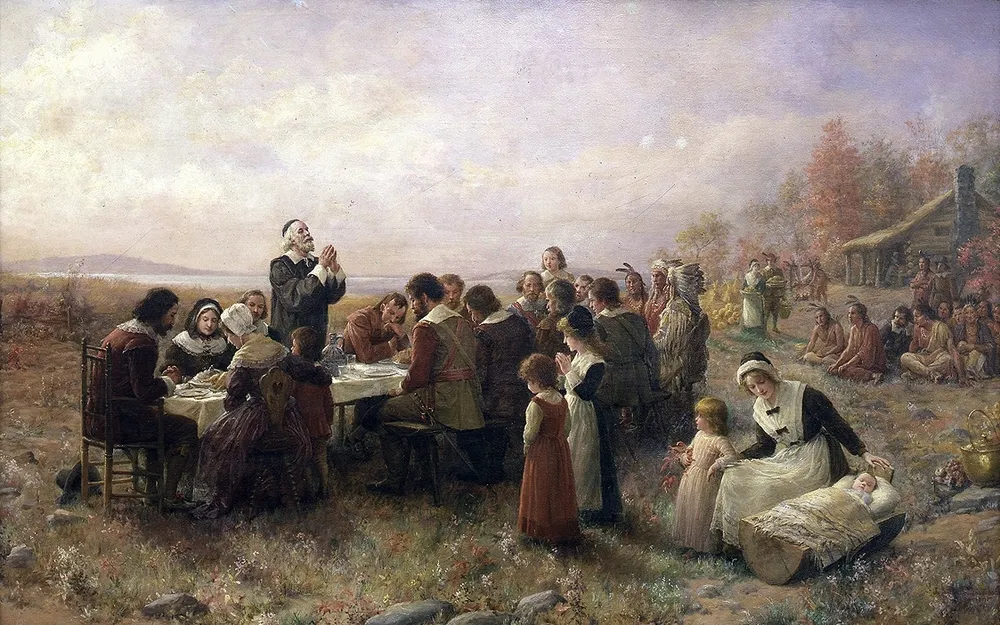
The First Thanksgiving at Plymouth, painted by Jennie Augusta Brownscombe in 1914. It is an artist's picture, made almost 300 years after the feast.
The Thanksgiving story most students know begins in 1621 at Plymouth, Massachusetts. A year after the Mayflower arrived, the English settlers held a harvest feast that lasted several days, and the Wampanoag people joined them. Edward Winslow, who was there, wrote that about ninety Wampanoag men came with their leader, Massasoit. The settlers had survived a hard first winter, and their alliance with the Wampanoag, along with the help of Squanto, a Patuxet man who had learned English, was important to getting through their first years.
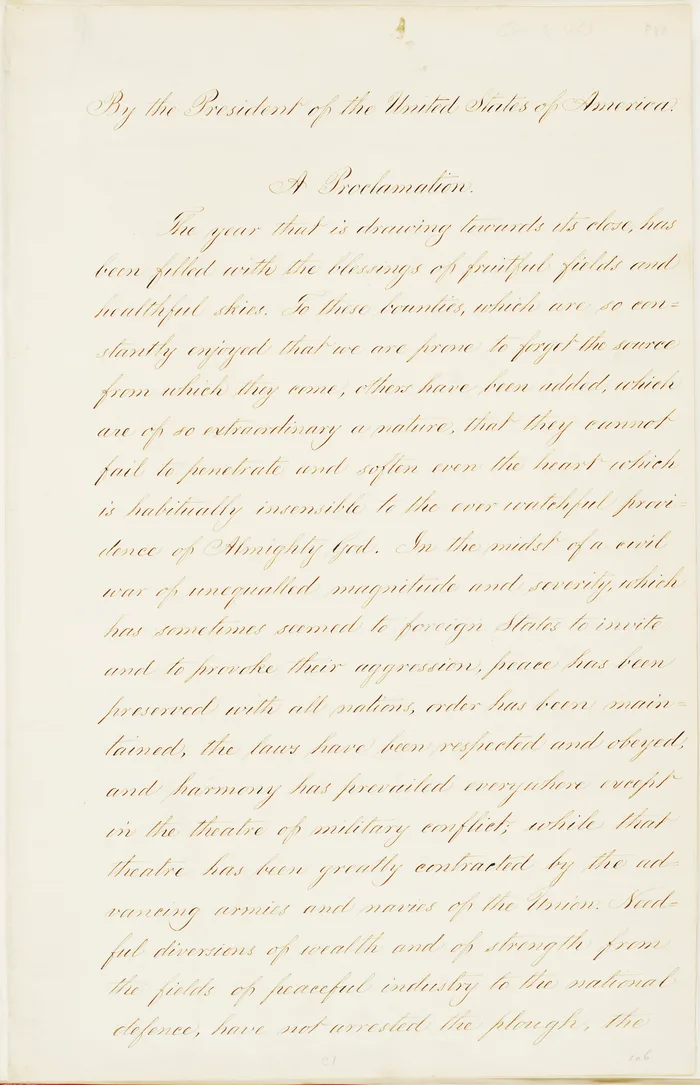
Page 1 of Abraham Lincoln's Thanksgiving Proclamation, 3 October 1863. Photo: U.S. National Archives.
The 1621 feast was not called Thanksgiving at the time, and it was not repeated every year. Colonies and towns held days of thanksgiving whenever they had something to be grateful for, such as a good harvest or the end of a hard time. George Washington proclaimed a national day of thanksgiving in 1789, but it was not yet a yearly holiday. Sarah Josepha Hale, a magazine editor, campaigned for decades for a national Thanksgiving, and in 1863, in the middle of the Civil War, President Abraham Lincoln proclaimed one for the last Thursday in November.
In 1939 President Franklin Roosevelt moved the date a week earlier to lengthen the holiday shopping season, which caused so much confusion that Congress settled the question in 1941. Since then Thanksgiving has been the fourth Thursday in November. The holiday also means different things to different people. Since 1970, some Native Americans and their supporters have gathered at Plymouth on Thanksgiving Day for a National Day of Mourning, so the story is worth looking at from more than one side. Squanto, Pocahontas and The New World each tell part of that story from more than one point of view.